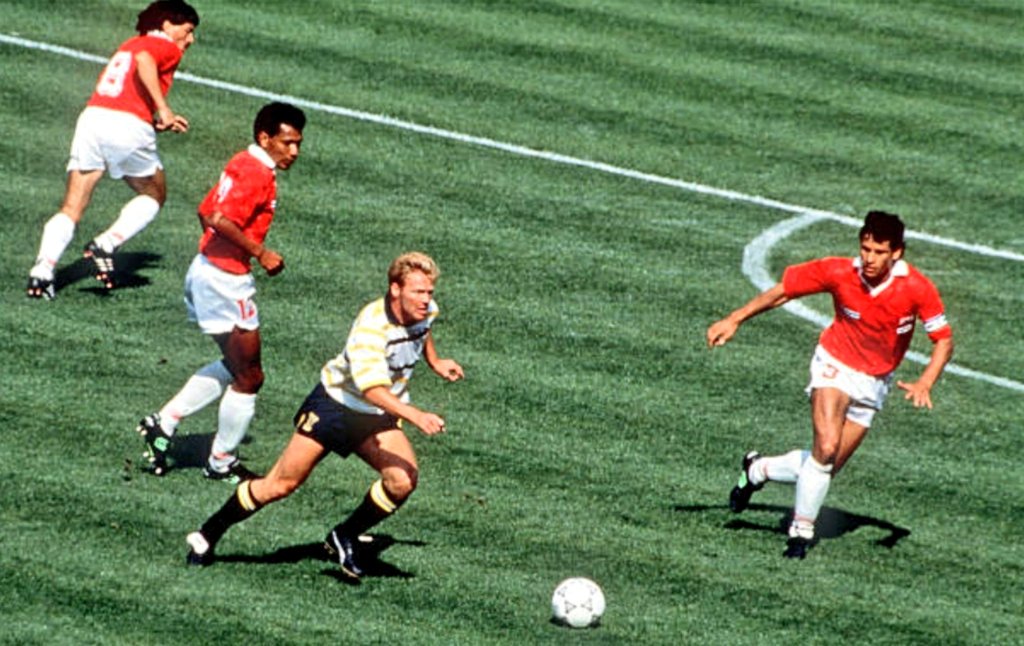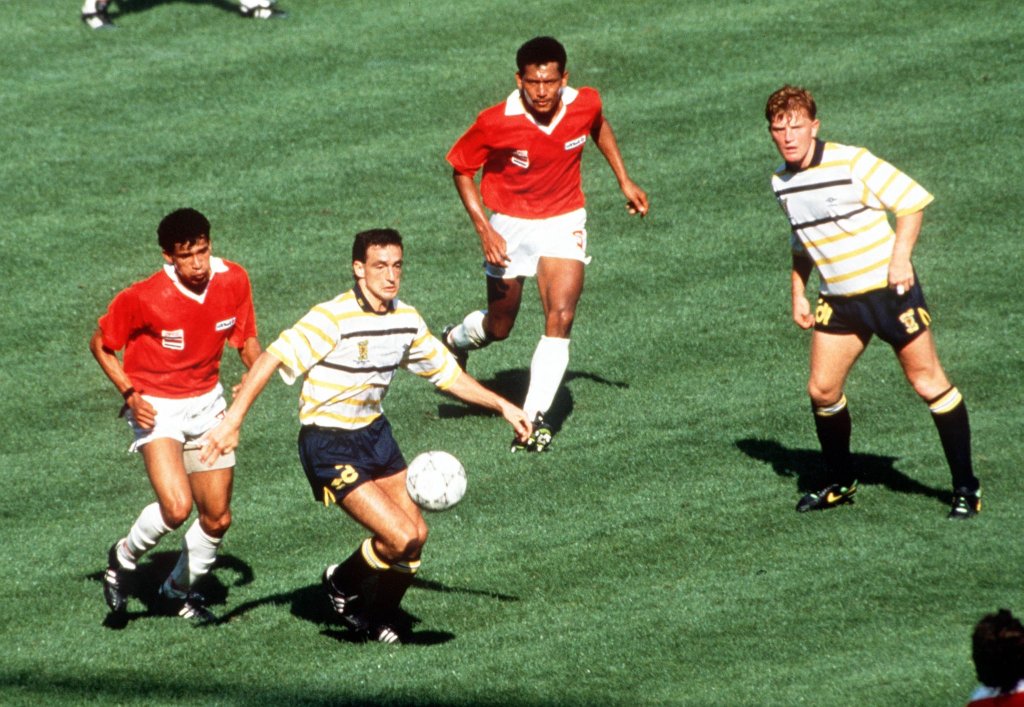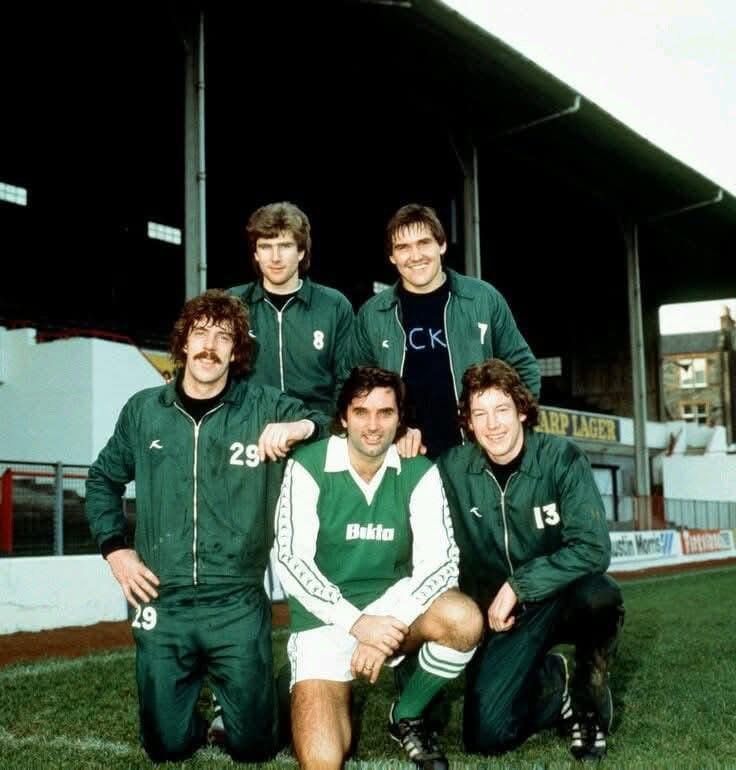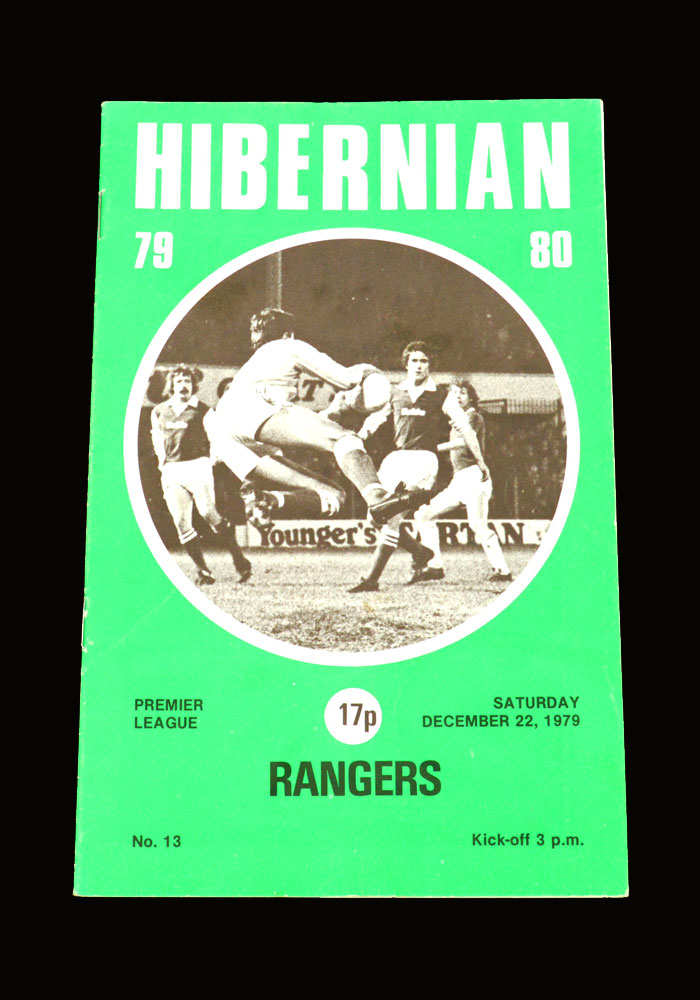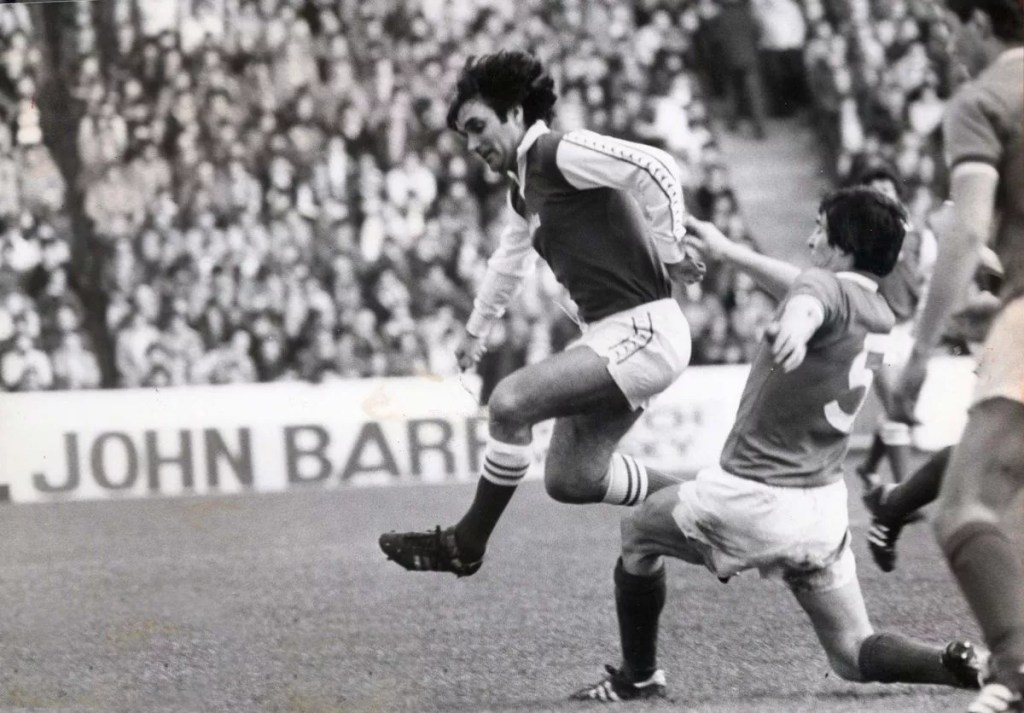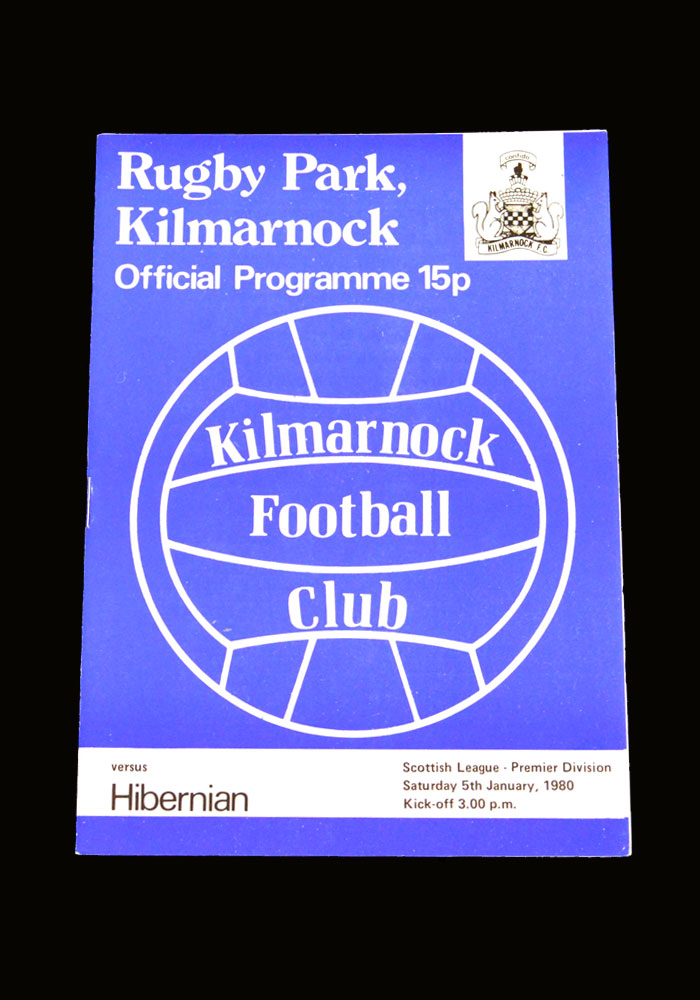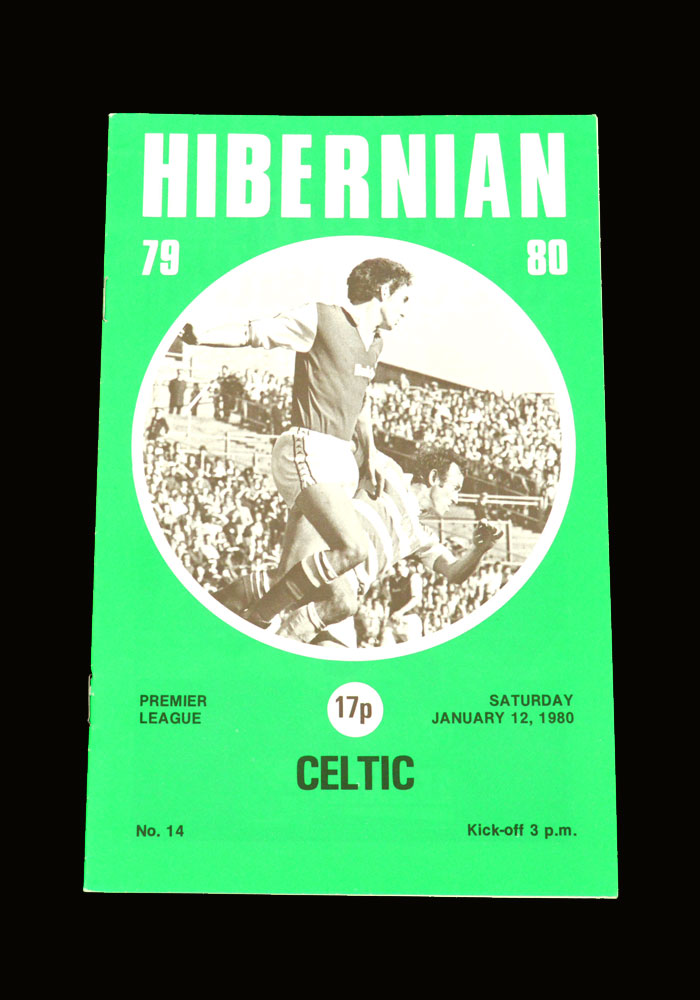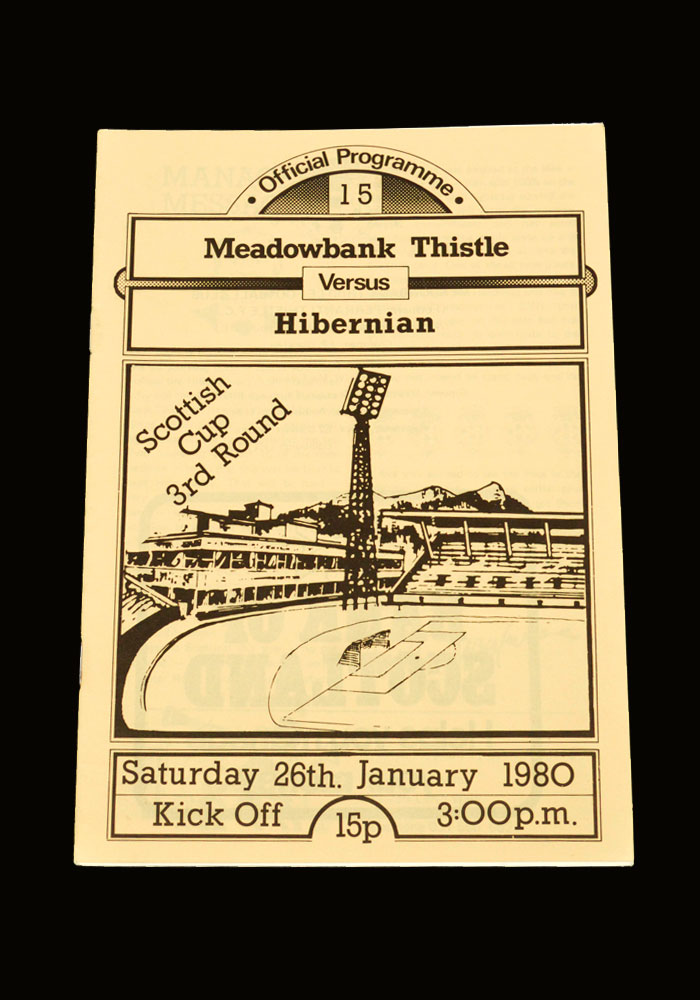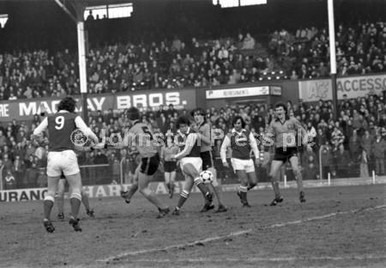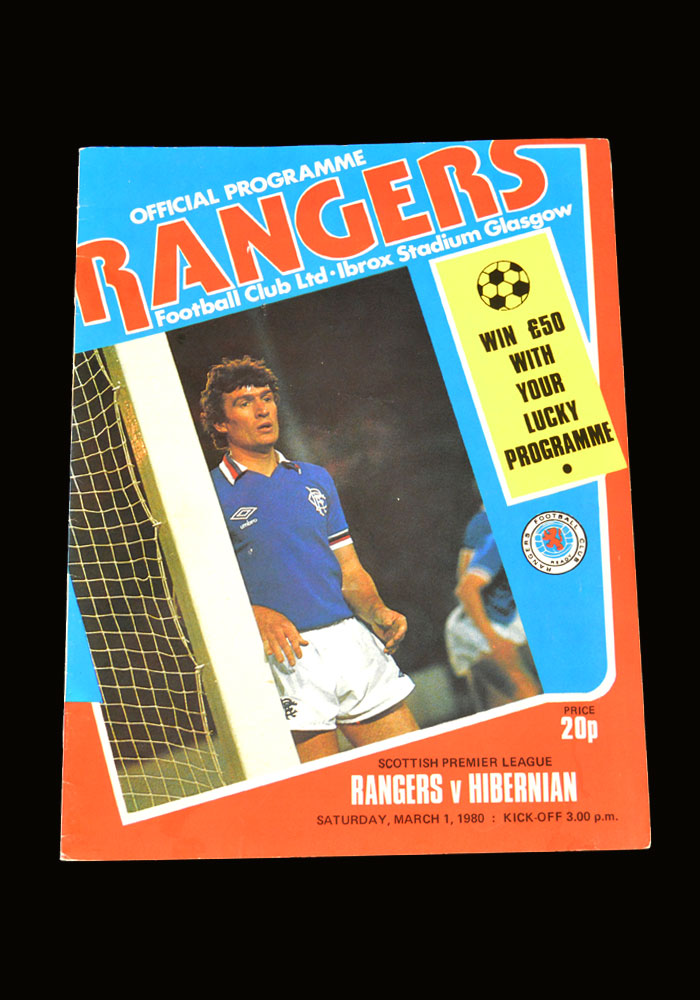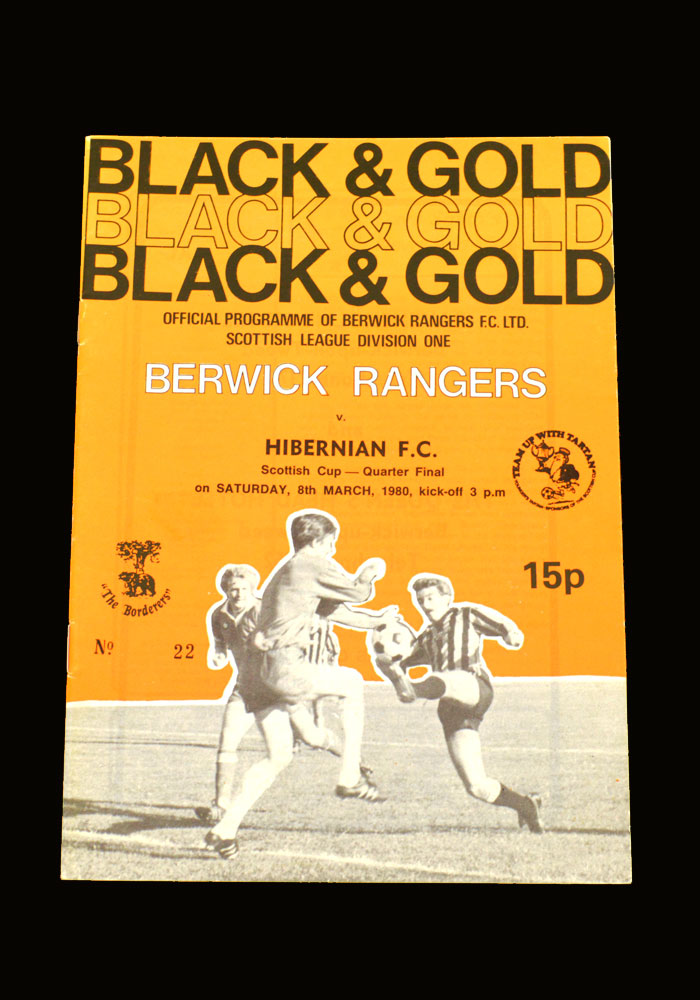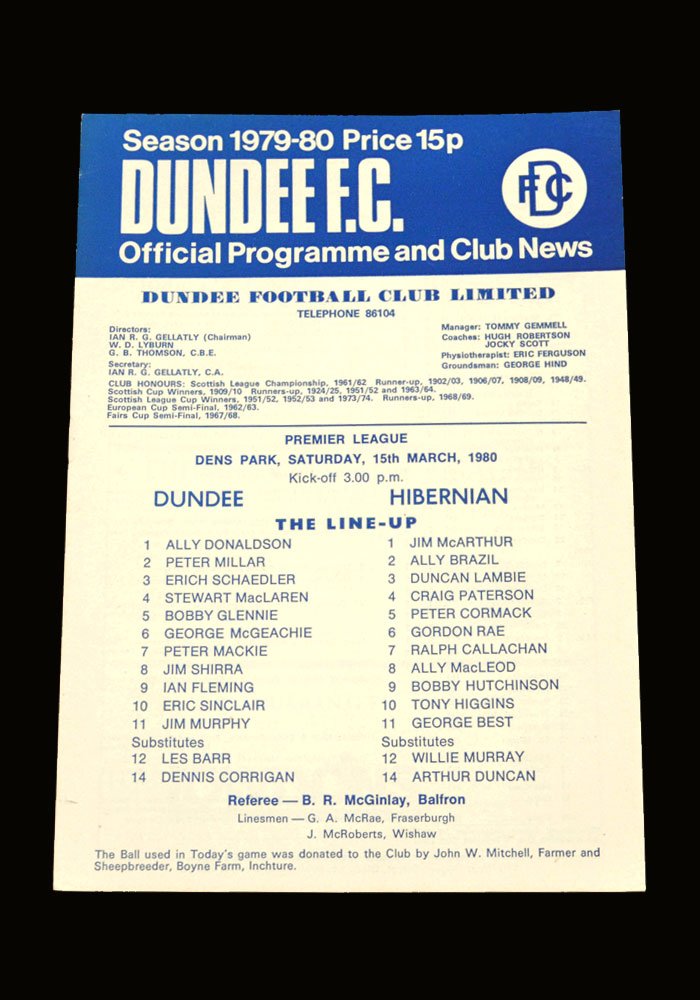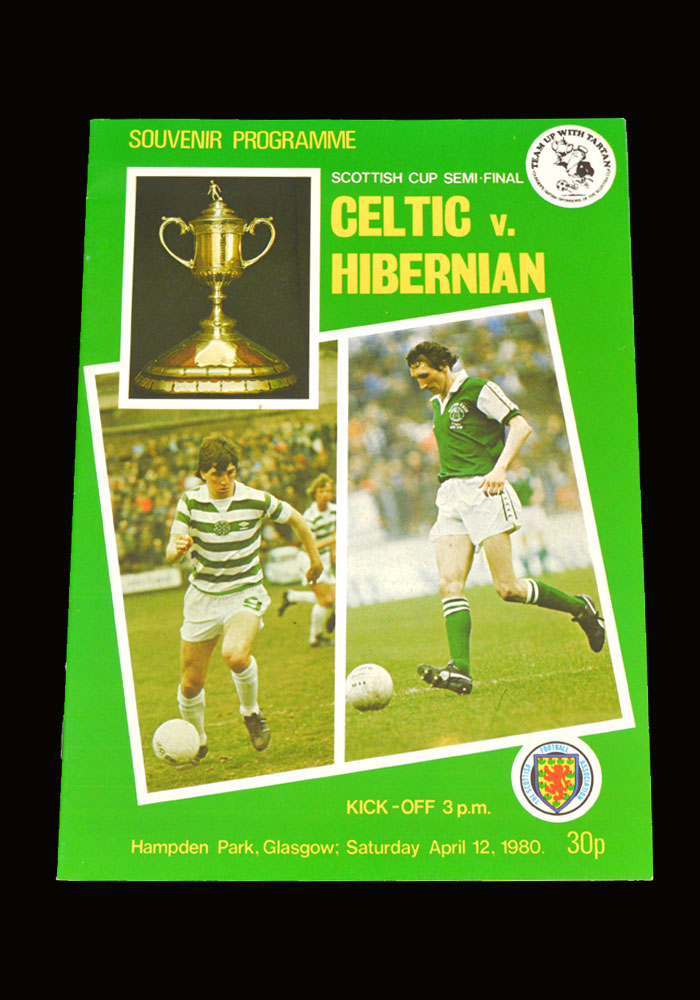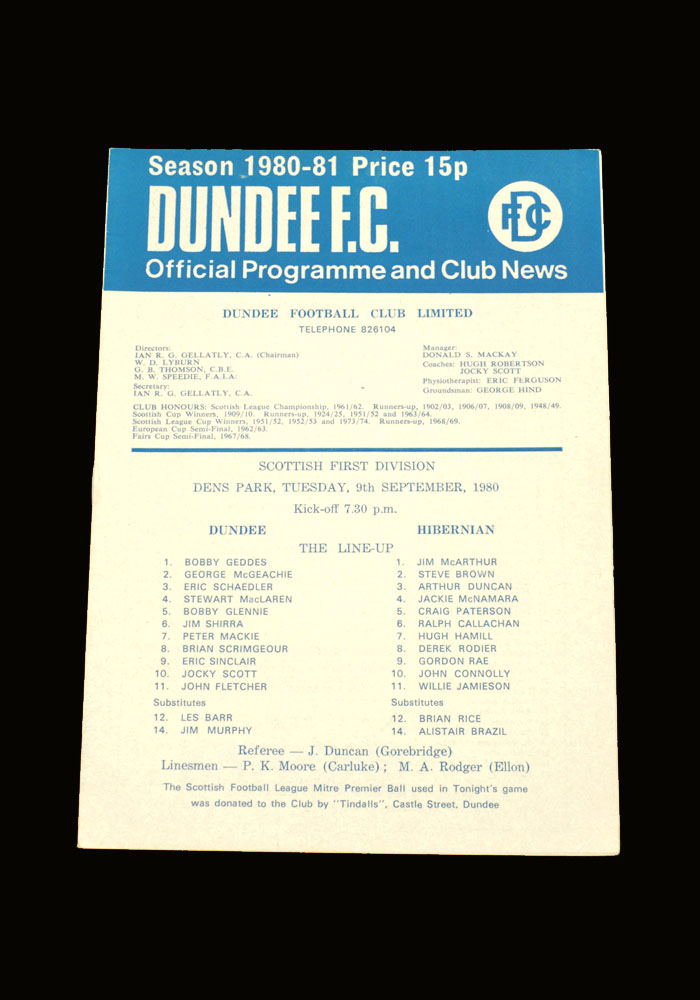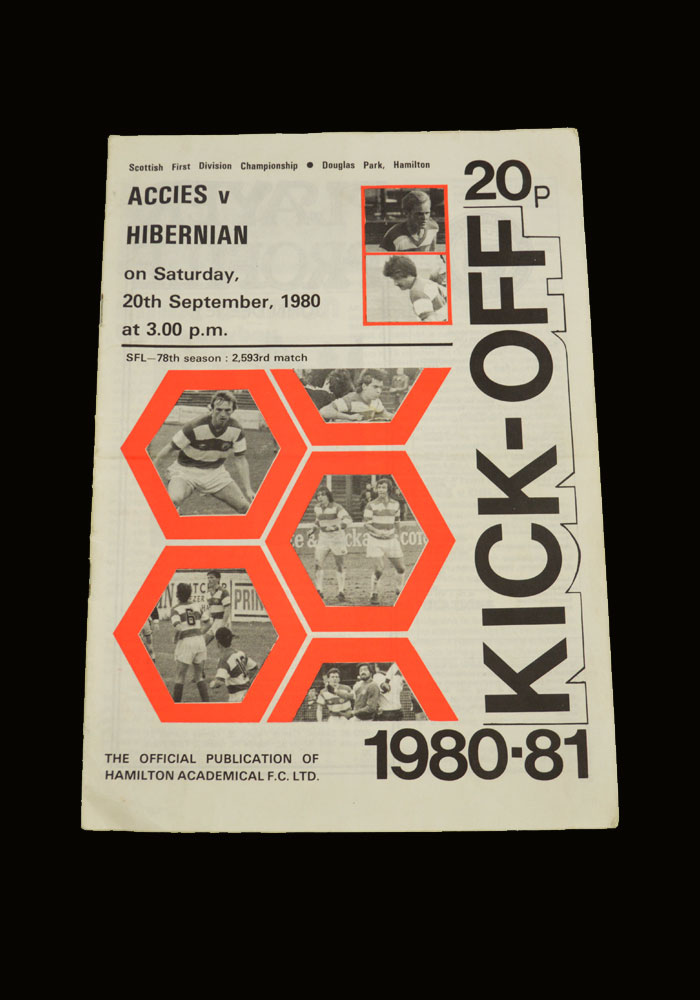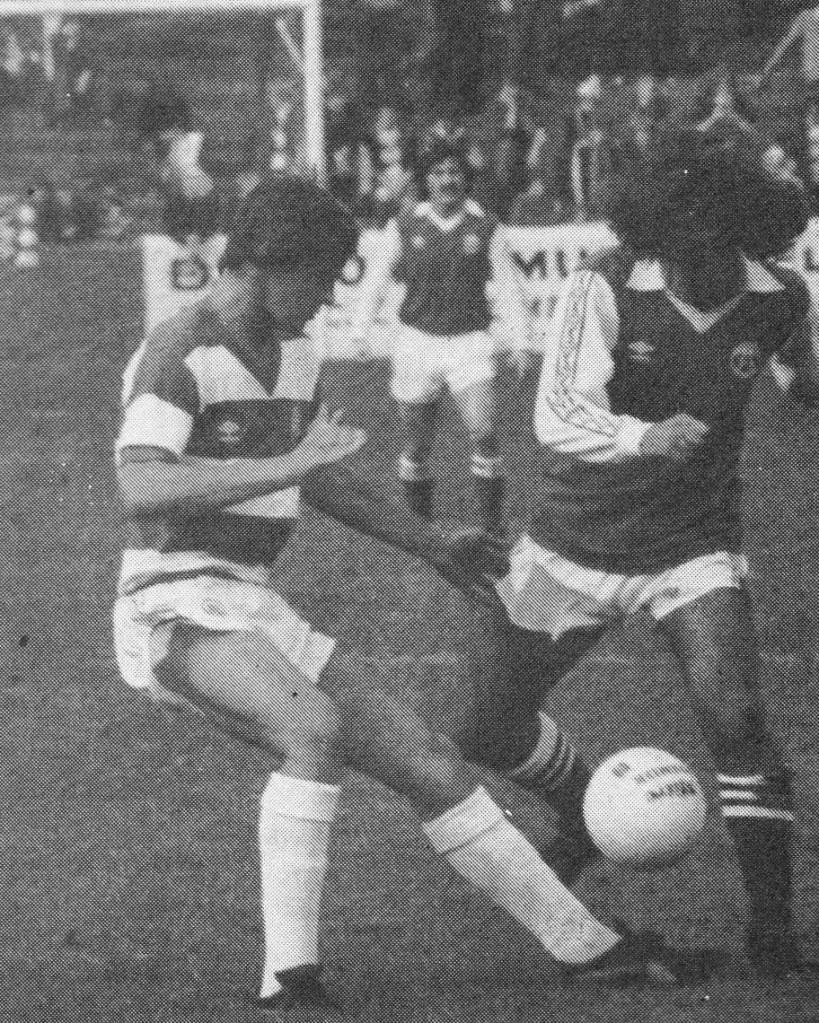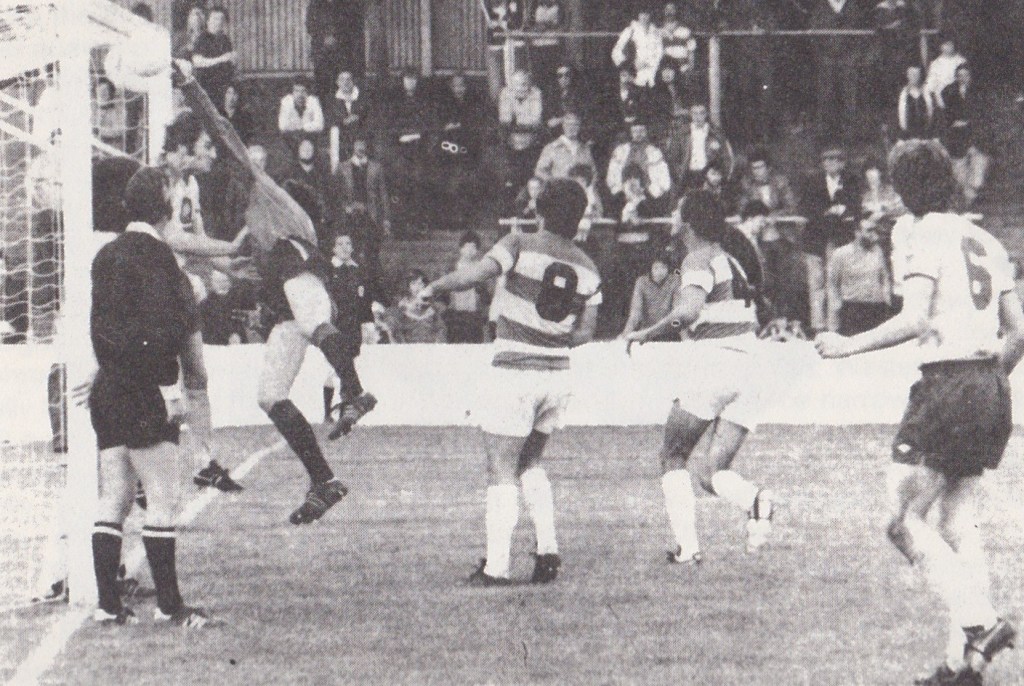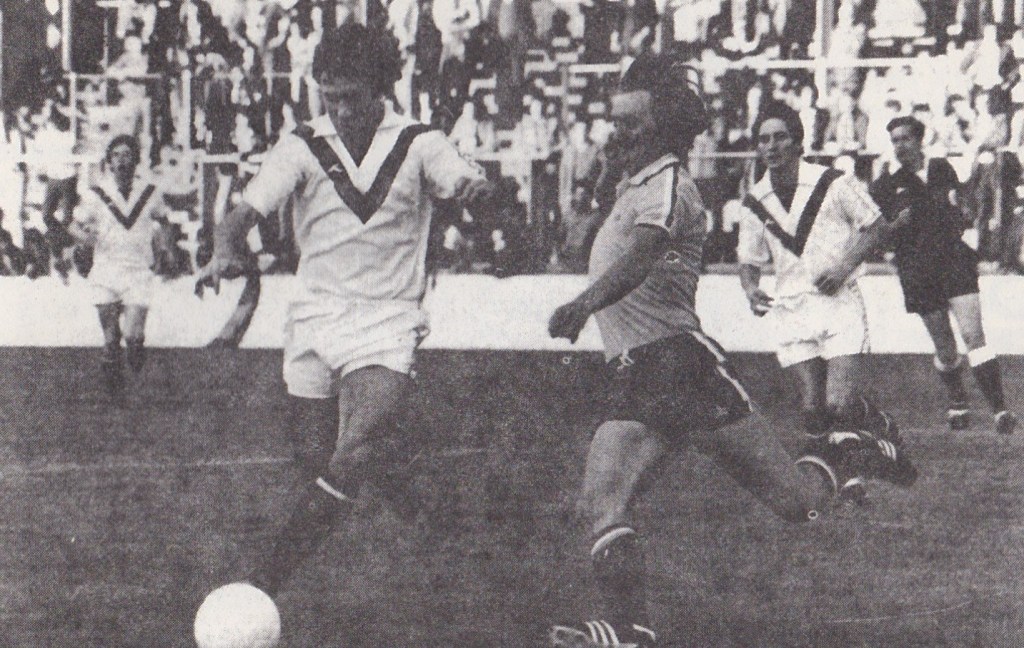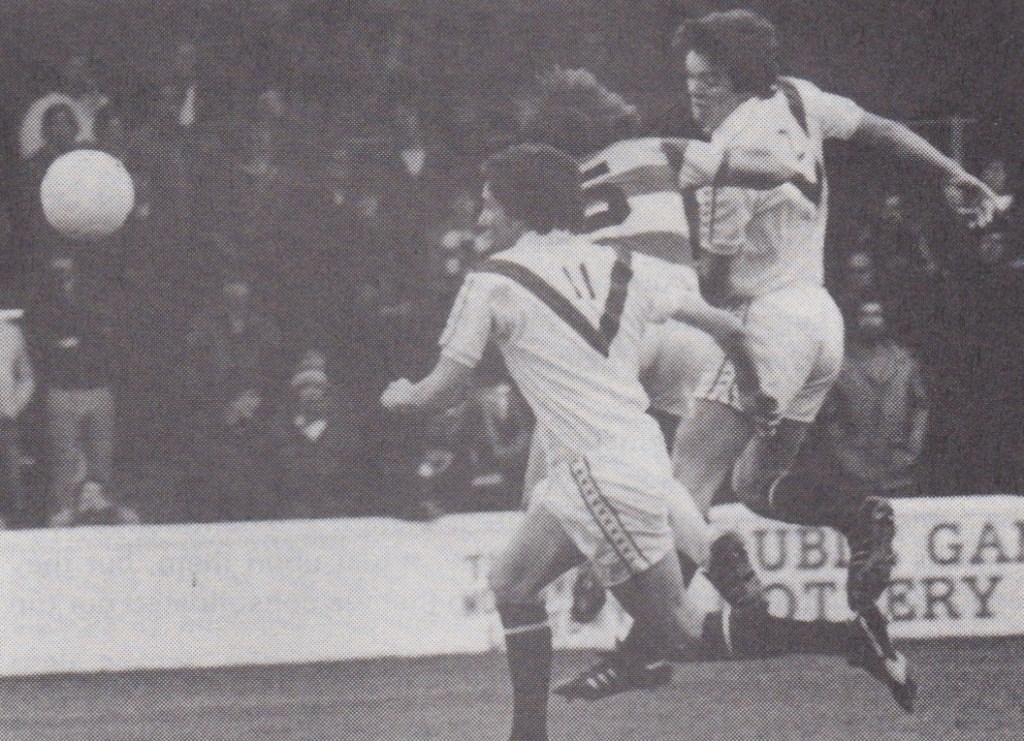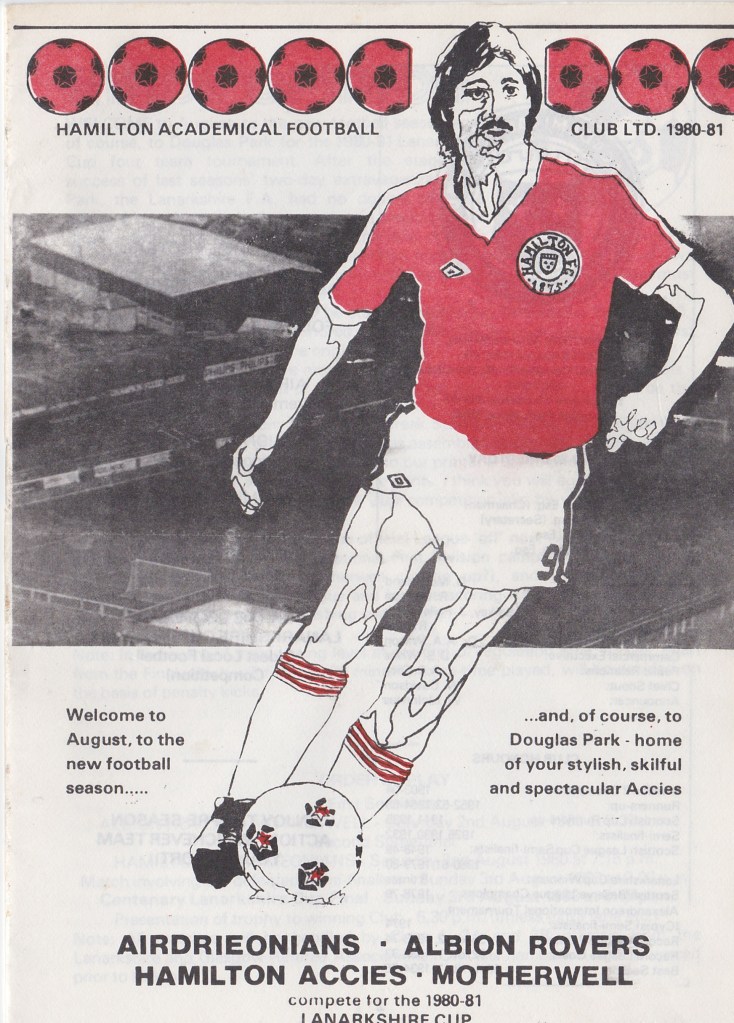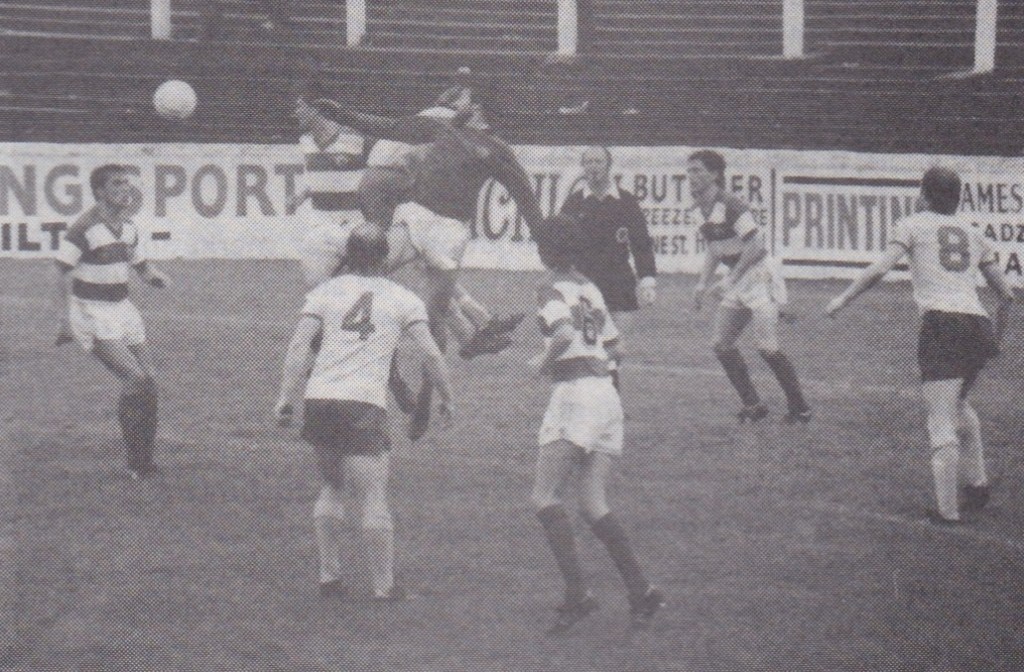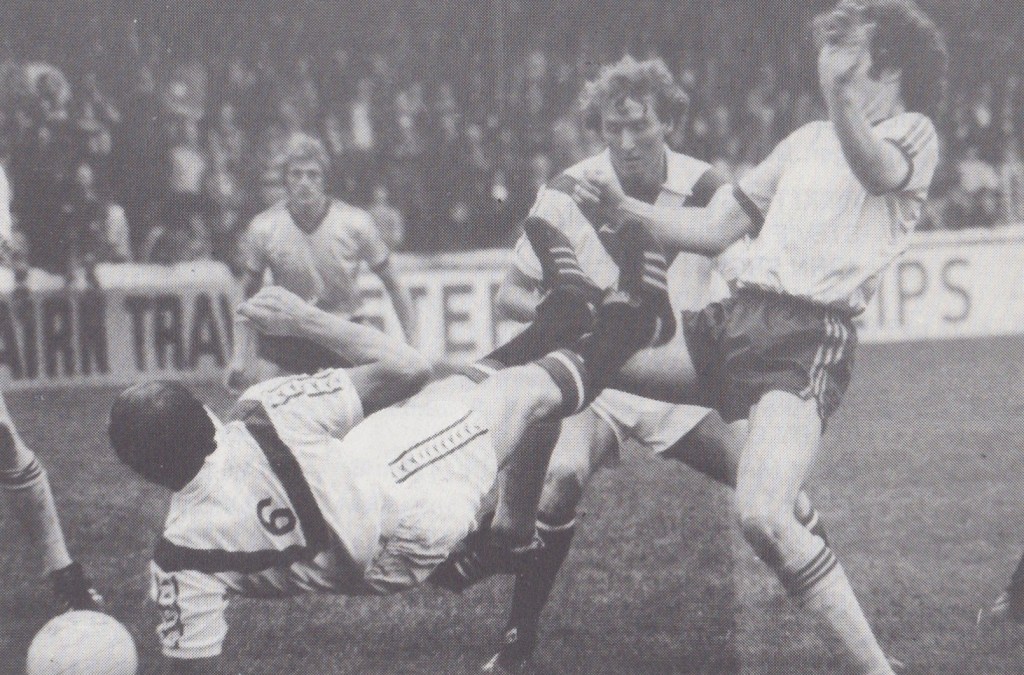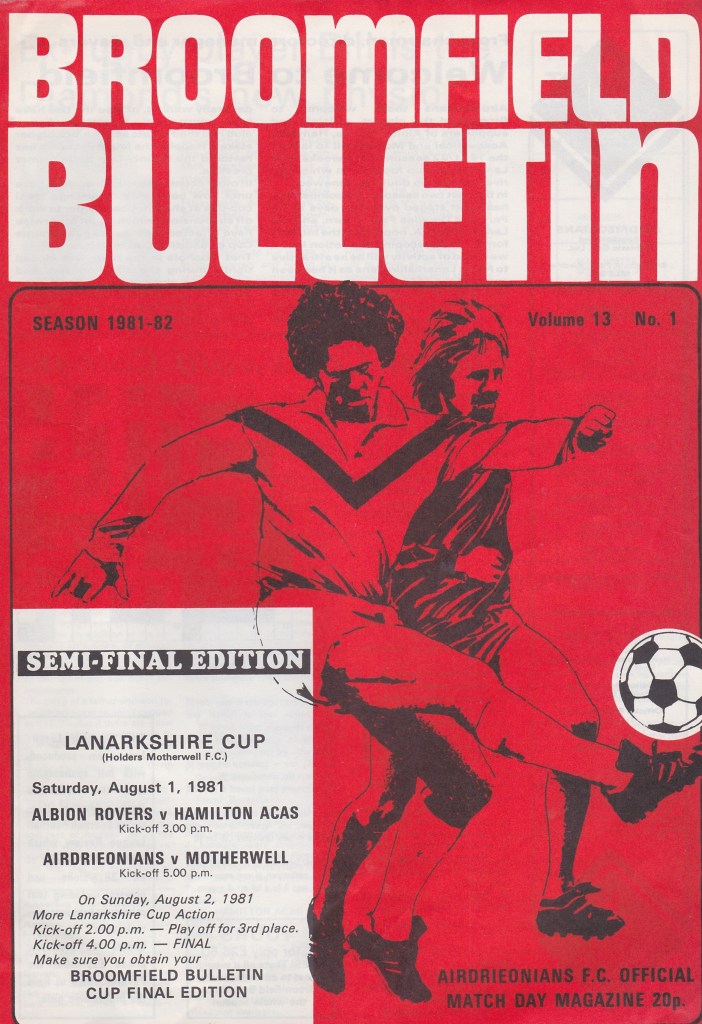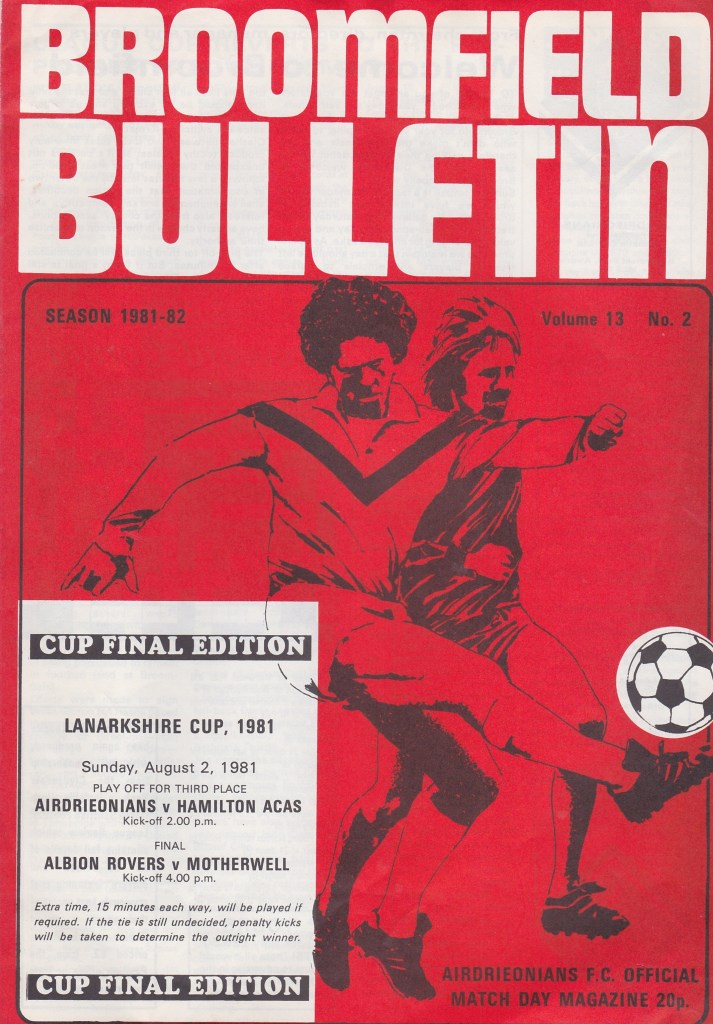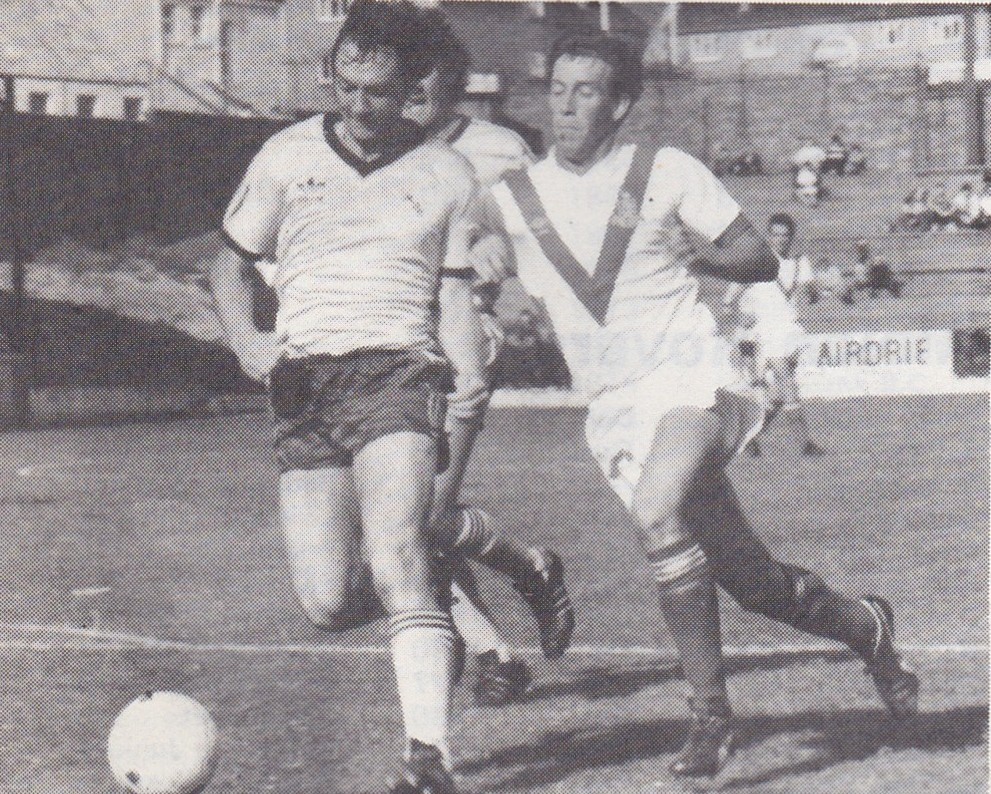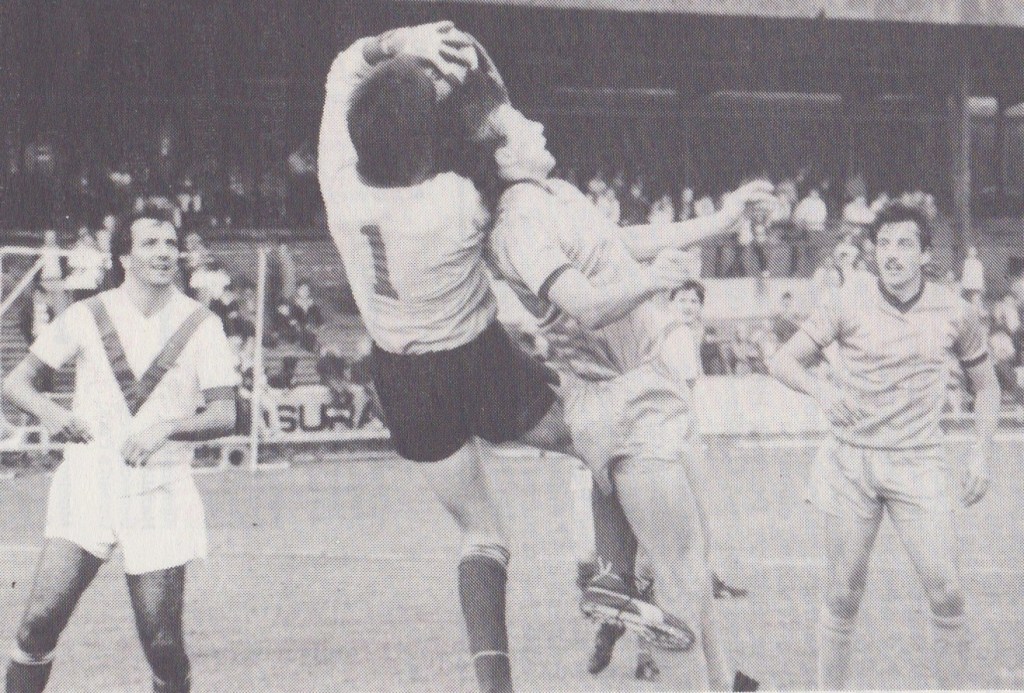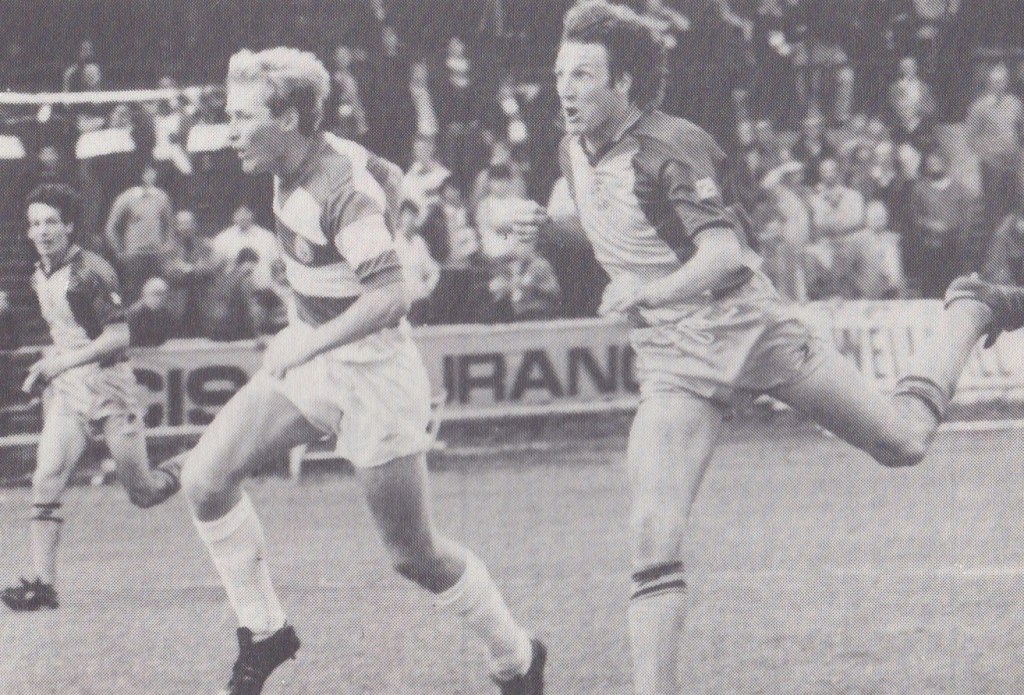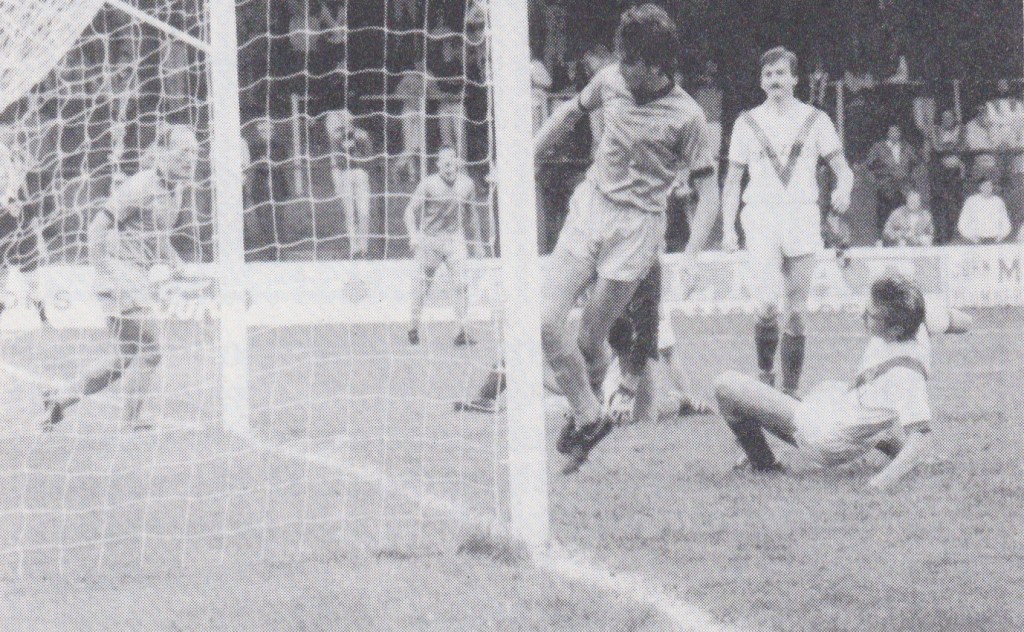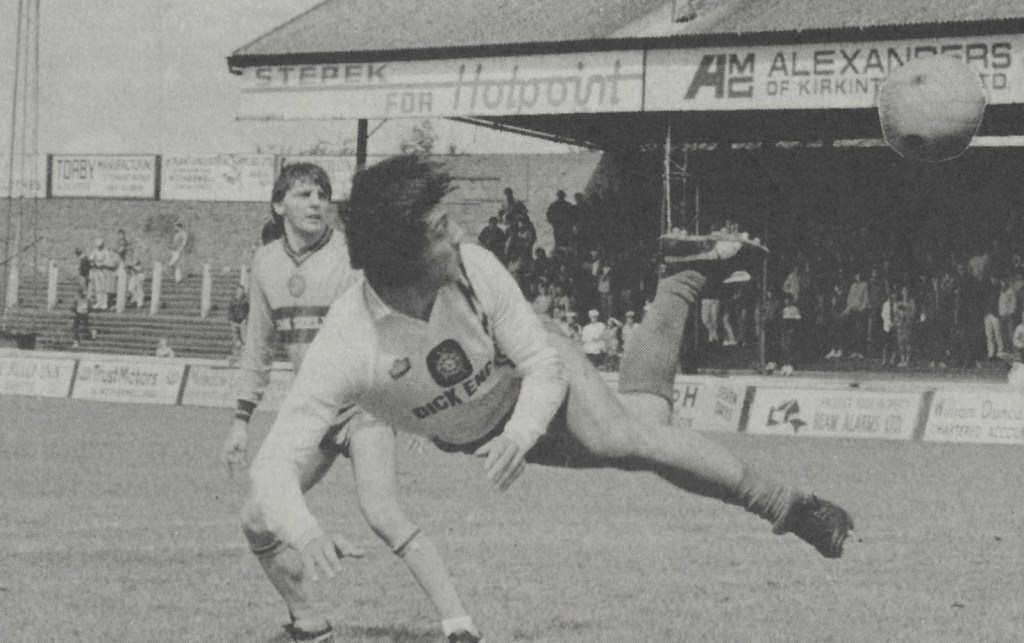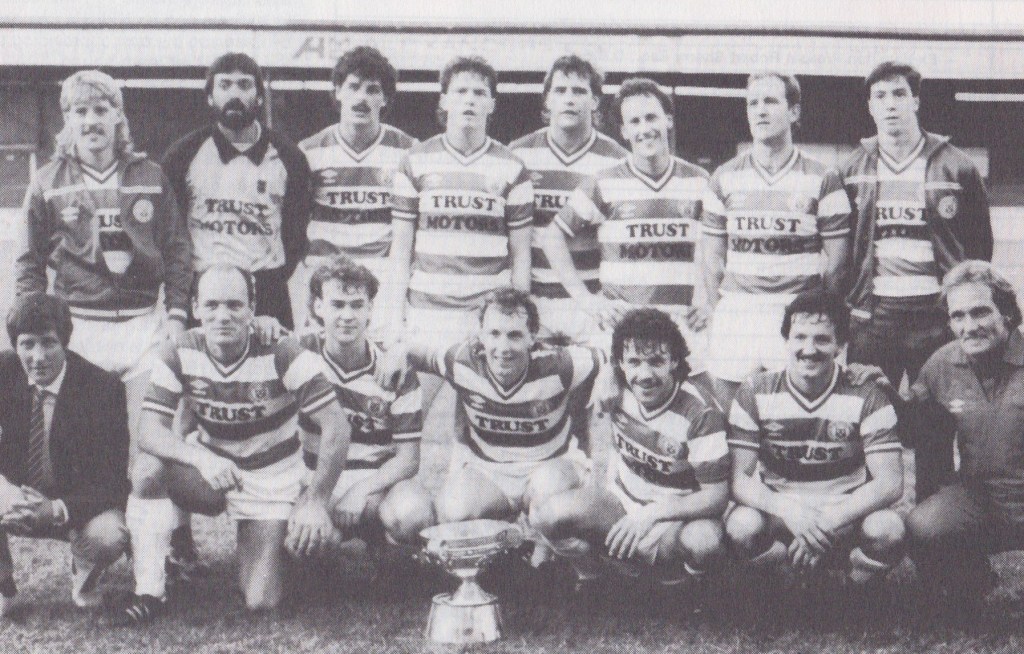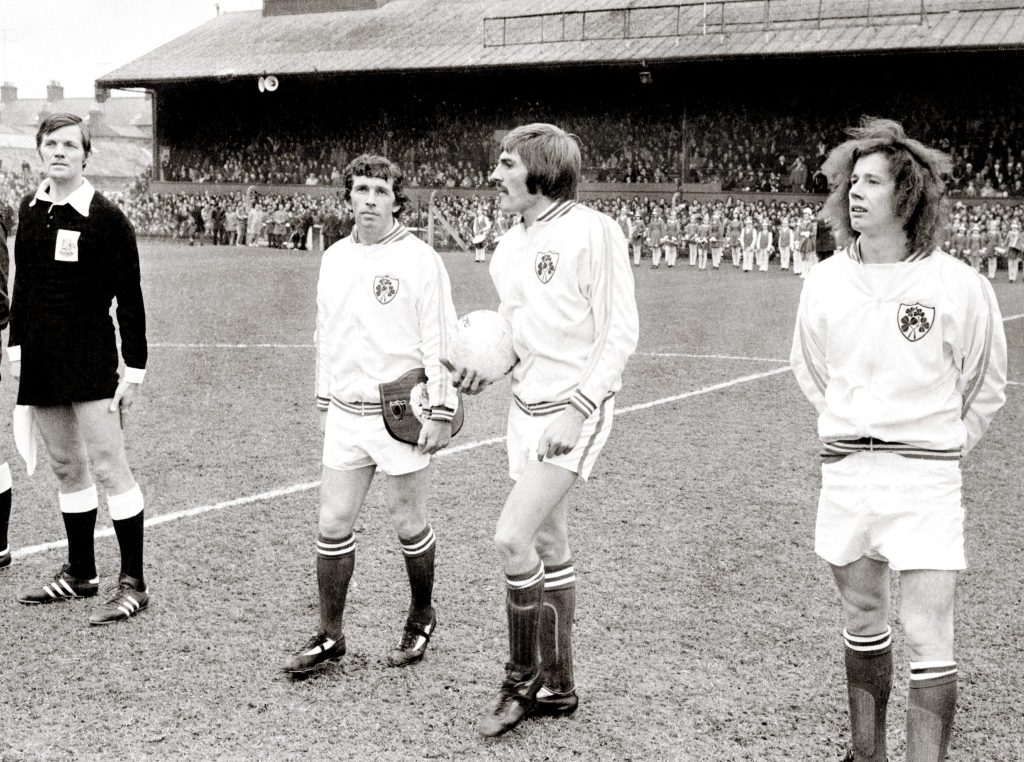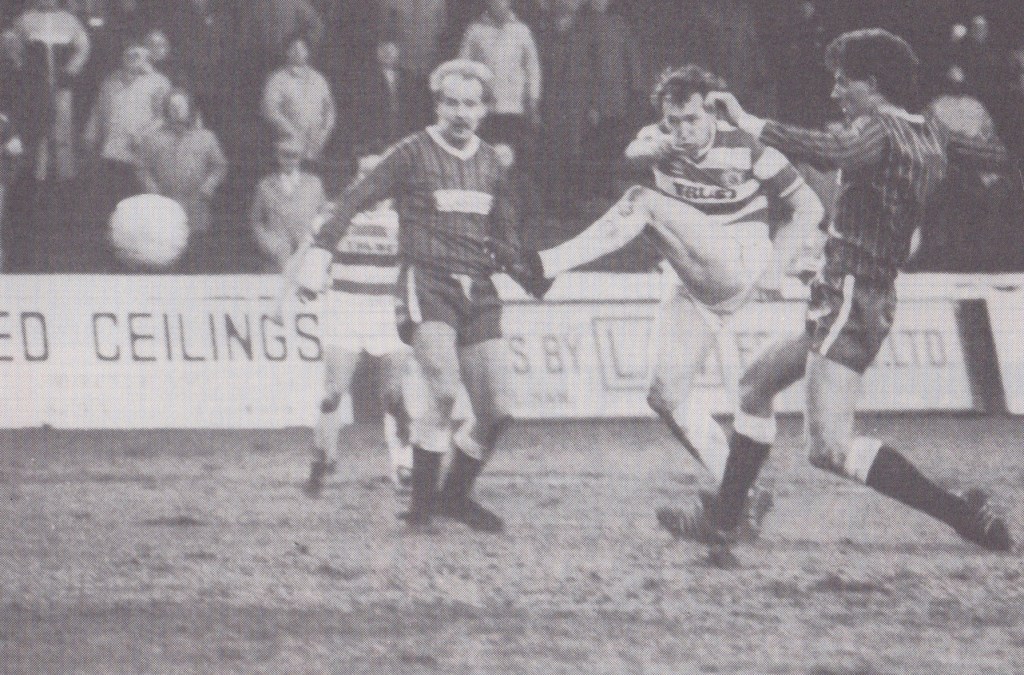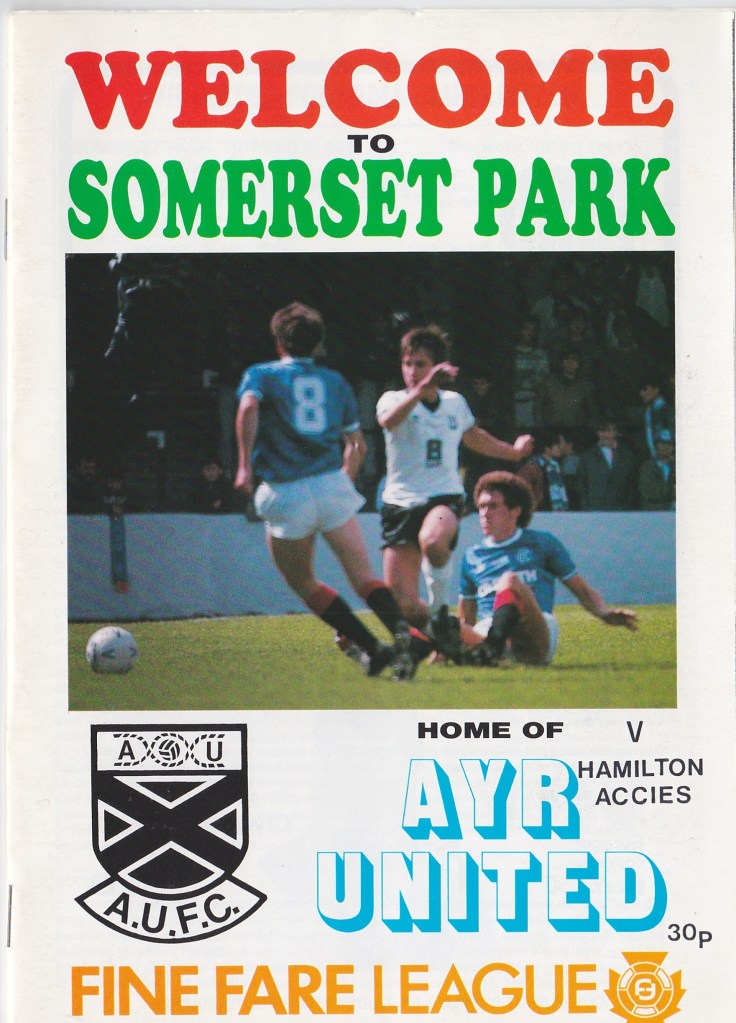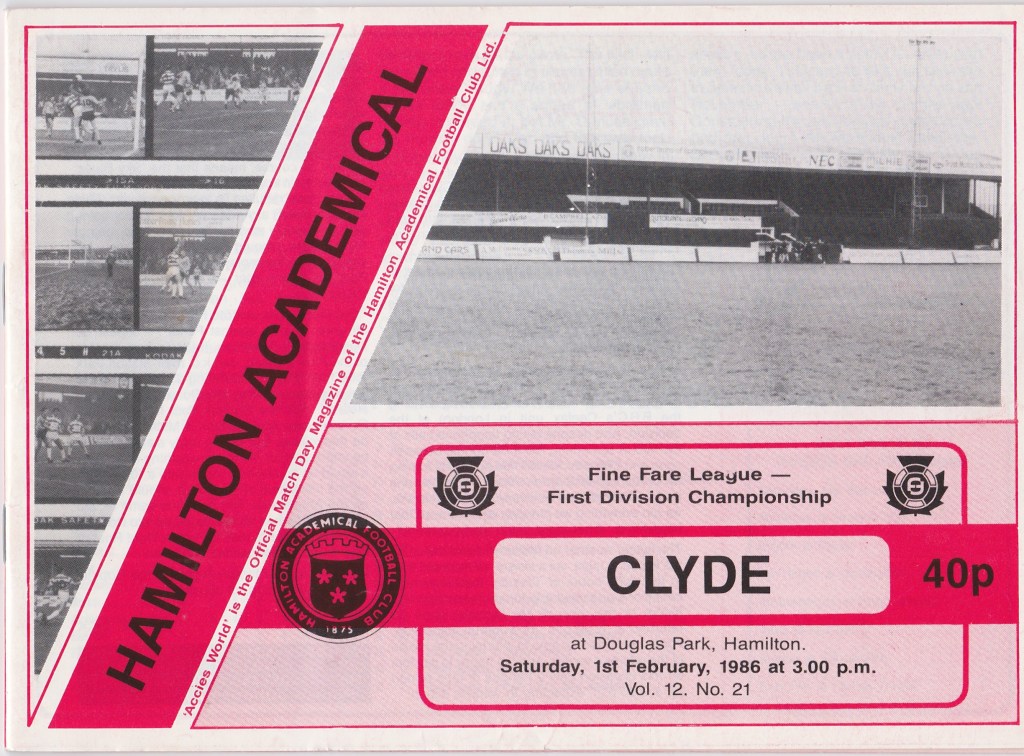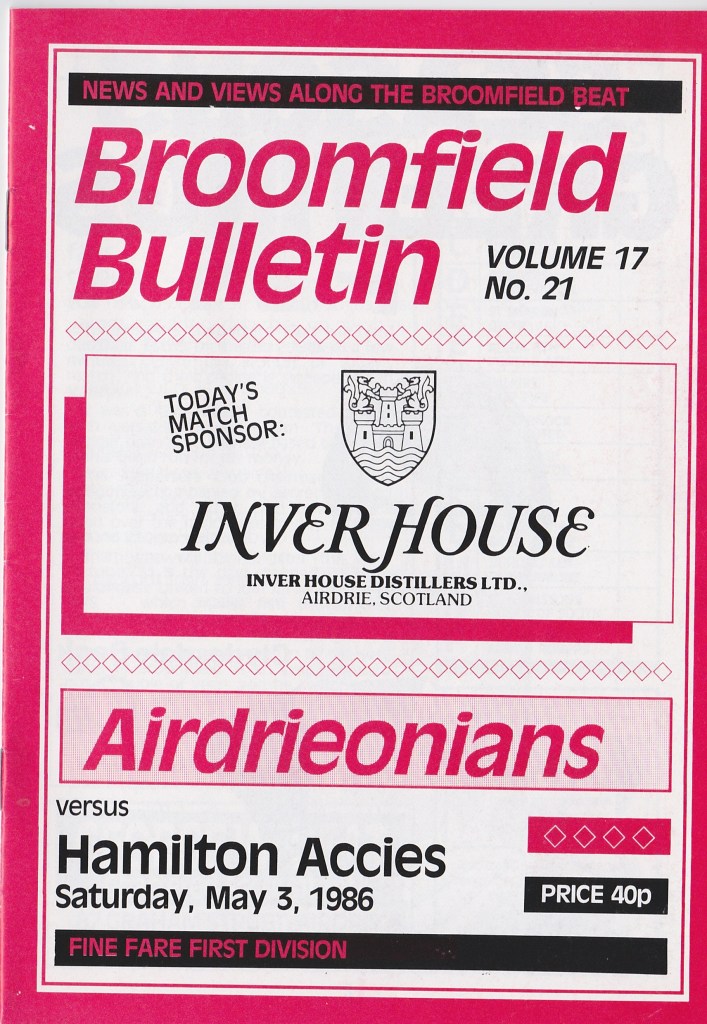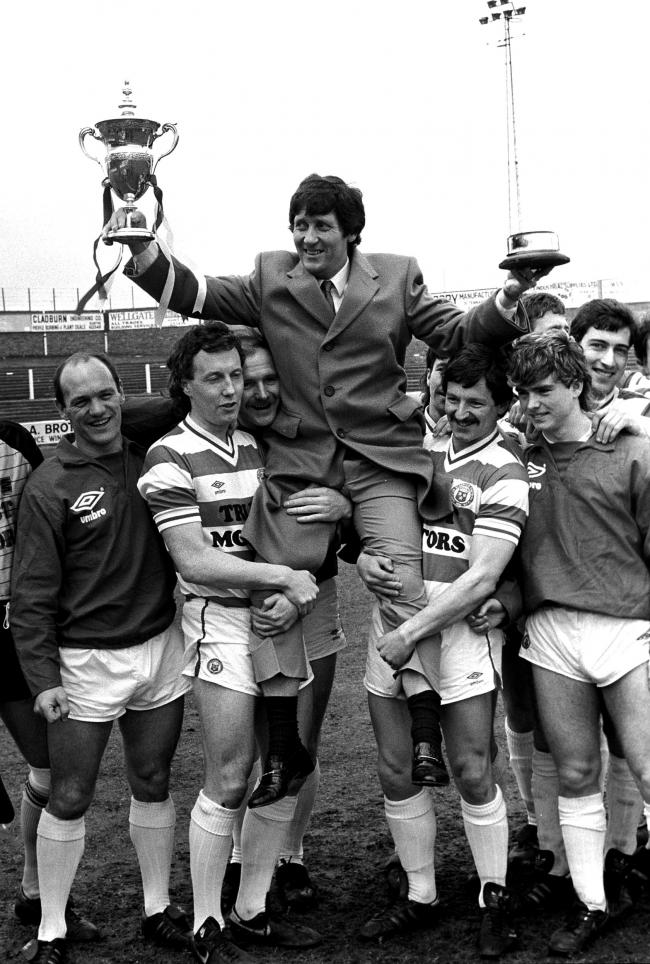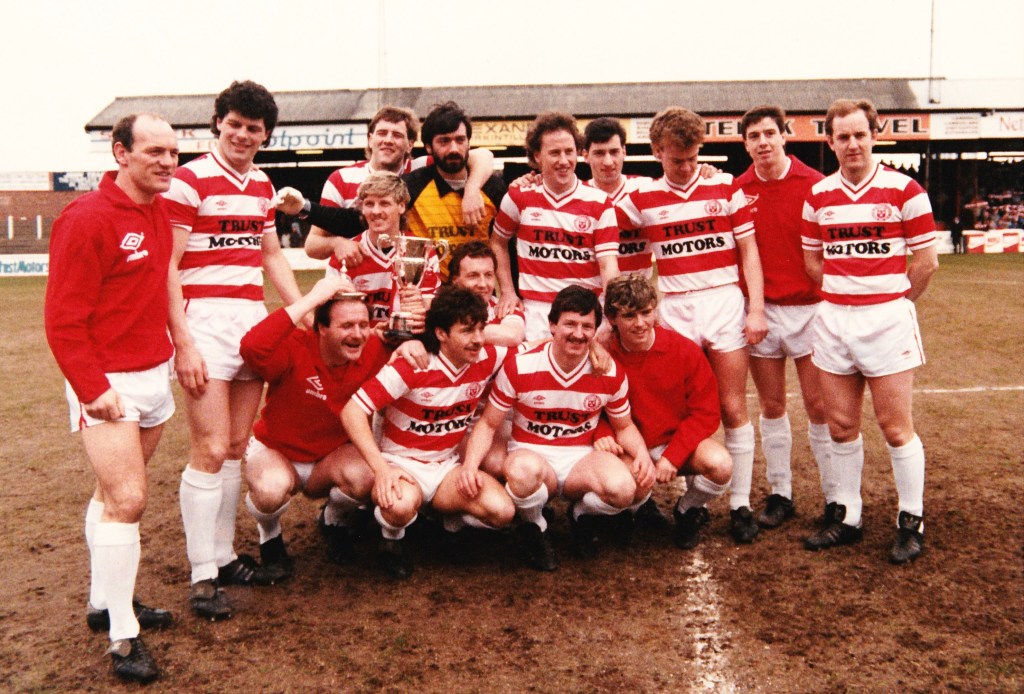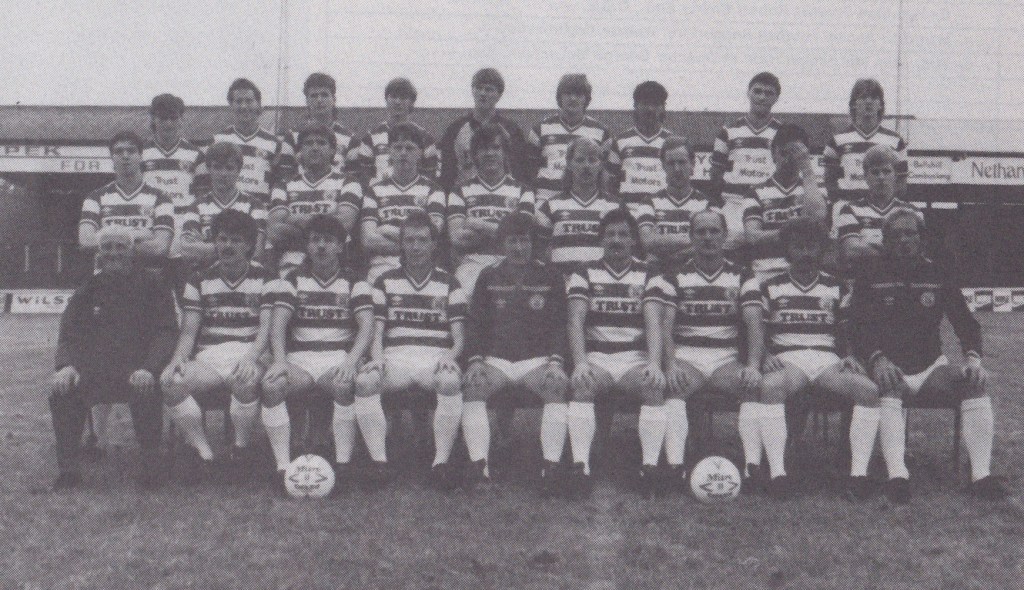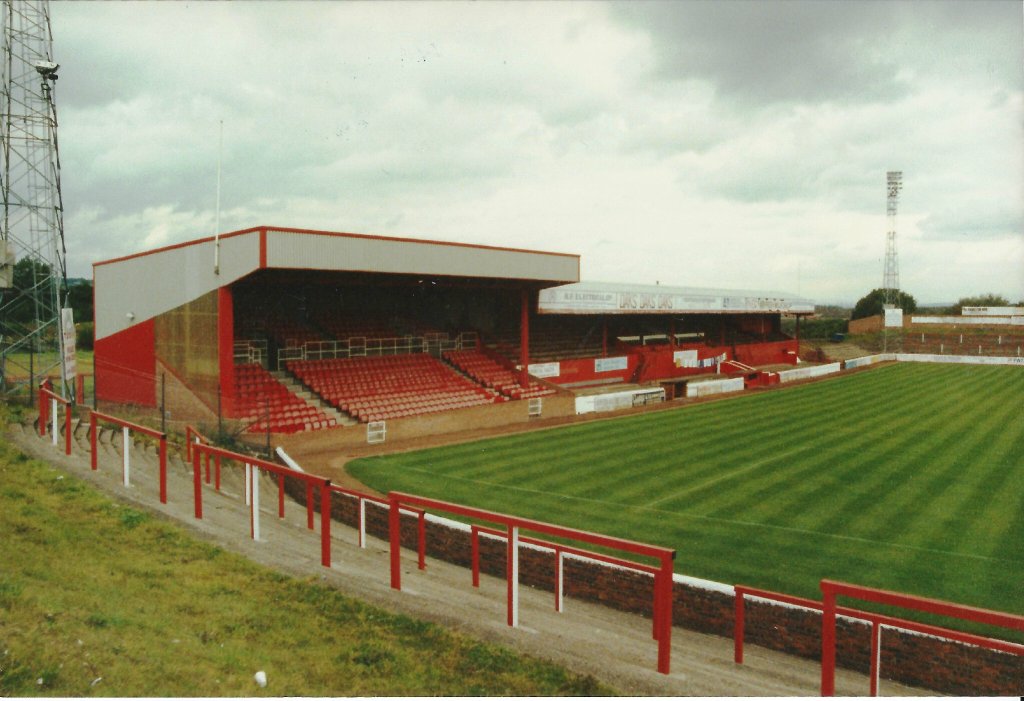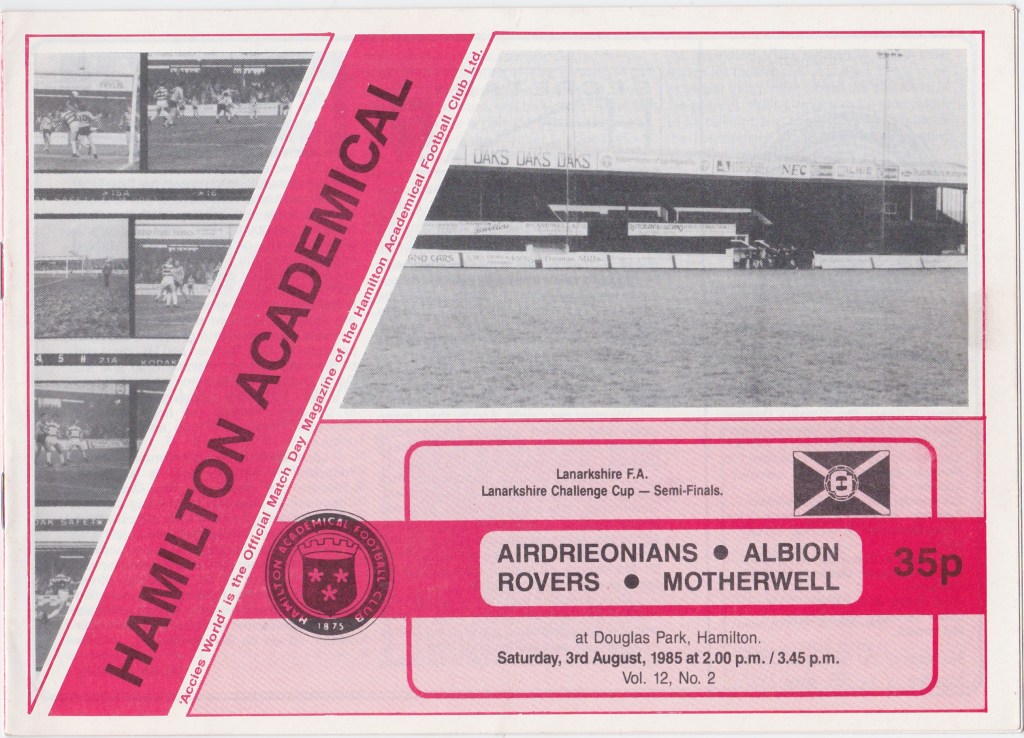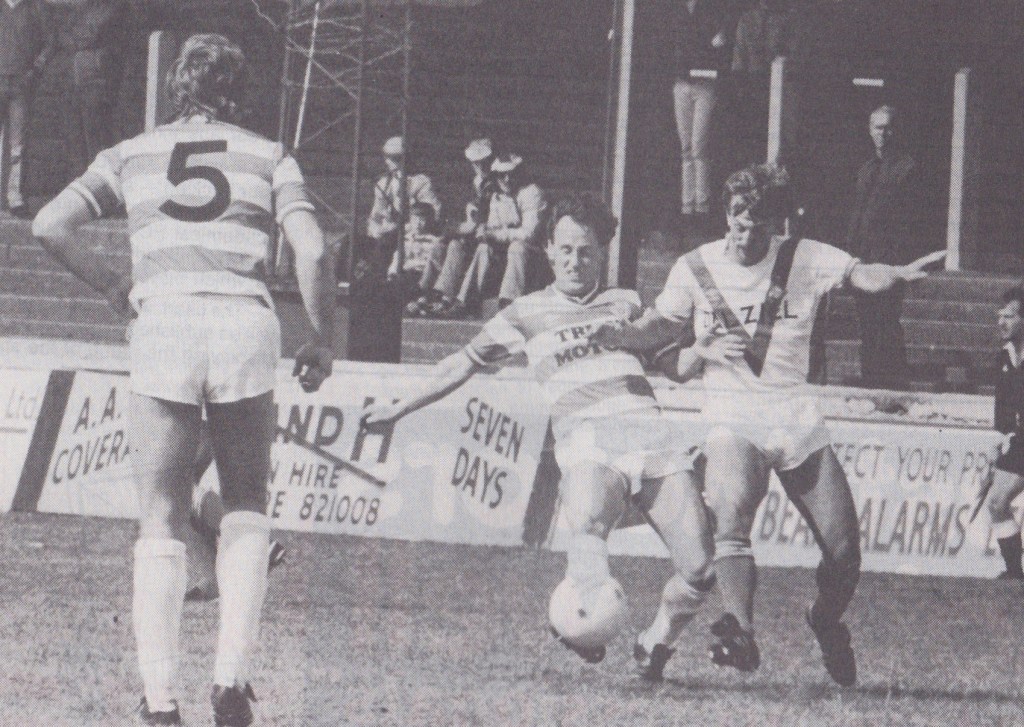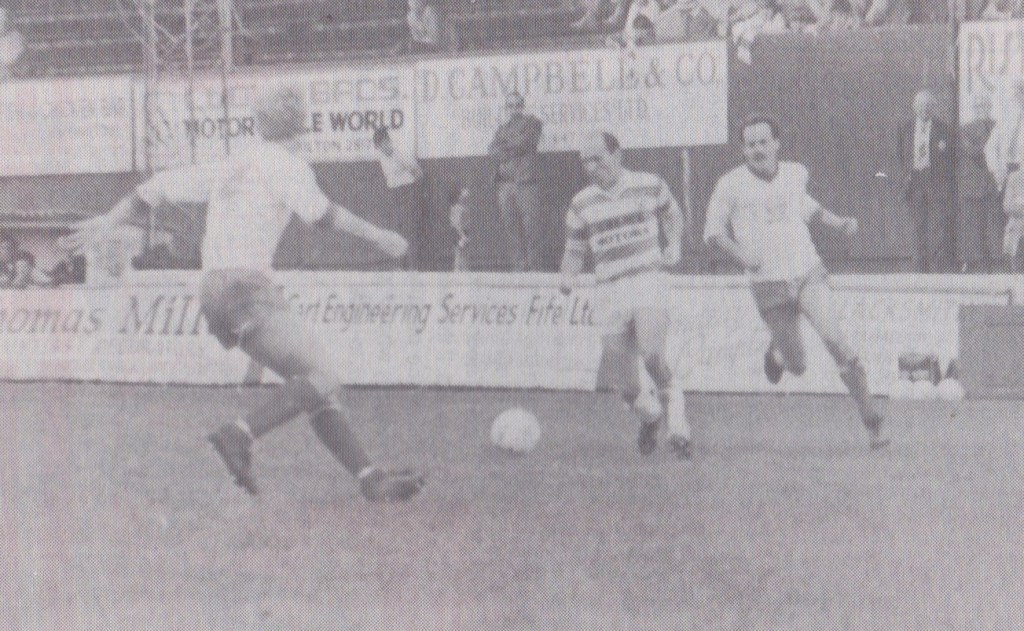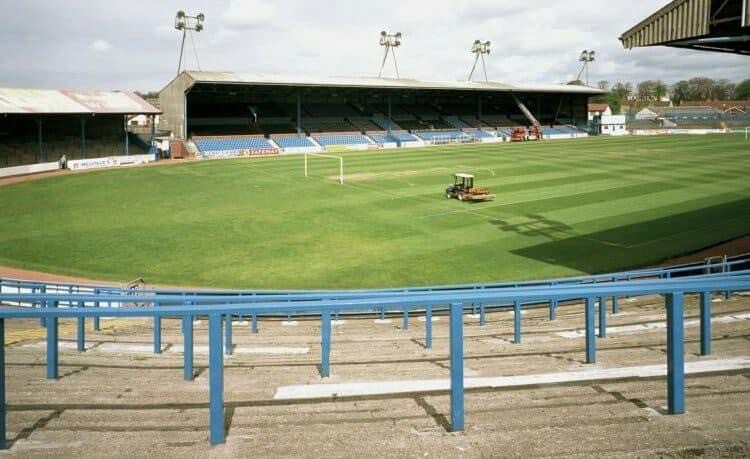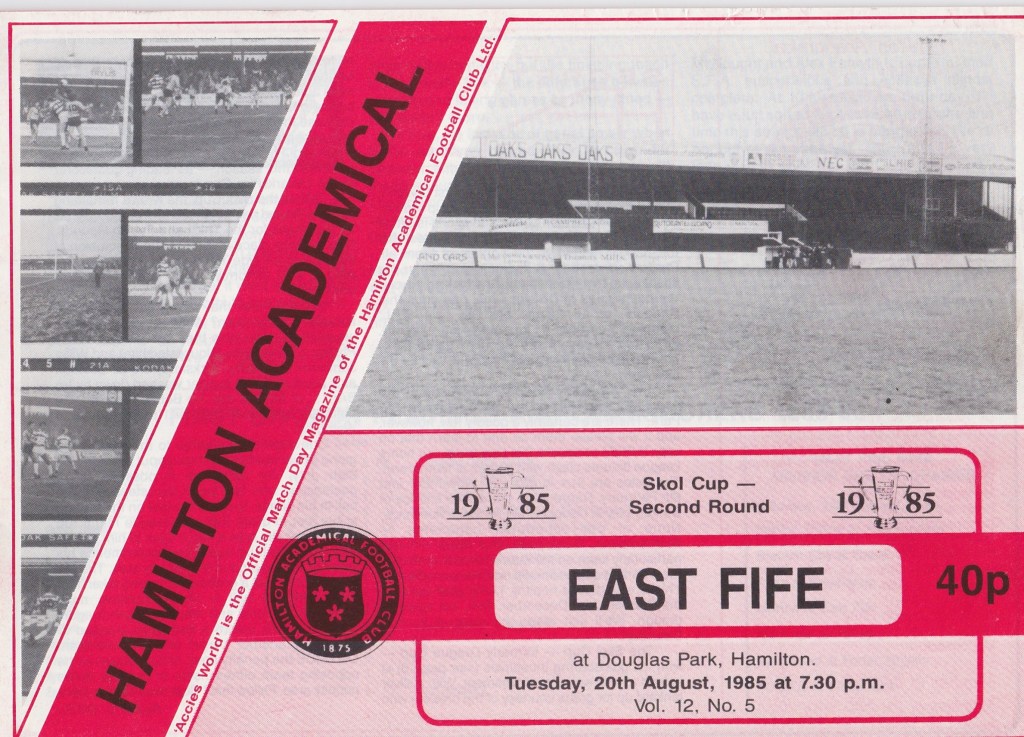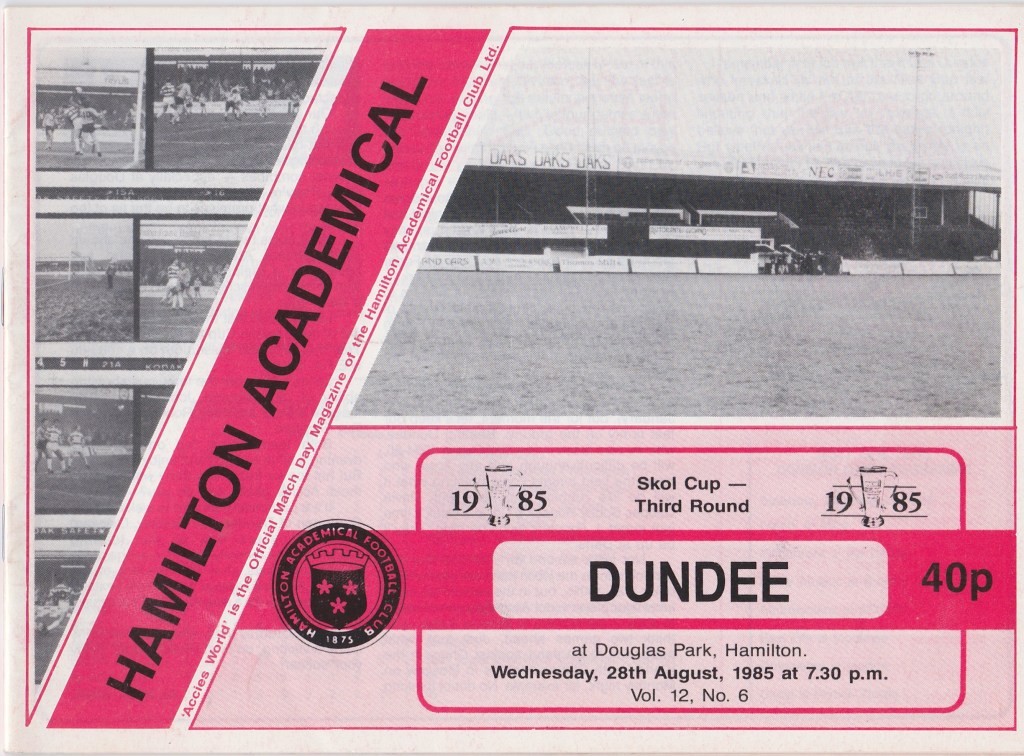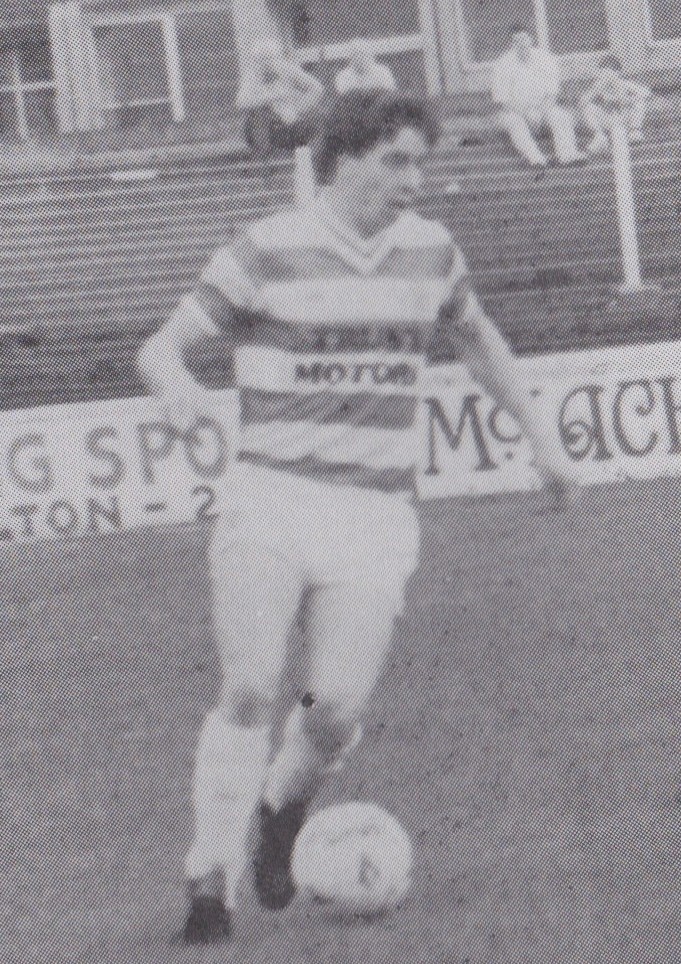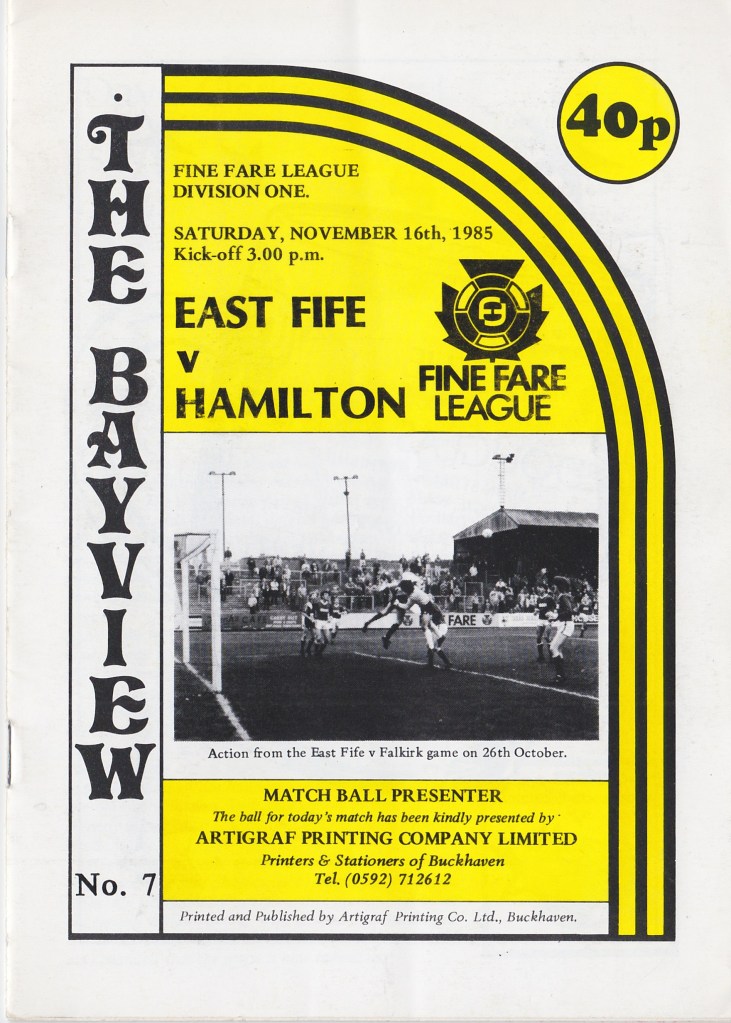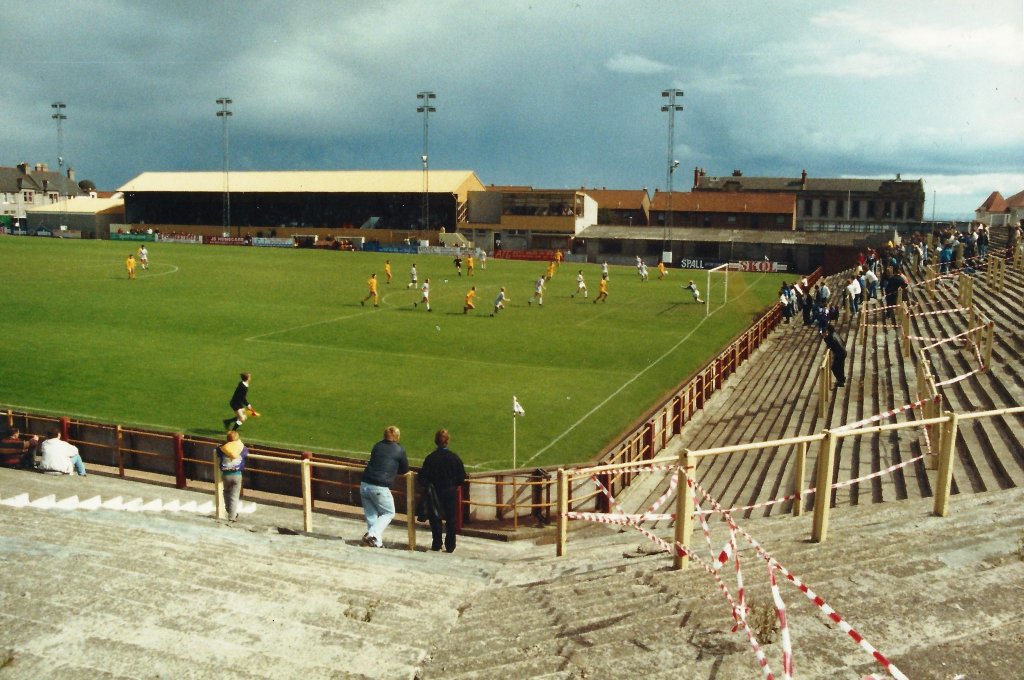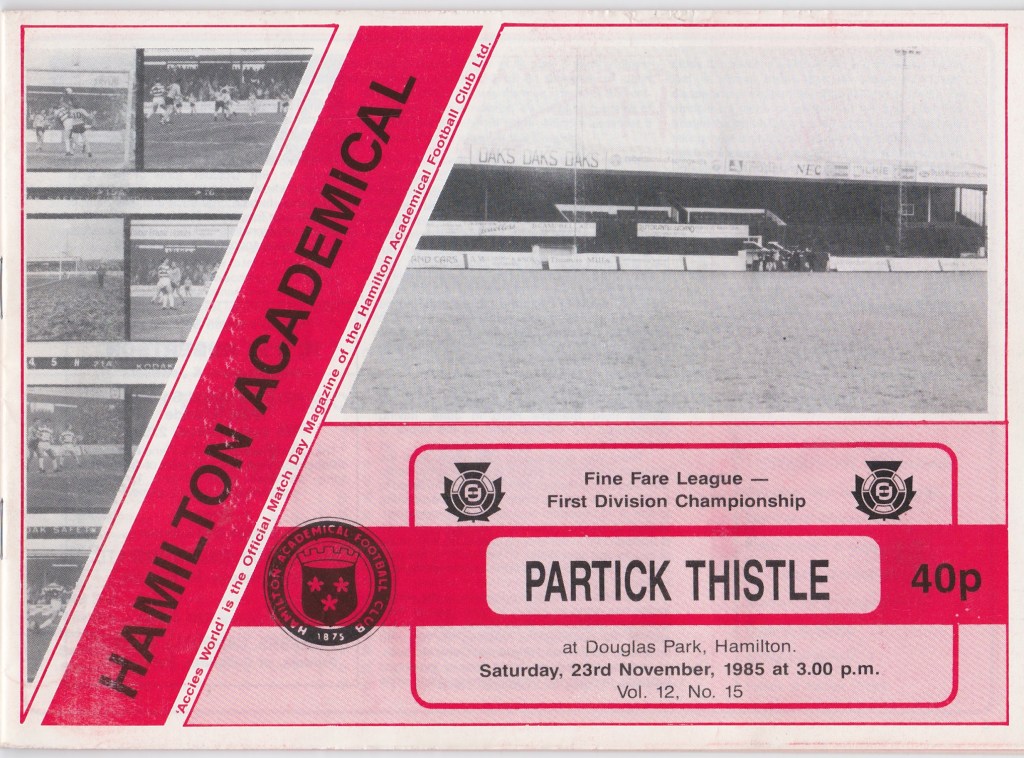
The Lanarkshire Cup was a competition played in the post war era by Lanarkshire’s four senior football clubs – Airdrieonians , Albion Rovers , Hamilton Accies and Motherwell.
The tournament was a damp squib in the mid to late 1970s with games sporadically played and in many cases no final being played.
It was decided in 1979 to make the tournament a two day event pre season in August at one venue with each club hosting in rotation.
This was quite successful with each team playing two games in two days as a curtain raiser for the season and fans seeing two games each day. The exception being 1983.
This is a look at these two day tournaments.
1979 – Fir Park Motherwell (4th /5th August)
The fist semi final was fairly tame with First Division Hamilton Accies defeating Albion Rovers 2-0
The second semi final saw Motherwell who had been relegated from the Premier League play fellow First Division side Airdrieonians, in an incredible game saw Motherwell score first before Airdrie romped into a 4-1 lead. Motherwell fought back but Airdrie held out to win 4-3.
Airdrie opened the final with 2 early goals and looked to have the game won when they made it 3-0 before Accies staged a late comeback but the Broomfield side held out to win the cup 3-2.
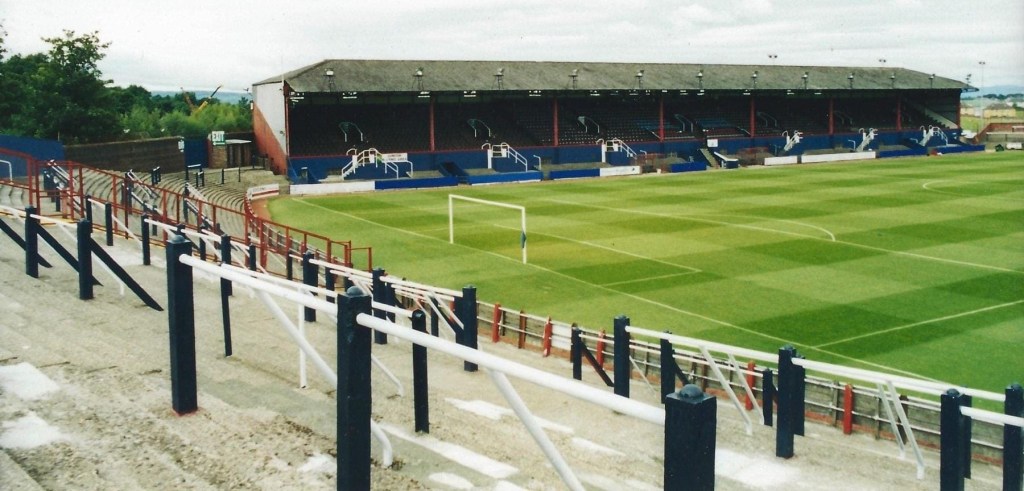
1980 – Douglas Park , Hamilton (2nd / 3rd August)
Airdrieonians now in the Premier League beat Hamilton Accies in the first semi final 2-0 before Motherwell comfortably saw off Albion Rovers 4-1.
Hamilton Accies John Denney scored 4 goals as they beat Albion Rovers 5-2 to claim third spot.
Motherwell scored a spectacular opening goal in the final before Sandy Clark’s equaliser looked to have sent the game to extra time. Ian Clinging however won the cup for Motherwell 2-1 late in the 90mins.
1981 – Broomfield Park , Airdrie (1st/2nd August)
Second Division Albion Rovers came from a goal down to shock Hamilton Accies in the first semi final and reach the Final for the first time in the new format.
Airdrieonians and Motherwell failed to score during the 120mins of the second semi final and it was Motherwell keeper Hugh Sproat who was the penalty shoot out hero as Motherwell won 5-4 on pens.
Hamilton Accies finished third with a 4-2 win over the hosts Airdrieonians as the shocks continued.
The major shock however was reserved for the final where after a 1-1 draw Albion Rovers beat Motherwell 3-2 on pens.
Second Division Albion Rovers were the cup winners while Premier Division Airdrieonians finished 4th.
Airdrieonians had been relegated to the First Division and Motherwell promoted as Champions to the Premier League.
Airdrieonians drew 1-1 with Hamilton Accies in the first semi final but Accies won the penalty shoot out 4-3.
It was a fairly easy task for Motherwell under new manager Jock Wallace to beat the hosts Albion Rovers 2-0.
The competition organisers dispensed with the 3rd/4th place play off so the Sunday saw Hamilton Accies play Motherwell. Accies took an early lead and fans could hear Jock Wallace tear into his players at half time.
Motherwell improved in the second half and equalised to take the game to extra time where their superior fitness proved decisive as they went on to win 5-1 after extra time
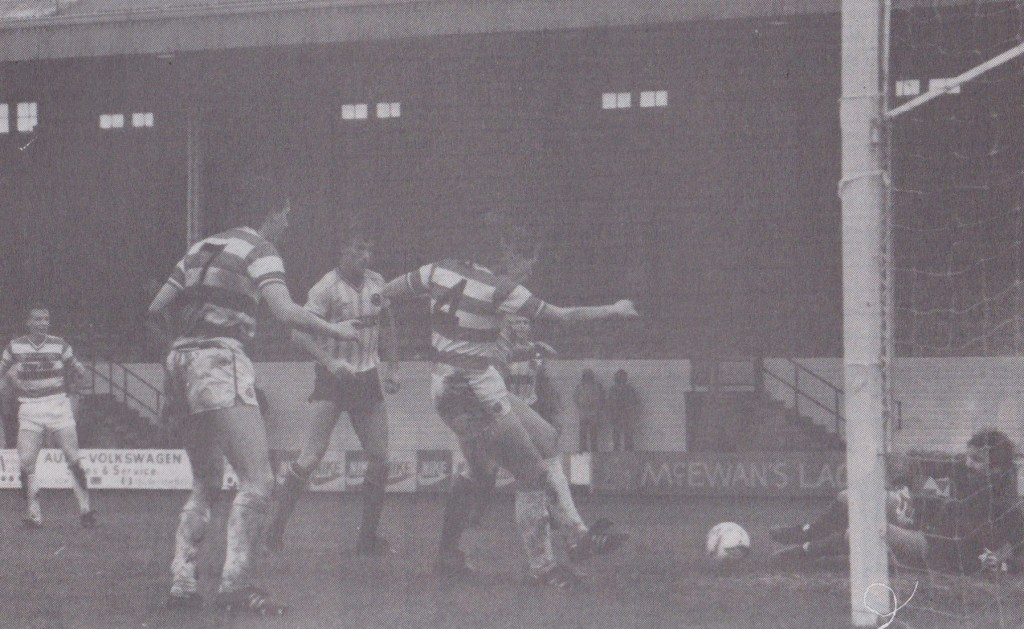
1983 – Games played at home grounds in May with Airdrieonians beating Hamilton Accies 4-3 on pens after a 3-3 draw at Broomfield
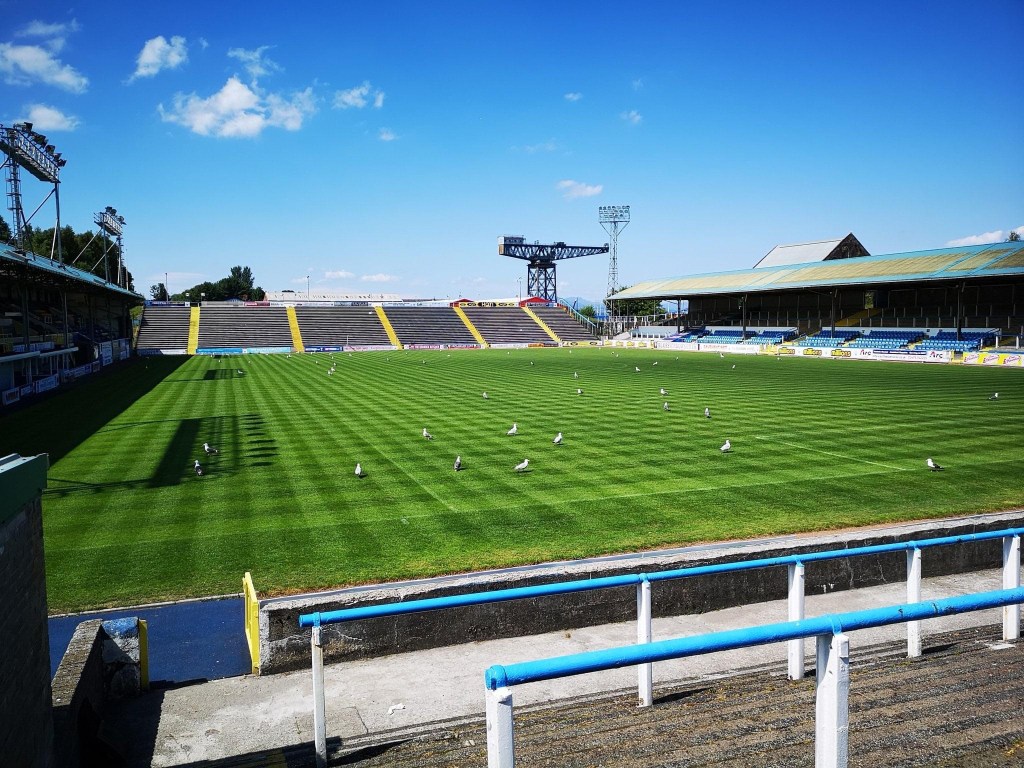
1984 – Fir Park , Motherwell (4th Aug / 7th Aug)
The 1984 version saw all games played at Fir Park but after the Saturday semi final double header, the Final was played the following Tuesday.
Airdrieonians came from 2-1 down to Hamilton Accies to win 3-2, before Motherwell who had been relegated from the Premier League beat Albion Rovers 2-1.
The hosts then returned to win the trophy on the Tuesday evening beating Airdrieonians 3-1.
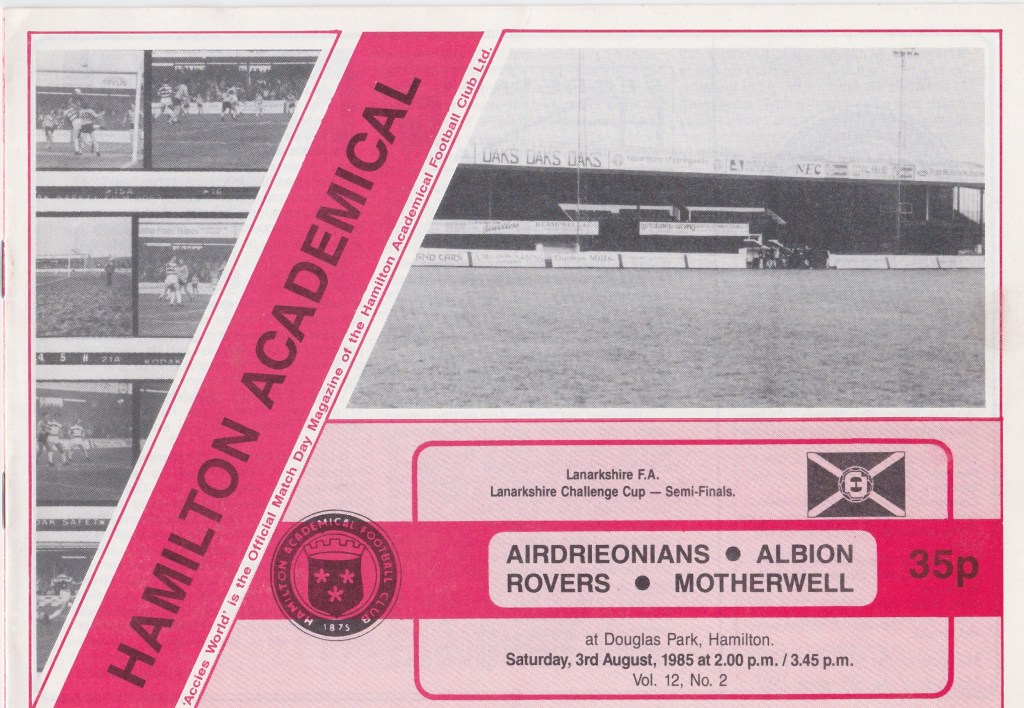
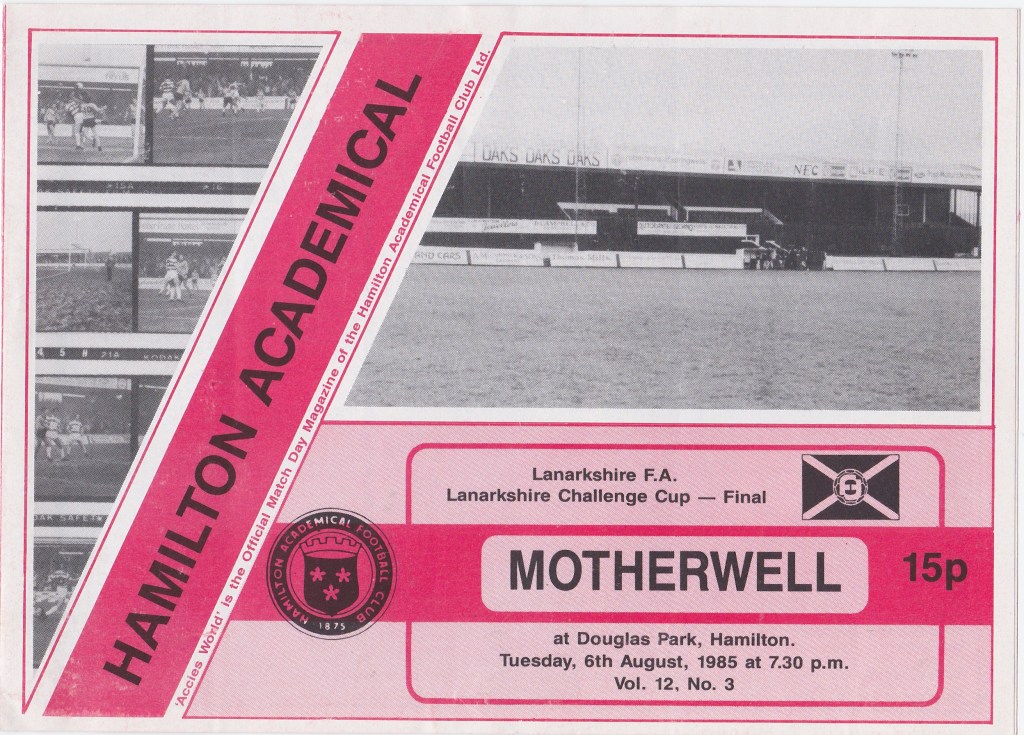
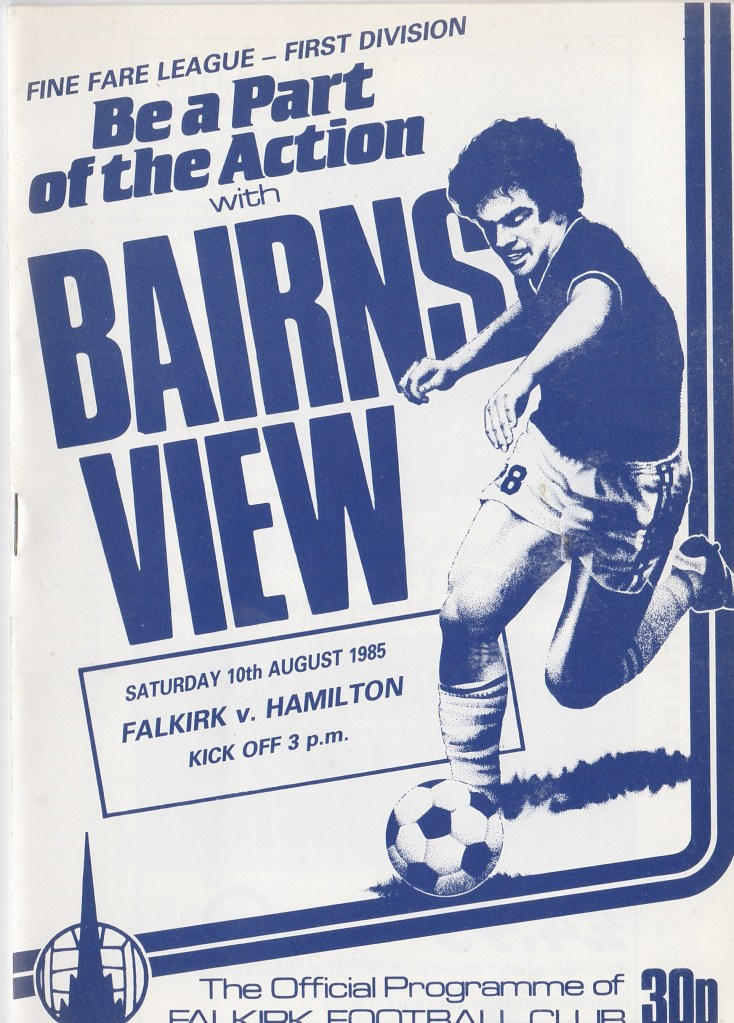
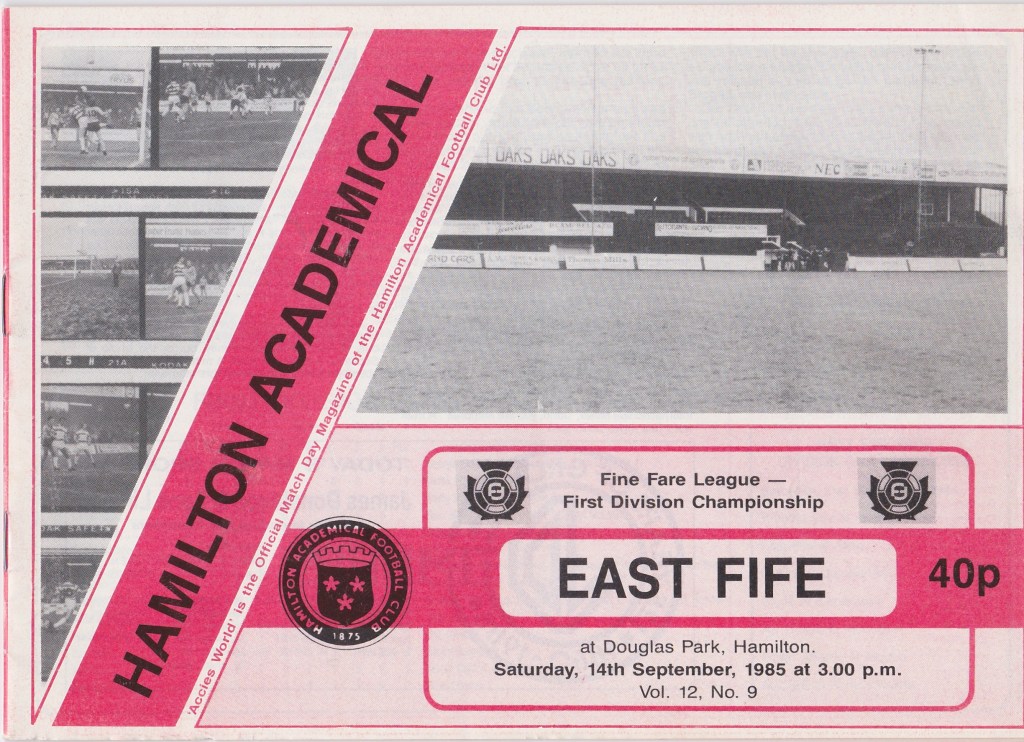
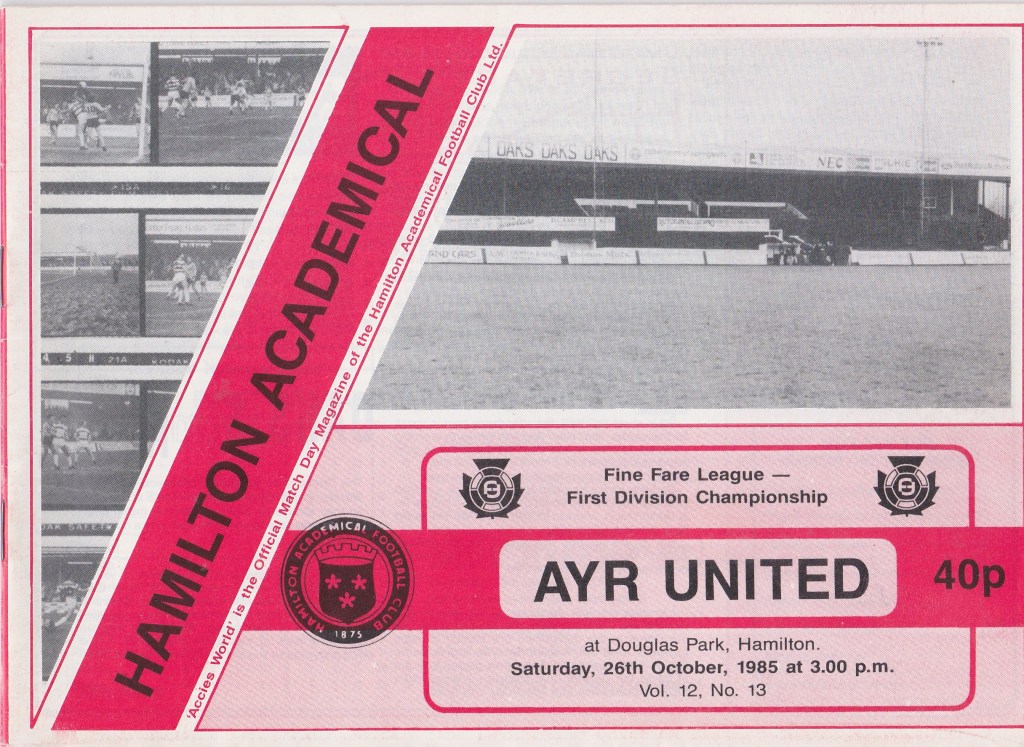
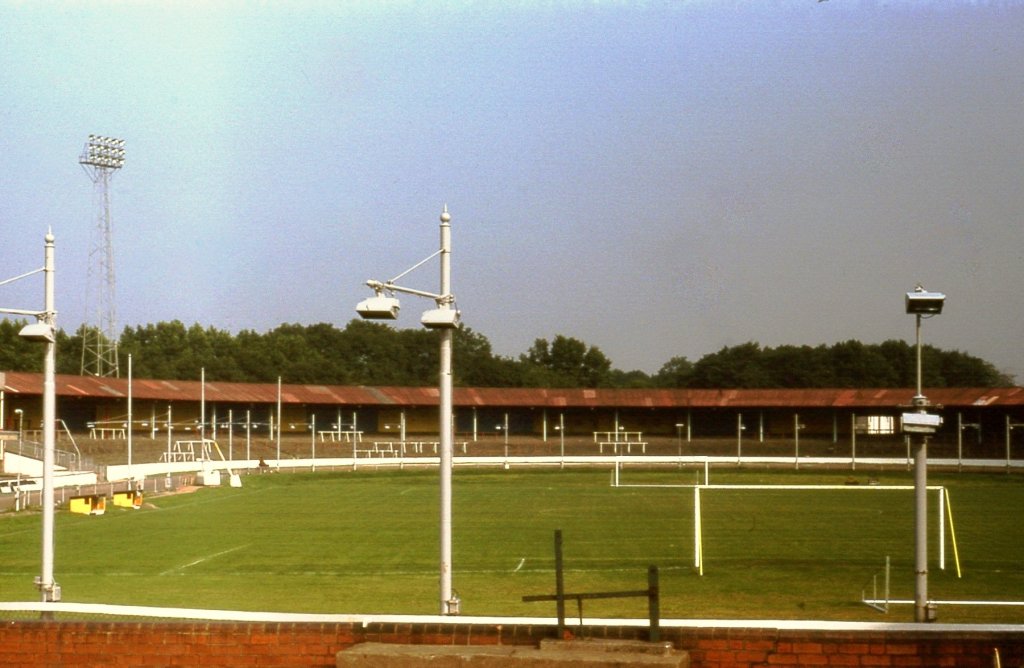
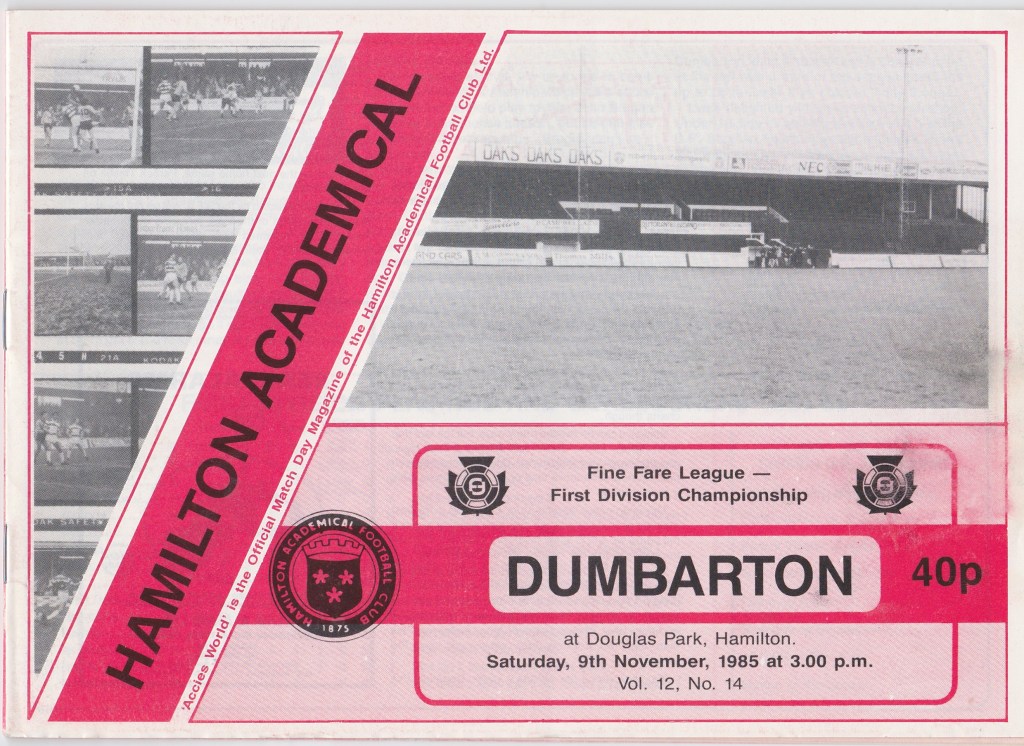
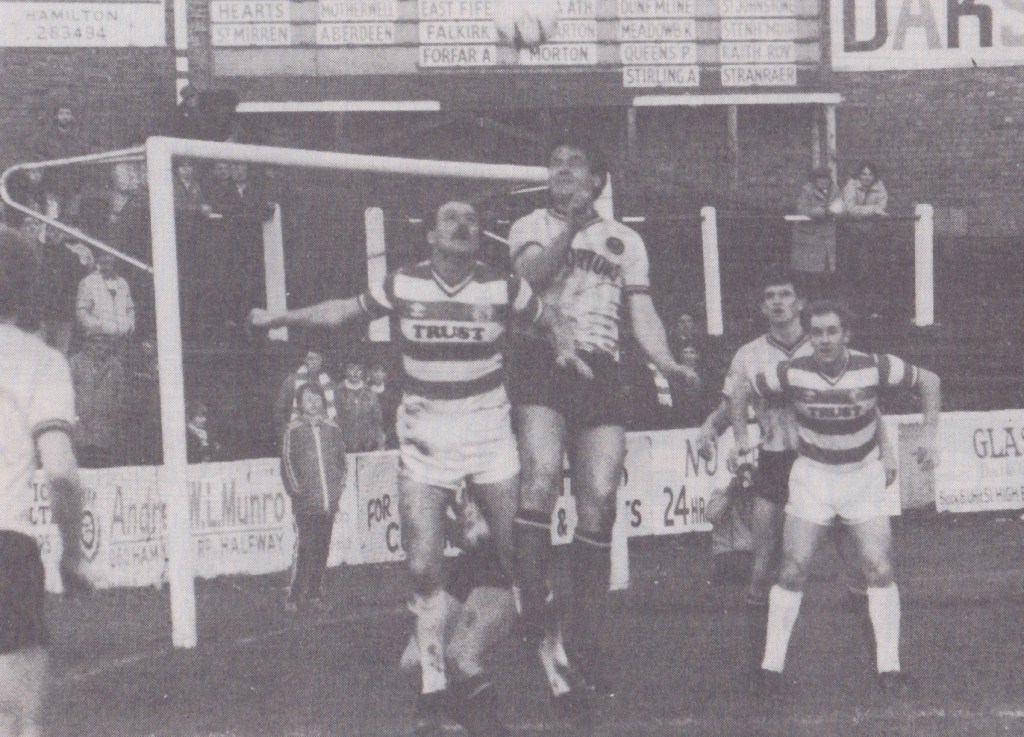
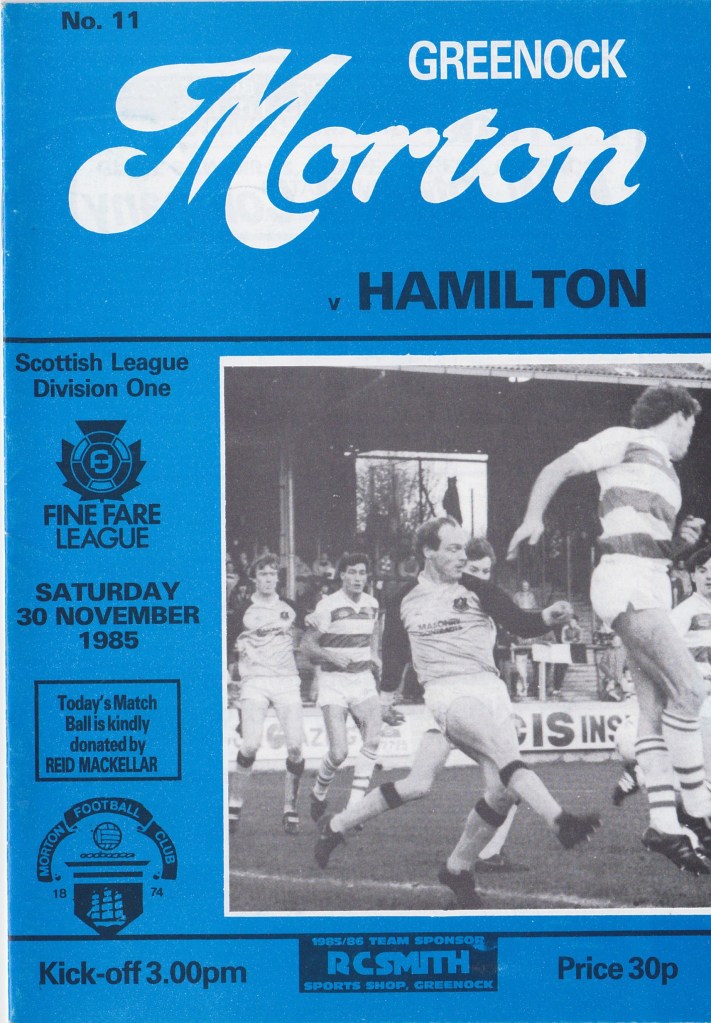
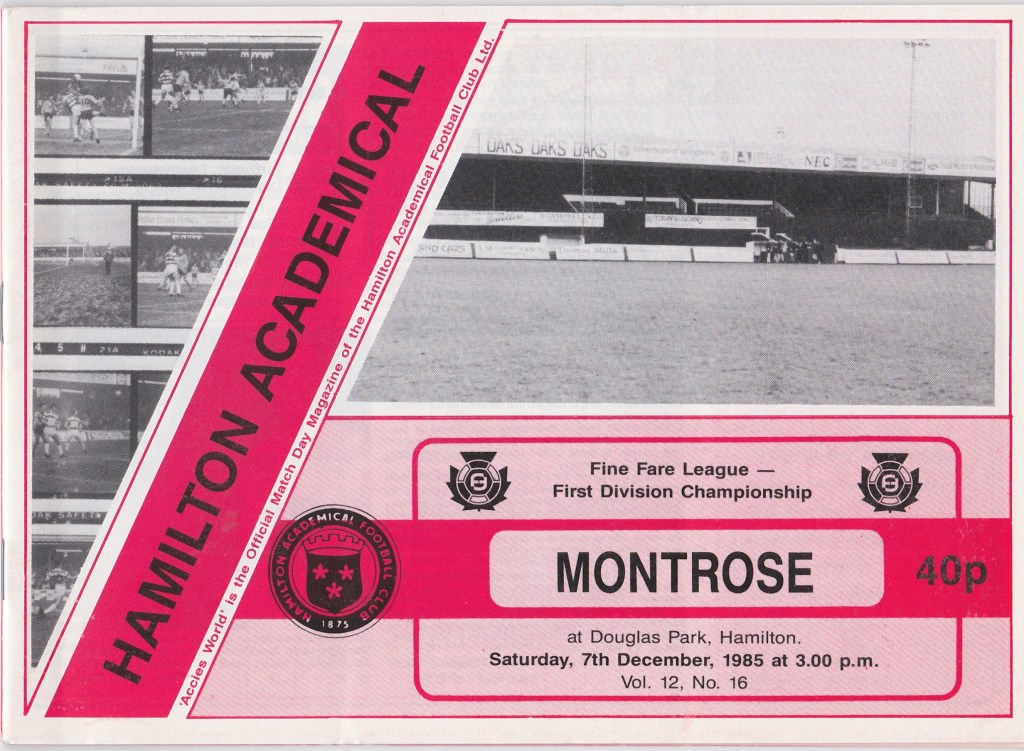
1985 – Douglas Park, Hamilton (3rd/6th August)
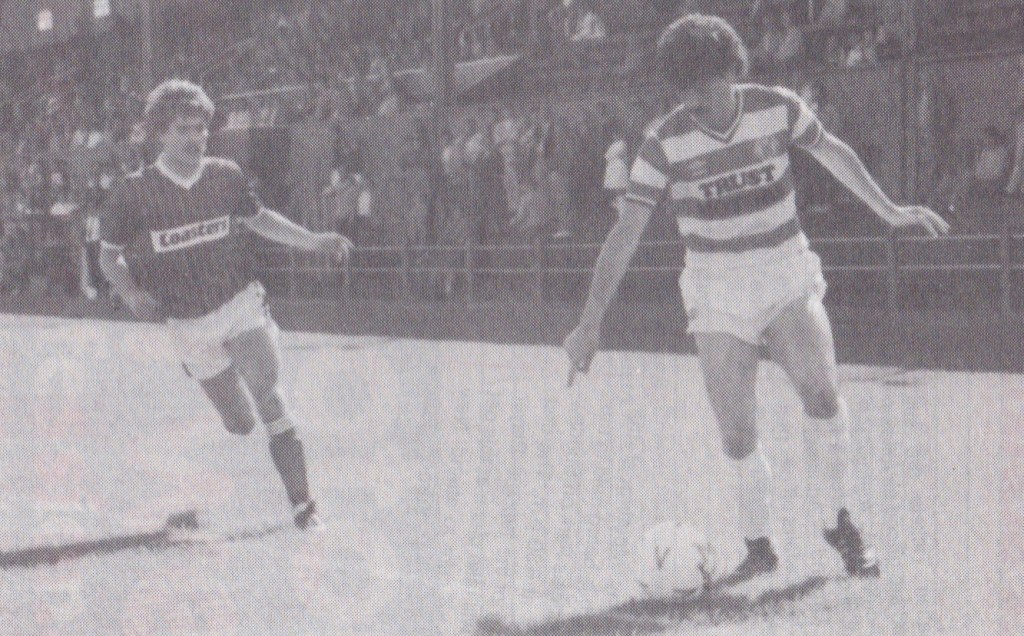
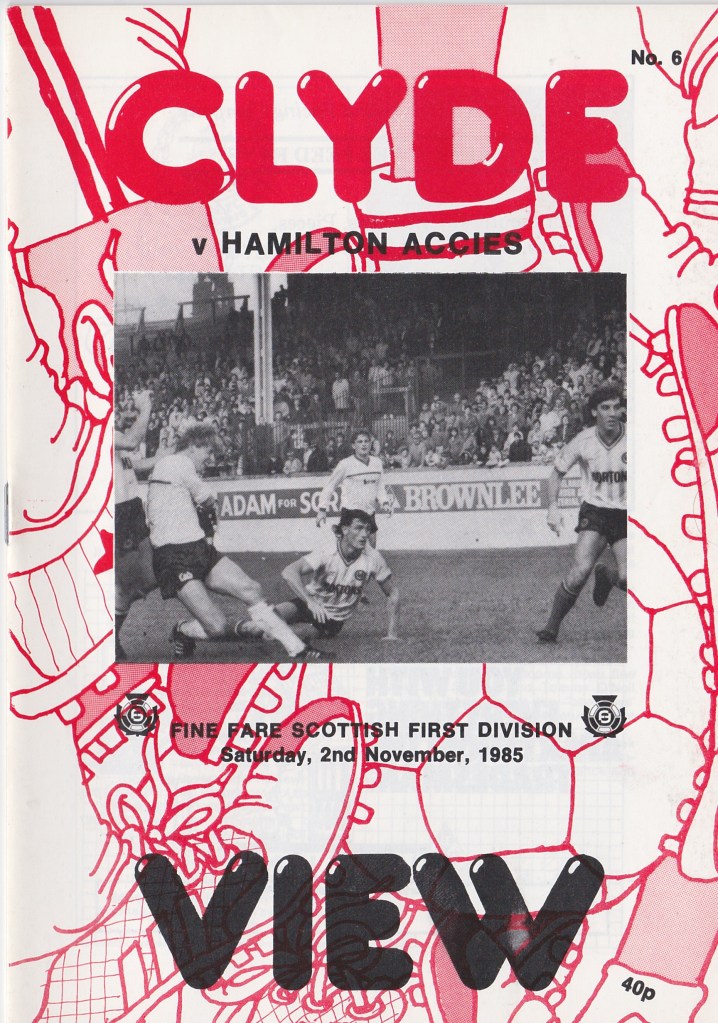
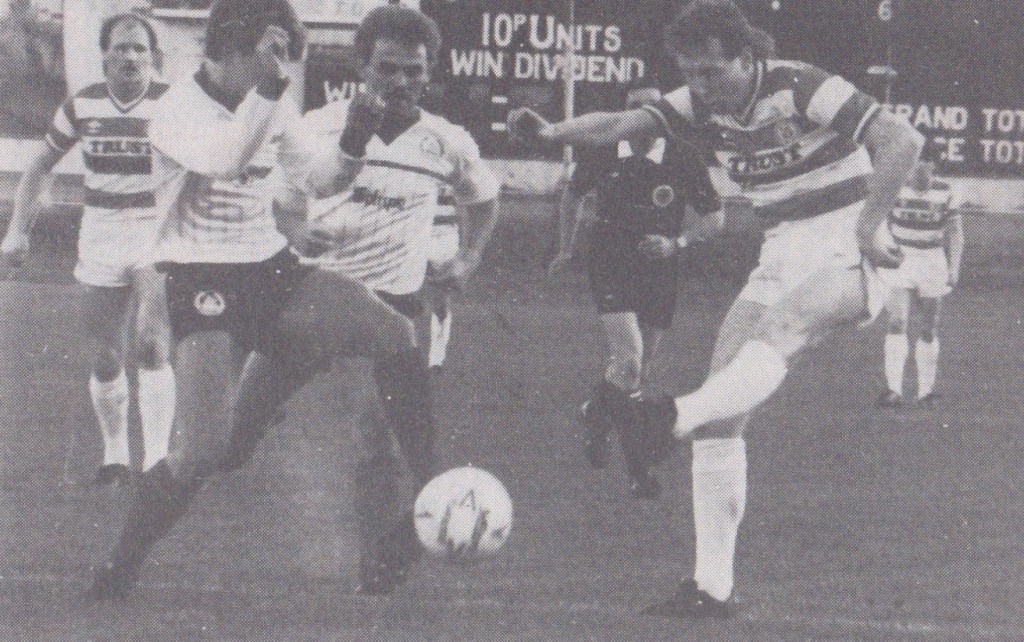
Airdrie opened the scoring after 17mins in the first semi final , but a Accies side who would go on to win the First Division came back to destroy their county neighbours 6-1.
It would take a 5-4 penalty shoot out triumph for Premier Division Motherwell to overcome Second Division Albion Rovers after a 1-1 draw.
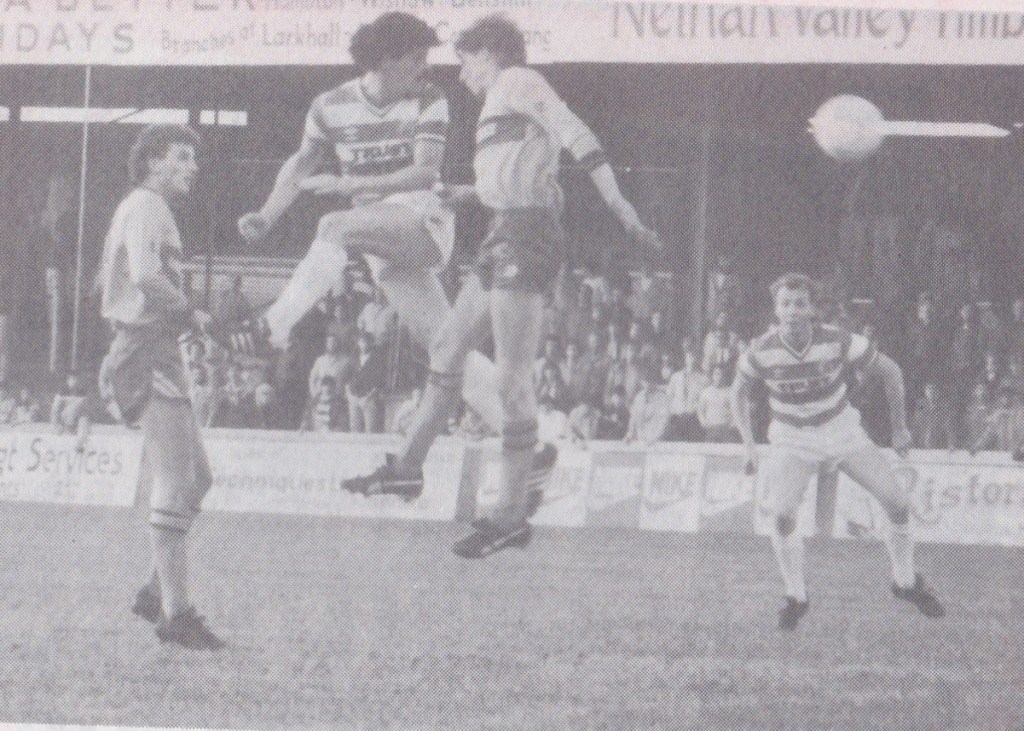
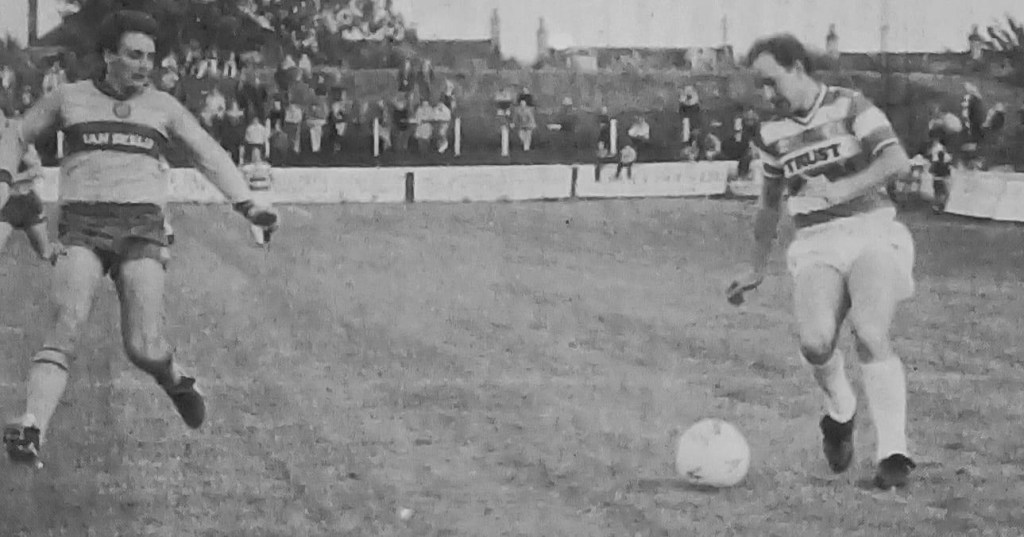
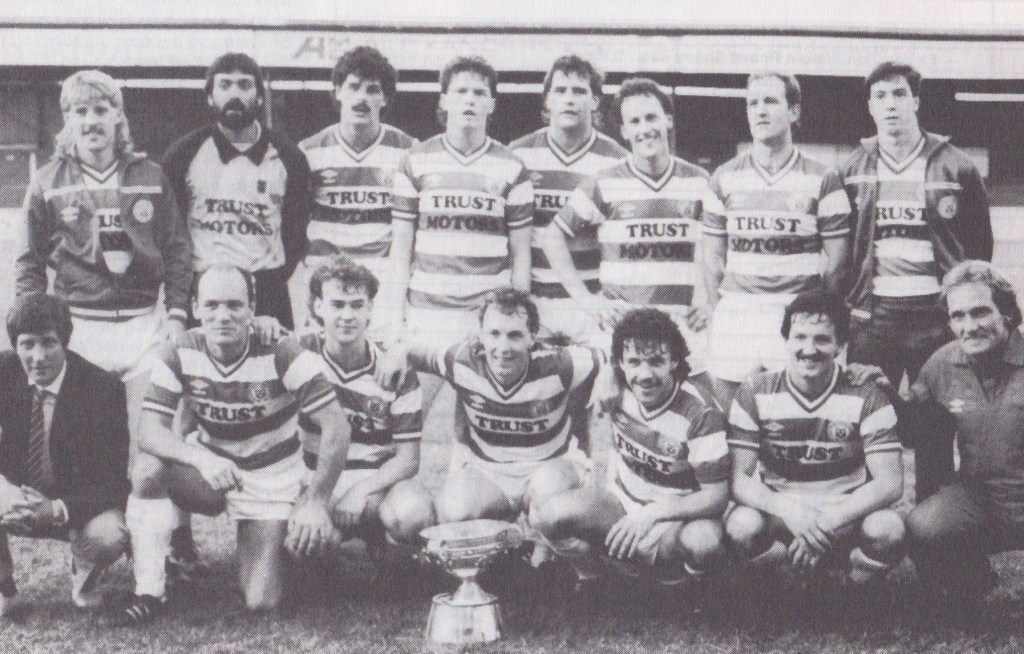
After a 51 year wait Hamilton Accies finally got their hands on the Lanarkshire Cup the following Tuesday with a 1-0 win over Motherwell, with Gerry Phillips scoring as Motherwell’s Gary McAllister and Ali Mauchlen departed for Leicester City after the game.
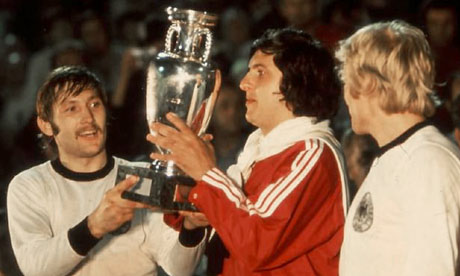
The recent award by UEFA to Slovakia as joint winners with Czech Republic following the Czechoslovakia triumph in 1976 had me reminiscing about a much forgotten football tournament particularly in the UK, where only the Final was shown on Live TV.
Euro 1976 was the last of the old style format with 32 countries divided into 8 groups of four with the 8 group winners playing two legged Quarter Finals before the final tournament only involved 4 countries and was played over 4 days in June 1976 in Yugoslavia.
In 1976 football used 2pts for a win
GROUP 1
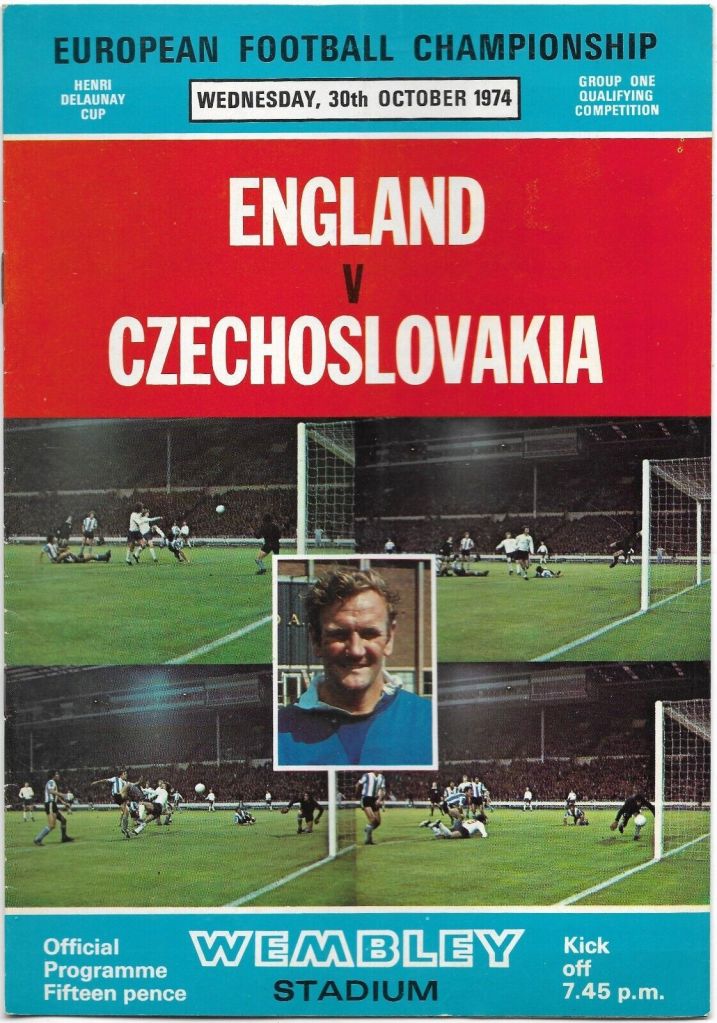
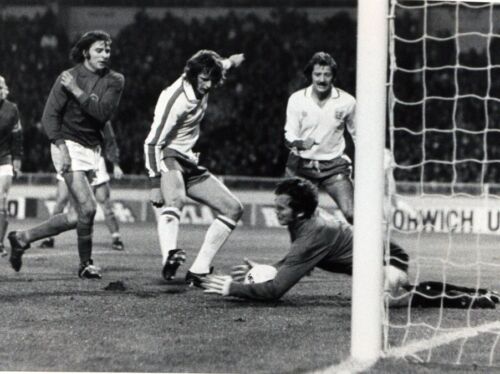
The group opened with England playing three home fixtures at Wembley , three goals in the last 20 minutes saw England beat Czechoslovakia 3-0
A damaging 0-0 home draw with Portugal followed.
Malcolm McDonald scored all 5 goals as Cyprus were defeated 5-0. The Czechs opened with a 4-0 win over Cyprus before a 5-0 win over Portugal meant a win over England would be enough to win the Group. The game was featured on an episode of The Likely Lads TV comedy with the game abandoned after 17 mins due to fog and replayed the following evening where despite Channon giving England the lead , Czechoslovakia would win 2-1 a result which effectively won them the Group.
WINNERS – CZECHOSLOVAKIA
GROUP 2
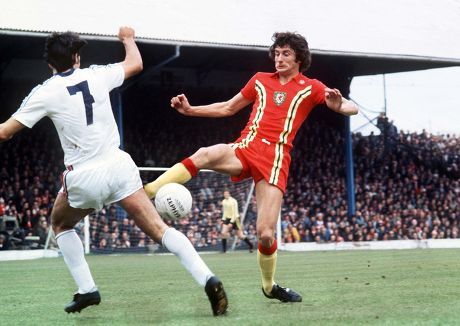
Austria beat Wales 2-1 in Vienna , but their 0-0 home draw with Hungary gave the Welsh the boost they needed and having beaten Hungary and Luxembourg home and away, it came down to the final game in Cardiff.
Wales beat Austria 1-0 with a 69th min goal by Arfon Griffiths in front of 27,578 in Wrexham , on one of the most famous nights in Welsh international football history as Wales won the Group.
Mandatory Credit: Photo by Colorsport/Shutterstock (3130286a)
Arfon Griffiths (Wales) left European Nations Cup 19/11/75 Wales v Austria 1975/76 Ninian Park Cardiff Euro76 Qual: Wales 1 Austria 0
Sport
WINNERS – WALES
GROUP 3
N Ireland opened the scoring early in Oslo but Norway came back to win 2-1 before Yugoslavia beat Norway 3-1 at home. N Ireland however started to make an impression in the group with a 2-0 away win in Sweden before beating Yugoslavia 1-0 in Belfast. Yugoslavia then beat Sweden 2-1 and Norway 3-1 both away.
N Ireland chances of qualifying were given a hammer blow when they lost 2-1 at home to Sweden despite opening the scoring.
Yugoslavia comfortably won the Group beating Sweden 3-0 and N Ireland 1-0.
WINNERS – YUGOSLAVIA
GROUP 4
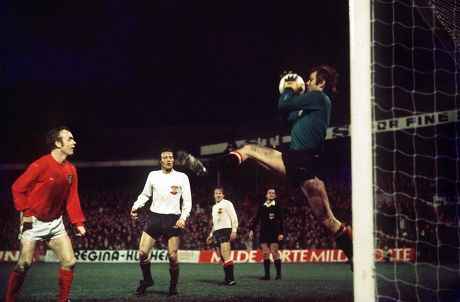
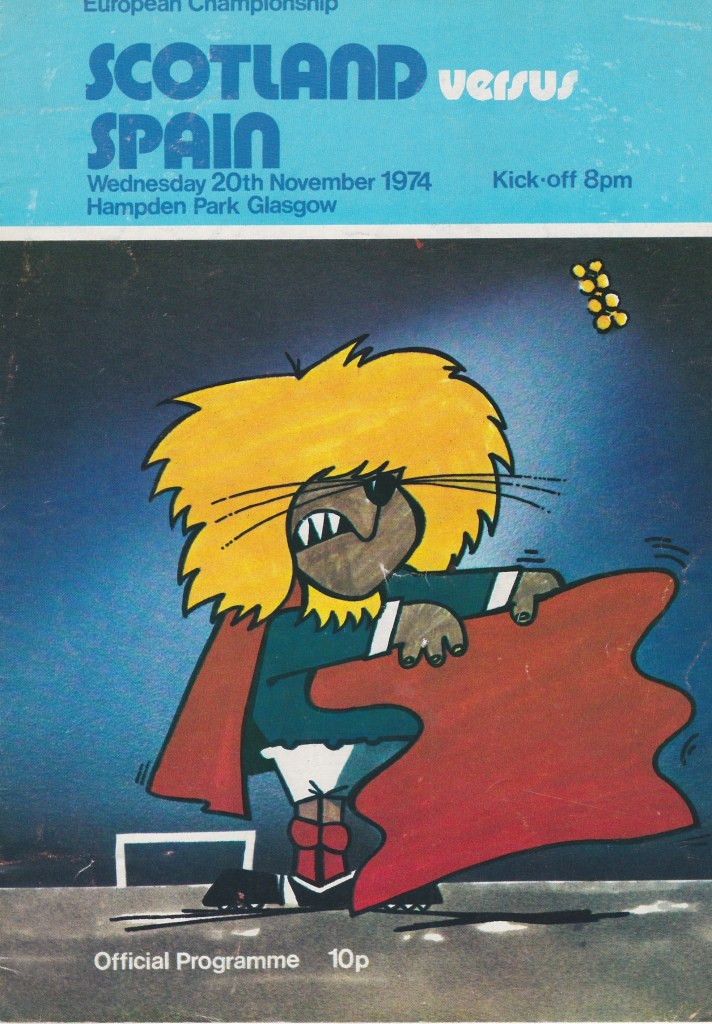
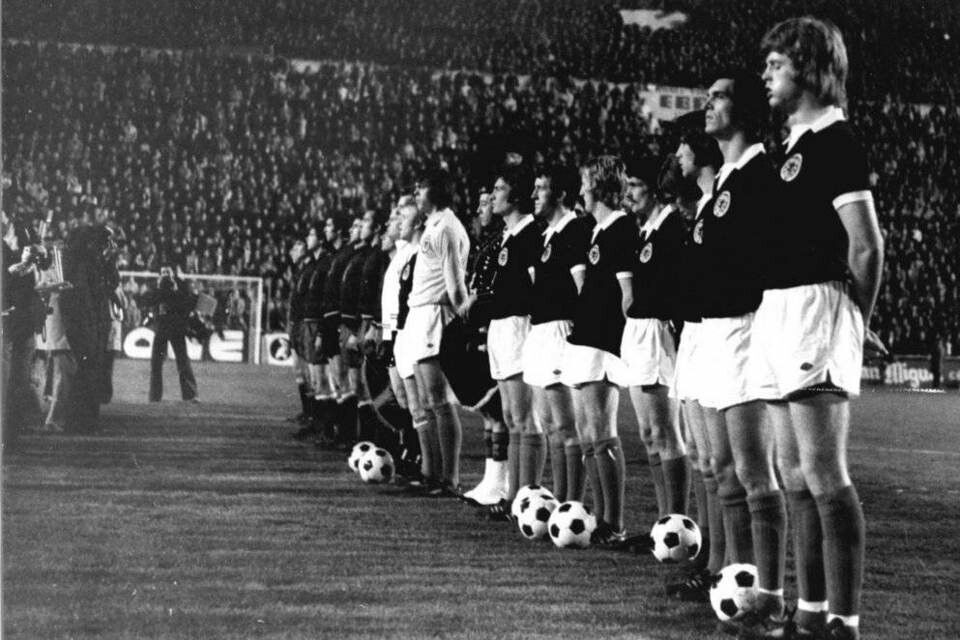
Spain opened with a 2-1 win in Denmark before they travelled to Hampden Park in Glasgow to face Scotland on 20th November 1974.
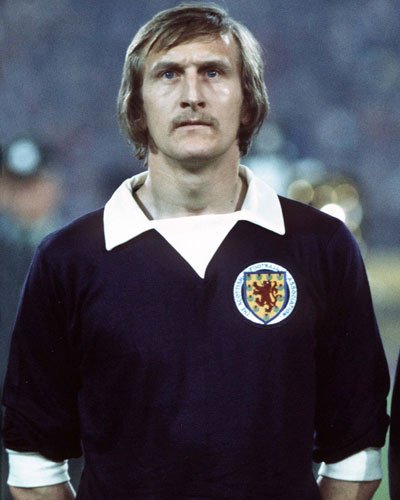
Scotland on the back of an impressive World Cup campaign in the summer were backed by a massive 94,331 crowd and took the lead through Billy Bremner. Spain however came back with two goals and a missed penalty by Scotland’s Tommy Hutchison was the decisive moment in the whole Group.
Tommy Hutchison
Scotland went to Valencia to play Spain and Joe Jordan’s first minute goal was eventually cancelled out as the Spanish secured a 1-1 draw.
Spain gave Scotland hope as they drew at home to Romania and in June 1975 a last minute equaliser by Gordon McQueen in Bucharest gave Scotland a further boost.
Scotland then closed to within two points of the Spanish when Joe Harper scored in a 1-0 win in Copenhagen against Denmark. The trip however was marred by a nightclub incident which saw 5 Scotland players banned for life by the SFA. Billy Bremner the Scotland captain had his international career ended on 54 caps , one short of Denis Law’s then record 55 caps, u-23 player Pat McCluskey , and the Aberdeen trio of Arthur Graham , Joe Harper and Willie Young. Arthur Graham and Joe Harper were later reprieved with Graham winning more caps and Harper going to World Cup 78 in Argentina winning one more cap.
Spain beat Denmark 2-0 to increase their lead to four points with a game to play in Romania , while Scotland had two games left both at Hampden.
On 29th October 1975 , my first Scotland game saw John Greig come out of International retirement to captain the team , with Billy Bremner banned and Scotland having suffered a humiliating 5-1 defeat in the summer by England at Wembley. The crowd of 48,021 saw Stuart Houston made his only Scotland appearance and his mistake led to part time Denmark take a shock lead at half time before an improved Scotland display saw three early second half goals , saw Scotland win 3-1 and put pressure on Spain in their final game.
Spain secured qualification with a 2-2 draw in Romania, before Scotland ended the campaign drawing 1-1 at home to Romania.
WINNERS – SPAIN
GROUP 5
Holland and Poland came into a tough group alongside Italy after impressive second and third place finishes behind host West Germany in the 1974 World Cup.
Poland began with wins in Finland and at home to the Finns. The Dutch also won in Finland before beating Italy 3-1 at home.
Poland then drew 0-0 in Rome against Italy, and after the Dutch completed their double over Finland they travelled to Poland.
Poland won 4-1 but the Dutch took revenge the following month winning 3-0 in Amsterdam in the pivotal match.
The Dutch claimed the group on goal difference from the Poles despite a 1-0 defeat in Rome against Italy.
WINNERS – HOLLAND
GROUP 6
Republic of Ireland had a sensational start to the group with a Don Givens hat trick in a 3-0 win over Soviet Union. The game marked the debut of a young Liam Brady.
The Irish however suffered a 1-1 draw in Turkey, which gave them three pts from their opening two matches but was seen as a dropped point.
Soviet Union beat Turkey 3-0 at home before Republic of Ireland beat Switzerland 2-1 at home and set up a massive match in Kiev.
Soviet Union would beat Republic 2-1 and deflate the Irish.
The Irish were the first to travel to Switzerland and a 1-0 defeat handed the Soviet Union a massive chance to qualify at the Irish expense. The Soviets won 1-0 in Switzerland and then clinched qualification with a 4-1 home win over the Swiss.
WINNERS – SOVIET UNION
GROUP 7
Belgium began with 2-0 away win in Iceland before Iceland took a shock point off East Germany with a 1-1 draw in Magdeburg. Belgium took control of the group beating France 2-1 at home before East Germany again drew this time 2-2 in France.
Belgium maintained their group lead with a 0-0 draw away to East Germany as the Germans drew their third game in a row.
Iceland drew 0-0 at home to France before beating the Germans 2-1.
Belgium virtually clinched the group beating Iceland 1-0 and could afford a 2-1 home defeat to East Germany before a final day 0-0 draw in Paris won the Group
WINNERS – BELGIUM
GROUP 8
West Germany on the back of their World Cup win surprisingly struggled despite their group rivals Bulgaria and Greece drawing 3-3 in the first match.
West Germany had to rely on equalising twice in Greece to get a 2-2 draw before winning 1-0 in Malta.
Greece having beaten Bulgaria 2-1 then lost 2-0 in Malta.
West Germany’s 1-1 draw in Bulgaria saw both teams convert from the penalty spot.
Greece 4-0 and Bulgaria 5-0 beat Malta at home.
West Germany took control of the group as they drew 1-1 at home to Greece and then beat Bulgaria 1-0, to end all doubt before hammering Malta 8-0 at home in the final match.
WINNERS – WEST GERMANY
QUARTER FINALS
Yugoslavia v Wales
Yugoslavia took the lead in the first minute through Vugotic in Zagreb and when Popivoda added a second after 55mins it gave them a 2-0 lead to take to Cardiff.
The second leg at Ninian Park Cardiff is infamous in Welsh football history as 30,346 packed the ground.
Yugoslavia took the lead through a controversial Katalinski penalty awarded by the East German referee, before Wales equalised on the day through Ian Evans. Terry Yorath missed a penalty and John Toshack had two goals controversially disallowed. the match ended with the referee pelted by bottles and coins , and a policeman speared by a corner flag. The match was dubbed the Battle of Ninian Park and resulted in Wales being banned for two years from playing within 100 miles of Cardiff. This led Wales to play their 1978 World Cup qualifier against Scotland at Anfiled , Liverpool.
YUGOSLAVIA 3 WALES 1
Czechoslovakia v Soviet Union
The first leg in Bratislava was played in wet conditions with the Czechs scoring a goal in each half to secure a 2-0 lead going to Kiev. Moder’s first half goal was added to by a Paneka free kick.
Czechs took the lead just before half time with a Moder free kick before a Soviet equaliser from Buryak early in the second half brought the game level. The Czech response was a breakaway which saw Moder effectively end the tie before Blockin’s late chipped goal levelled the second leg at 2-2.
CZECHOSLOVAKIA 4 SOVIET UNION 2
Spain v West Germany
Spain opened the scoring in Madrid through Santillana midway through the first half, but Beer’s equaliser for the Germans on the hour mark mean the game was level going into the second leg in Munich.
Uli Hoeness gave the Germans after 17 mins and when Toppmoller added second before half time , this assured the German victory.
West Germany 3 Spain 1
HOLLAND V BELGIUM
In a very one sided contest in Rotterdam an early goal Rijsbergen was added to by Rensenbrink before half-time gave the Dutch a comfortable lead. Rensenbrink would go on to complete his hat trick with Cruyff scoring a penalty as Holland won the first leg 5-0 and virtually book their passage to the finals.
The second leg in Brussels saw Van Gool open the scoring for the Belgians before Rep and Cruyff gave Holland a 2-1 win.
Holland 7 Belgium 1
THE FINALS 16-20 JUNE 1976
SEMI FINALS
CZECHOSLOVAKIA V HOLLAND – 16th June 1976 – Zagreb
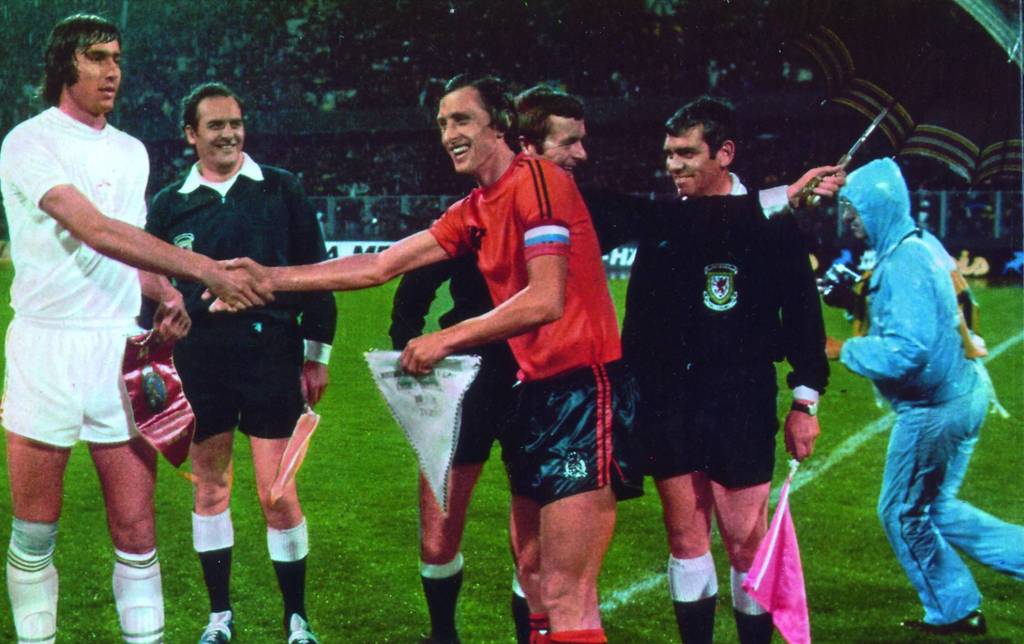
The match was played in a downpour and the Czech’s took a 19th min lead through Ondrus header from a Paneka free kick. Pollak was booked for encroachment at Dutch free kicks and a foul on Neeskens saw him sent off. Ondrus then sliced into his own net to level the scores before a red card for Neeskens saw both sides down to ten men going into extra time. Nehoda put the Czechs ahead in extra time. The Dutch were reduced to nine men with Van Hanegem sent off for dissent by Welsh referee Clive Thomas. Czechoslovakia secured their place in the final when Vesely scored late on.
Czechoslovakia 3 Holland 1 – after extra time
WEST GERMANY V YUGOSLAVIA – 17th June 1976 – Belgrade
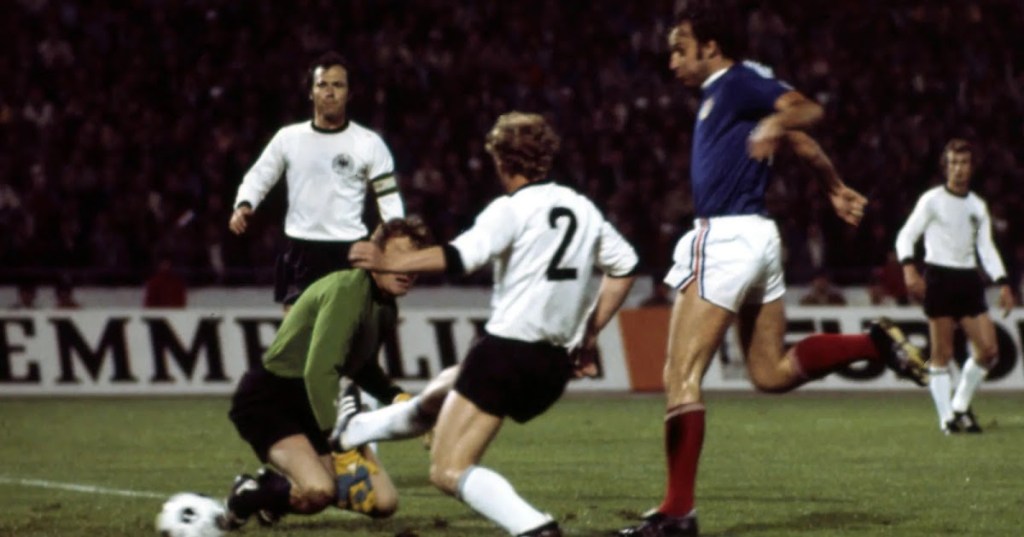
The hosts Yugoslavia opened strongly against the World Champions and took a deserved lead through Popivoda after 19mins, before Dzajic doubled their lead before half time when Maier failed to hold a cross.
Flohe’s shot was deflected into the Yugoslav net by Wimmer halfway through the second half before in 79th min , West Germany equalised through Dieter Muller on his debut. He came on as substitute and scored with his first touch, heading home Bonhof’s cross. Muller would go on to score a hat trick on the night with two goals in extra time.
West Germany 4 Yugoslavia 2 – after extra time
EURO 1976 FINAL – 20th June 1976 – Belgrade
CZECHOSLOVAKIA V WEST GERMANY
Svehik opened the scoring after 8mins for the Czech’s after Hehoda’s cross was missed by Ondrus. Masny’s free kick was cleared by Beckenbauer to Dobias who half volleyed past Maier to give the Czech’s a 2-0 lead after 25 mins.
Dieter Muller pulled a goal back a few minutes later to reduce the lead to 2-1.
Czechoslovakia held on during the second half but suffered heartbreak when Holzenbein headed a equaliser in 89th minute.
The match ended in a penalty shoot out for the first time to settle a major football tournament and after both teams scored each kick up to 4-3 , the German Uli Hoeness would miss setting up Paneka to chip the ball into the net as Sepp Maier dived and create his own piece of football history.
West Germany 2 Czechoslovakia 2 – after extra time
Czechoslovakia won 5-3 on penalties
The team of the Tournament was –
GK: Ivo Viktor (Czechoslovakia) DF: Anton Ondruš (Czechoslovakia) DF: Ján Pivarník (Czechoslovakia) DF: Ruud Krol (Netherlands) DF: Franz Beckenbauer (West Germany) MF: Antonín Panenka (Czechoslovakia) MF: Jaroslav Pollák (Czechoslovakia) MF: Rainer Bonhof (West Germany) MF: Dragan Džajić (Yugoslavia) FW: Zdeněk Nehoda (Czechoslovakia) FW: Dieter Müller (West Germany)
In the days before TV schedules dictated football and penalty shoot outs became common place in English cup ties, games were replayed until a team won.
I remember three of these cup marathons which I loved – listening to radio commentaries on BBC between 1977 and 1980.
English League Cup
The English League Cup began in 1961 with Aston Villa the first winners beating Rotherham over two legs. In 1967 the format of the final was changed to a one final at Wembley.
Ron Saunders had led Norwich City to the final in 1973 losing 1-0 to Tottenham , before leading Manchester City to the final in 1974 losing 2-1 to Wolves.
Saunders led out a team for the third consecutive season, this time lifting the trophy in 1975 as manager of Aston Villa s they beat Norwich 1-0 with a Ray Graydon penalty. This is the only time a major final has been contested by teams outside the top flight with both clubs in the Second Division at the time. Aston Villa would gain promotion at the end of the season as runner up to Manchester United.
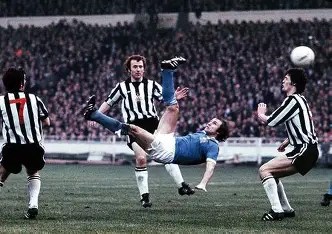
The 1976 final Newcastle managed by Gordon Lee lost 2-1 to Manchester City where Dennis Tueart scored one of Wembley’s most famous goals with a spectacular overhead kick from a Peter Barnes cross.
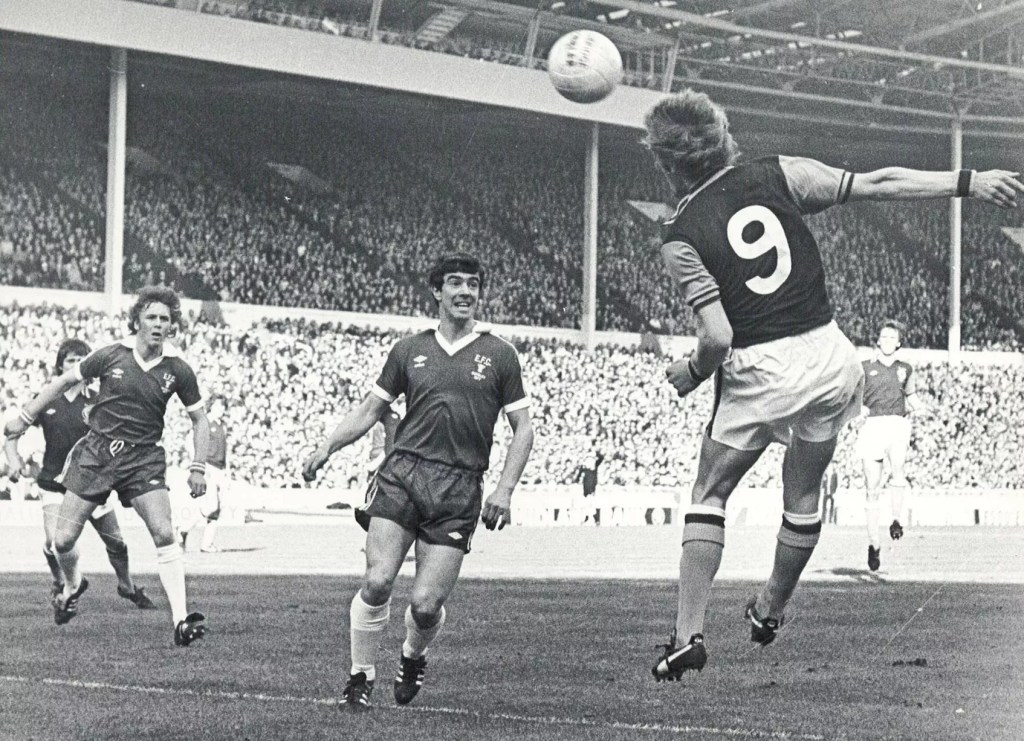
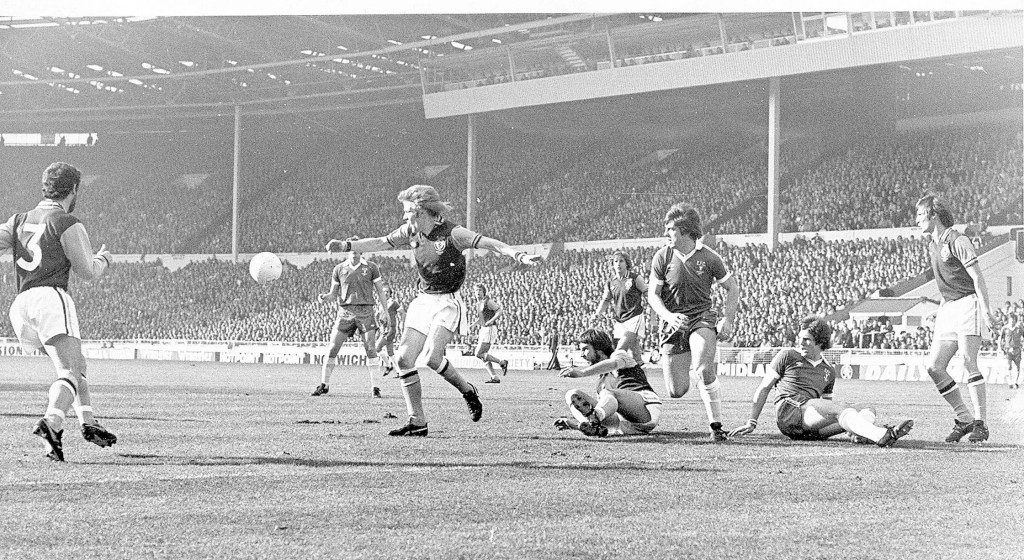
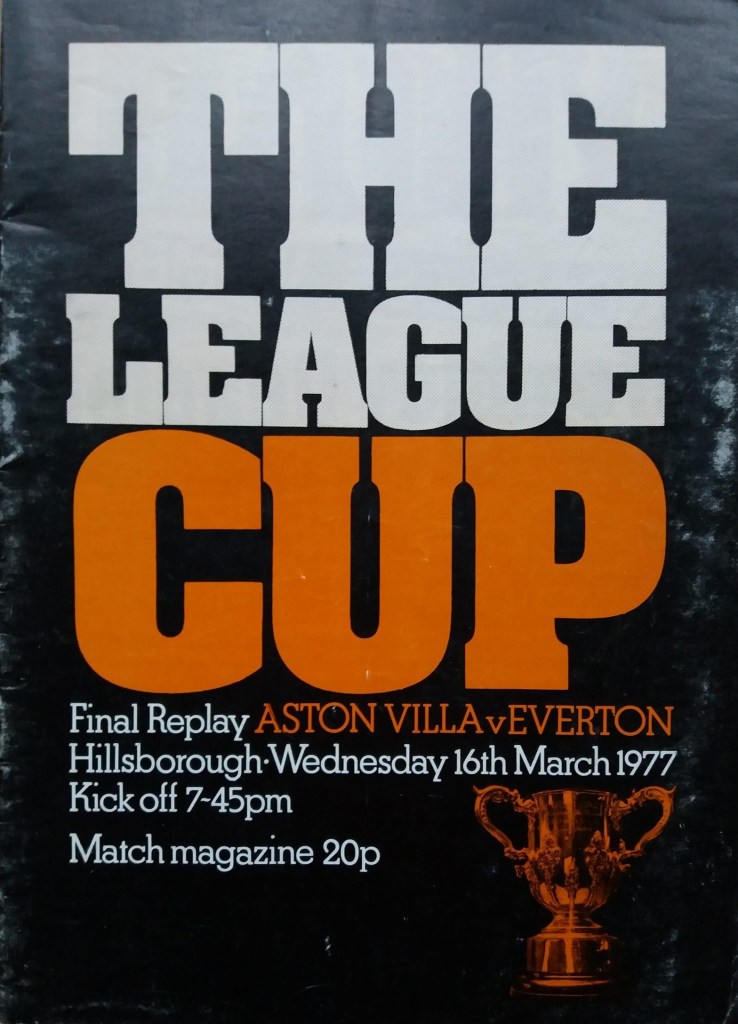
Aston Villa v Everton 1977 League Cup Final
Everton had sacked manager Billy Bingham in December 1976 replacing him with Gordon Lee. Aston Villa remained under the leadership of Ron Saunders.
There had not been a drawn League Cup Final although a replay date and venue had been set in advance.
The final took place on a hot sunny day at Wembley Stadium in front of a capacity 96,223 crowd on 12th March 1977 and failed to produce a goal in a very tame match. Many fans missed the kick off due to the congestion as both sets of fans travelled to London on the M6 motorway. It was a poor game with the Football League’s decision not to play extra time frustrating many fans.
The First Replay took place at Hillsborough Stadium Sheffield on 16th March as 54.840 spectators, this time on a quagmire of a pitch
Everton’s Roger Kenyon score an own goal after 79mins and the cup seemed destined for Villa Park. Everton though had their striker Bob Latchford to thank for sending the match into extra time when he equalised in the 88th minute. This led to extra time which produced no further scoring and set up a second replay.
The Football League had not planned for a second replay and with both clubs involved in the FA cup and a league fixture backlog, it was four weeks before the Second Replay was played with a penalty shoot out to decide the winner if the teams were still level at the end of extra time.
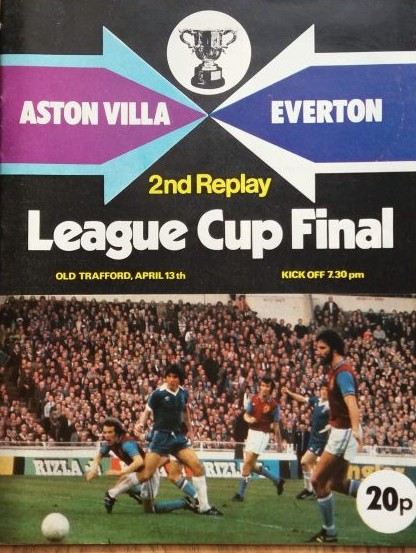
The Second Replay took place at Old Trafford , Manchester on 13th April 1977, with the crowd recorded as 54,749.
Villa were without the injured Andy Gray and Frank Carrodus through injury.
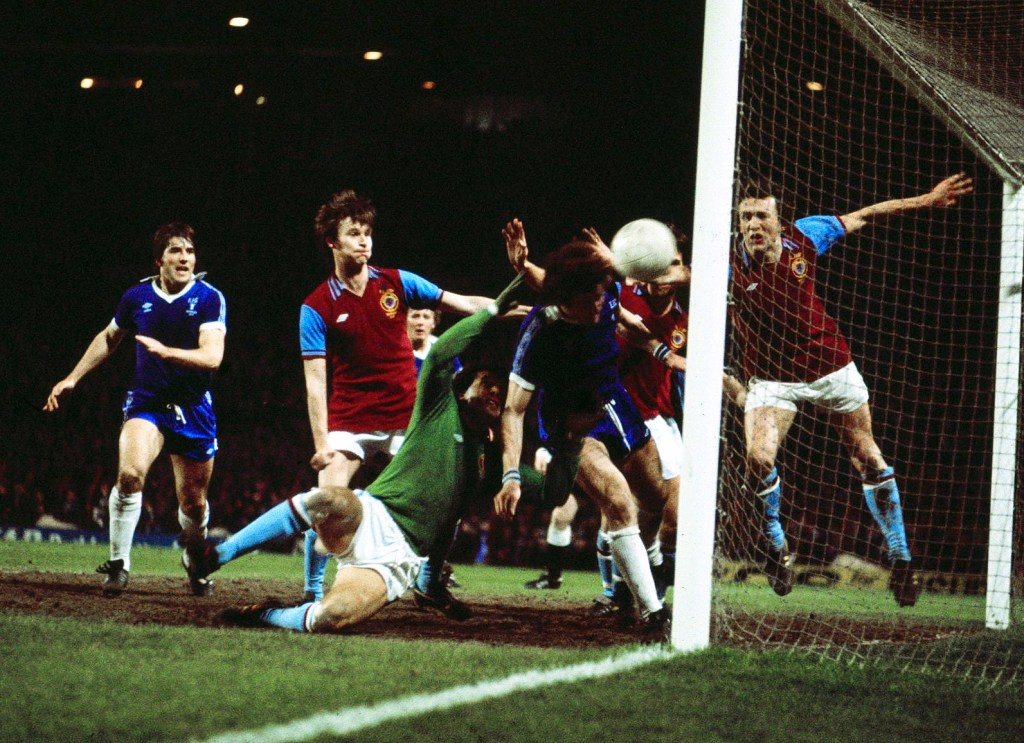
Bob Latchford gave Everton the half time lead before Aston Villa came storming back in the second half with a goal from Chris Nicholl to equalise on 80 minutes, Brian Little scored a minute later for Aston Villa but their fans joy was short lived as Mick Lyons soon levelled for Everton and again the match went into extra time.
Brian Little scored his second goal of the evening with two minutes left in extra time and Villa held on to lift the League Cup 3-2 after extra time.
FA CUP 1978 /1979
Sheffield Wednesday v Arsenal
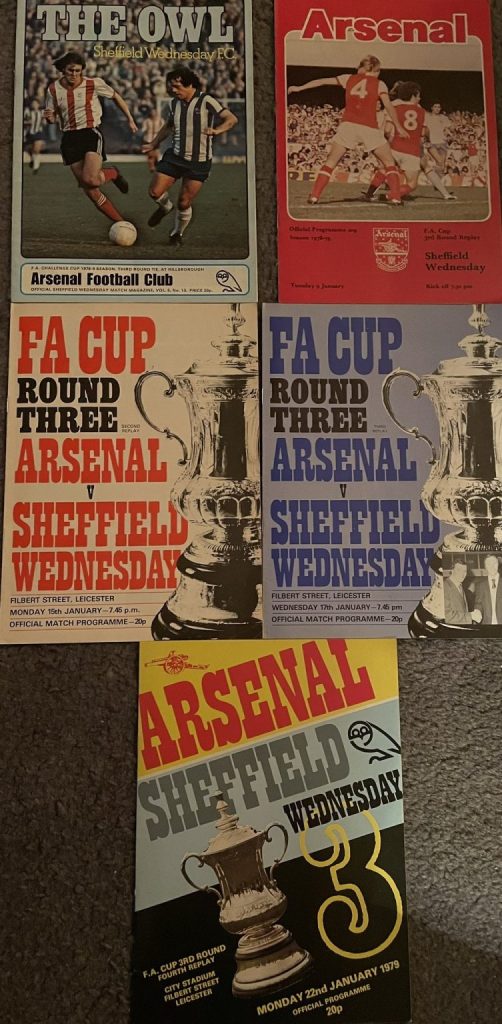
Third Round – 6th January 1979
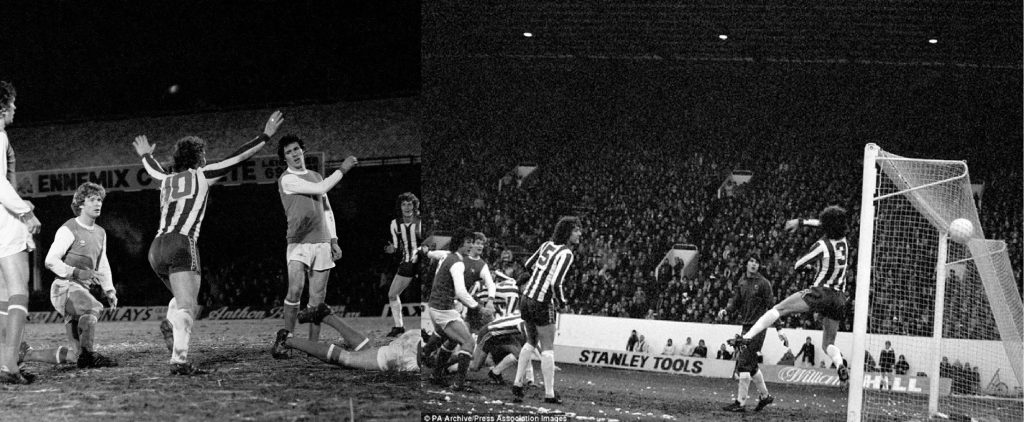
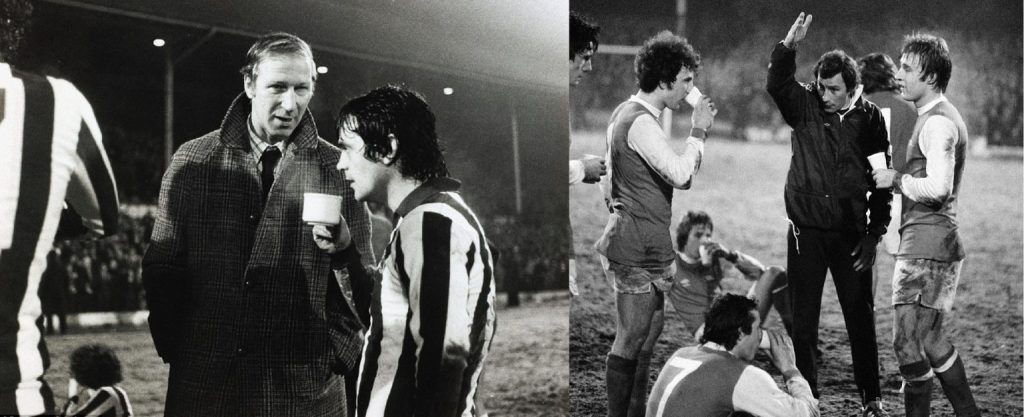
Arsenal had lost the 1978 FA Cup Final 1-0 to Ipswich and were drawn in the Third Round of the 1979 FA Cup away to Third Division Sheffield Wednesday managed by Jack Charlton.
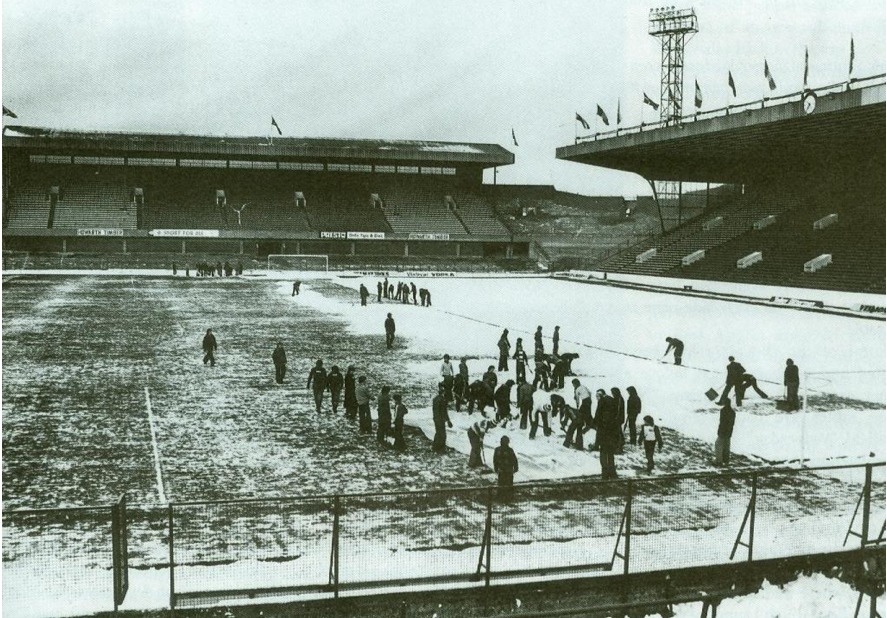
Arsenal were unhappy about the snowbound Hillsborough pitch as they arrived on 6th January 1979.
Sheffield Wednesday were captained by Ian Porterfield who had famously scored the winner in Sunderland’s shock 1973 FA Cup 1-0 win over Leeds Utd. There were 33,635 in attendance to see Alan Sunderland open the scoring for Arsenal, heading home Pat Rice’s right wing free kick after 9 minute.
Jeff Johnson headed home a cross from the left in the first minute of the second half to equalise for Wednesday, and send the game to a replay at Highbury.
Third Round Replay – 9th January 1979
The replay at Highbury three days later. It was Sheffield Wednesday who took a shock lead when Roger Wylde fastened on to a long ball from Jimmy Mullen to net just before half time and it took an 88th goal Liam Brady to take the game to extra time. David Price hit the post for the home side as the match ended again in a 1-1 draw after extra time in front of 37,987.
Third Round Second Replay – 15th January 1979
Jack Charlton the Sheffield Wednesday manager refused a coin toss to decide the venue of the second replay so a neutral venue of Filbert Street, Leicester was chosen to host the second replay, the following Monday. A crowd of 25.011 saw a 2-2 draw which went to extra time , and still no winner was found. Liam Brady and Alan Sunderland scored for Arsenal with Brian Hornsby scoring both Wednesday goals.
Third Round Third Replay – 17th January 1979
The teams reconvened two nights later again at Filbert Street and produced an even more astonishing game which ended 3-3 after extra time, The crowd was 17.008. Sheffield Wednesday took the lead on 59 minutes through David Rushbury. Liam Brady missed a penalty for Arsenal before Frank Stapleton levelled and Willie Young gave the Gunners the lead on 76 minutes. John Lowey equalised for the Third Division team after 86 minutes and send the game to extra time. Frank Stapleton put Arsenal ahead early in extra time but Graham Rix conceded a penalty to allow Sheffield Wednesday’s Brian Hornsby to force yet another replay.
Third Round Fourth Replay – 22nd January 1979
The teams met for the fifth time in 16 days and eventually Arsenal prevailed with a 2-0. Steve Gatting scored after 5 minutes and Wednesday’s resistance was broken when Frank Stapleton doubled the Arsenal lead after 34 minutes in front of 30.275 fans.
ARSENAL FA CUP WINNNERS 1979
The result was in the end the prelude to a long and successful cup run for Arsenal as they won the FA Cup at Wembley in May 1979. Arsenal led 2-0 late in the game before Manchester United scored two late goals and just as extra time beckoned Alan Sunderland popped up with a now famous late winner as the Gunners won 3-2 to list the FA cup. This was either side of losing to Ipswich in 1978 and West Ham in 1980 both 1-0 as they made the FA Cup Final in three successive seasons.
FA CUP 1979 /1980
Arsenal v Liverpool
The 1979/80 season began with Liverpool beating Arsenal 3-1 in the Charity Shield at Wembley in August 1979.
Arsenal had begun April losing 2-1 at Norwich on Wednesday 2nd before drawing 1-1 at home to Southampton on Saturday 5th. On Easter Monday they travelled to local rivals Tottenham and won 2-1 before drawing 1-1 with Juventus at Highbury on Wednesday 9th in the semi final first leg of the European Cup Winners Cup. As they arrived at Hillsborough for the FA Cup semi final against Liverpool it was their 5th game in 11 days.
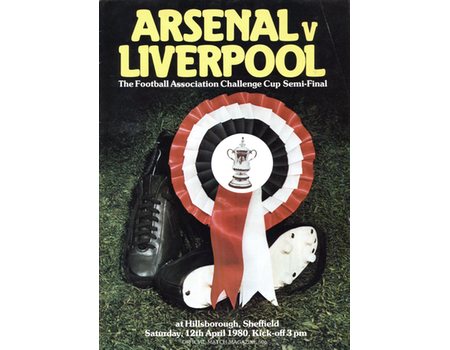
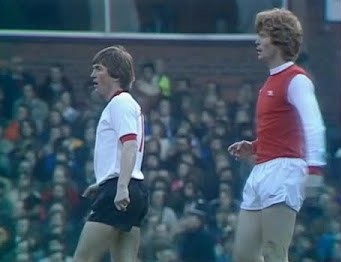
Semi Final – 12th April 1980 – Hillsborough
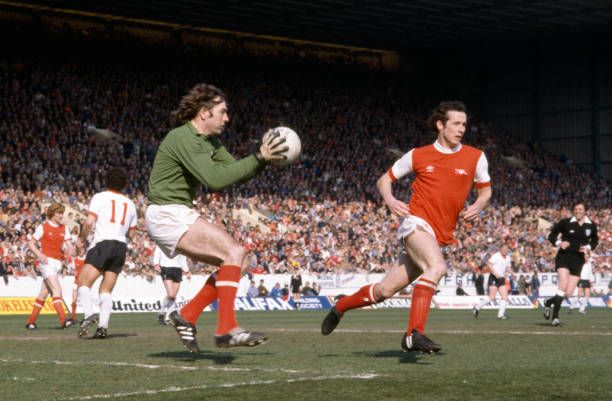
The first game was a bit of a non event on a warm sunny day, with both teams playing out a scrappy 0-0 draw on a heavy pitch. The teams couldn’t produce a goal even after extra time in front of 50.174 fans.
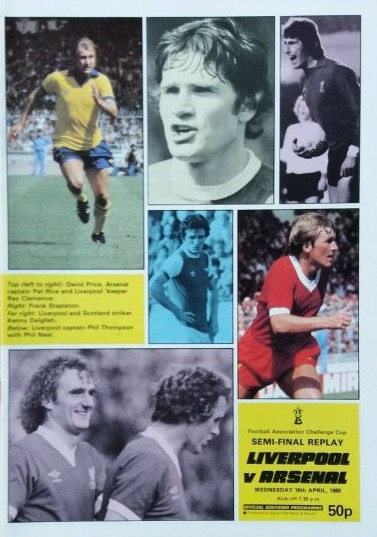
Semi Final Replay – 16th April 1980 – Villa Park
Liverpool went into the game with Kenny Dalglish dropping back to midfield in place of Jimmy Case injured in the first game , with David Fairclough partnering David Johnson in attack. Liverpool in red shirts with Arsenal in yellow,
Liverpool’s David Fairclough headed on a Ray Clemence goal kick to David Johnson whose shot was saved by Pat Jennings. David Fairclough however followed up to score the rebound to put Liverpool ahead. Frank Stapleton had the ball in the net shortly afterwards for Arsenal but the gaol was ruled out for offside against David Price. Liverpool’s reprieve was short lived as David Price’s headed the ball through their defence and Alan Sunderland lofted over Ray Clemence from outside the area to make the game 1-1. Another half hour of extra time failed to produce a winning goal, in front of 40.679.
League Game 19th April 1980 – Anfield
The following Saturday the teams met in a league game in Liverpool where an early Kenny Dalglish goal was cancelled out by Brain Talbot as the sides drew 1-1 again.
Arsenal then won 1-0 in Turin against Juventus on 23rd April to reach the European Cup Winners Cup Final and drew 1-1 at home to West Brom on 26th April.
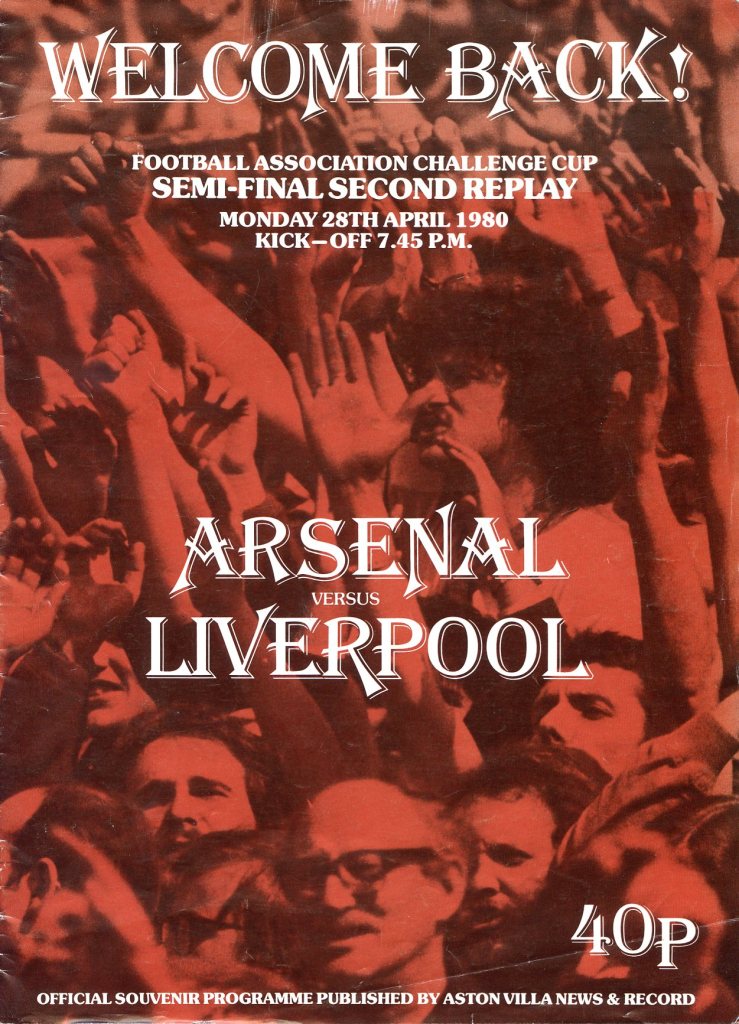
Semi Final Second Replay – 28th April 1980 – Villa Park
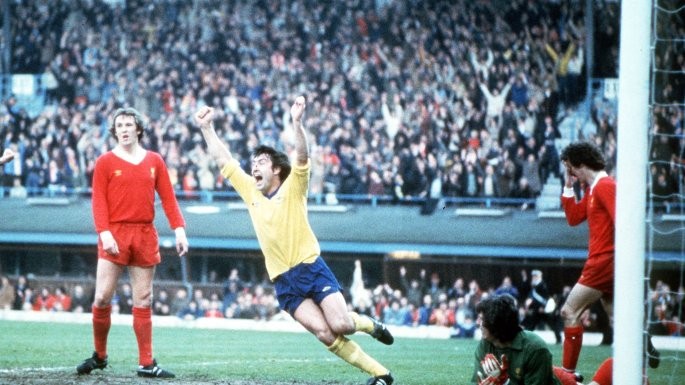
The teams played again at Villa Park with Alan Sunderland scoring a goal in the opening seconds which looked to have won the tie. Liverpool had one frantic last attack in injury time and it was Kenny Dalglish who popped up with the equaliser, knocking in from close range after a Ray Kennedy header, to take the match to extra time and ultimately a third replay. The crowd was 42.975.
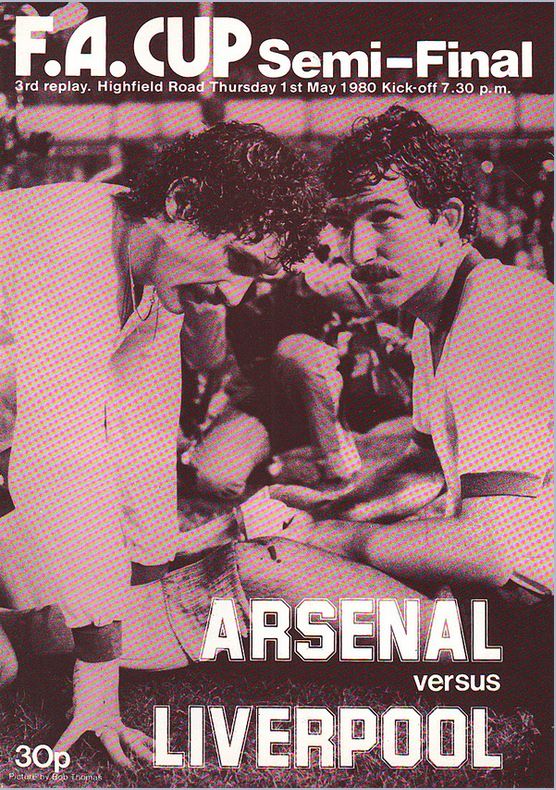
Semi Final Third Replay – 28th April 1980 – Highfield Road
The Third replay was played at Highfield Road , Coventry in front of 35.335 fans as Arsenal finally booked a place in the FA Cup final with a 1-0 win courtesy of Brian Talbot who had joined Arsenal the previous summer having played in the Ipswich team who beat Arsenal 1-0 in the 1978 FA Cup Final
Season 1979/80 Summary
Arsenal would end the season trophyless losing the FA Cup Final 1-0 to West Ham with Trevor Brooking scoring and the European Cup Winners Cup Final on penalties to Valencia after a 0-0 draw.
Liverpool despite failures in the cup competitions won the league in 1979/80
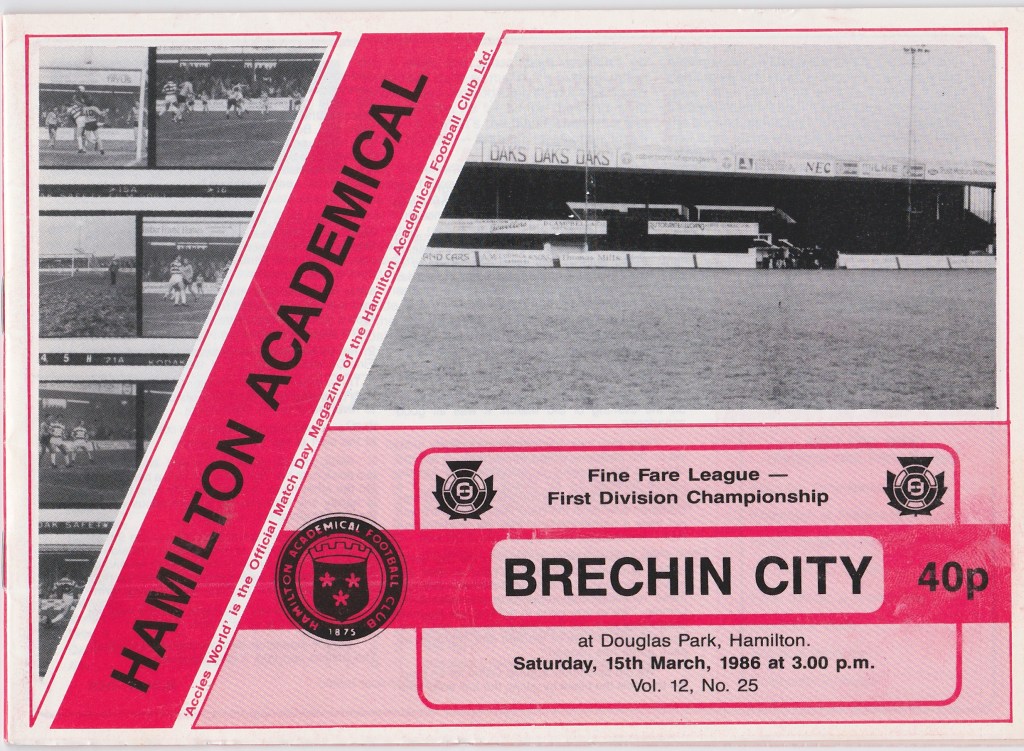
Accies won the First Division Championship in 1985-86 , this is a look back at an amazing season
PART TWO – JANUARY TO MAY 1986
January 1986
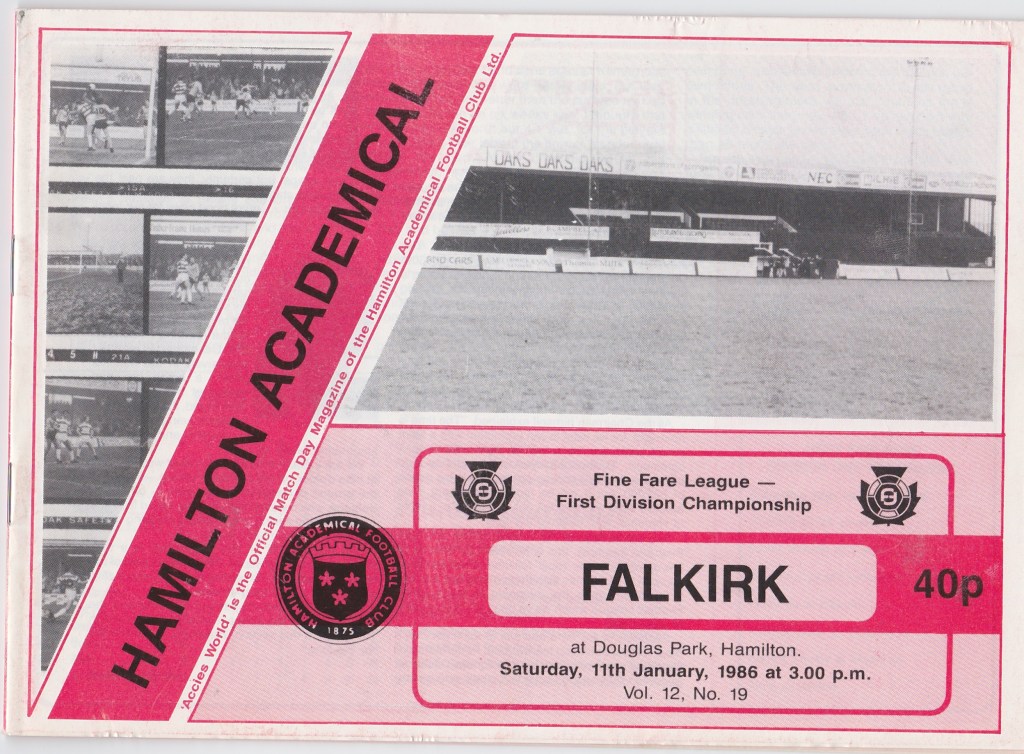
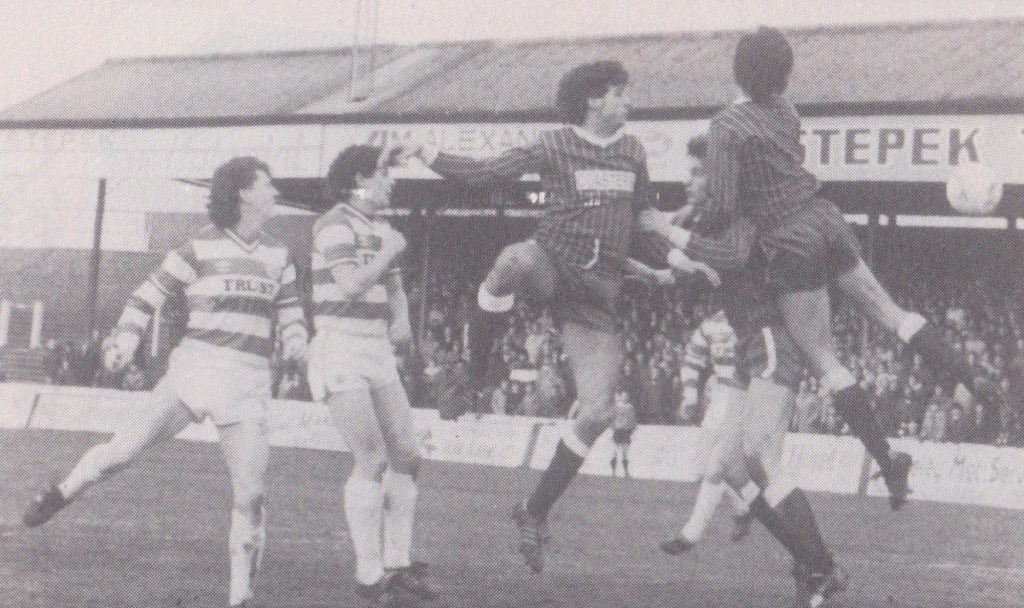
The bad weather at the start of 1986 saw Accies first two matches at Airdrie and Brechin postponed before a return to action on 11th January at home to Falkirk. A tough afternoon saw second half goals from Tommy O’Neill and a first in Accies colours by Adrian Sprott.
Toomy O’Neill scores
Accies run of 6 consecutive wins was brought to a halt at Somerset Park where again Adrian Sprott scored in a 1-1 draw , the fifth consecutive match between the teams in Ayr with the same 1-1 result.
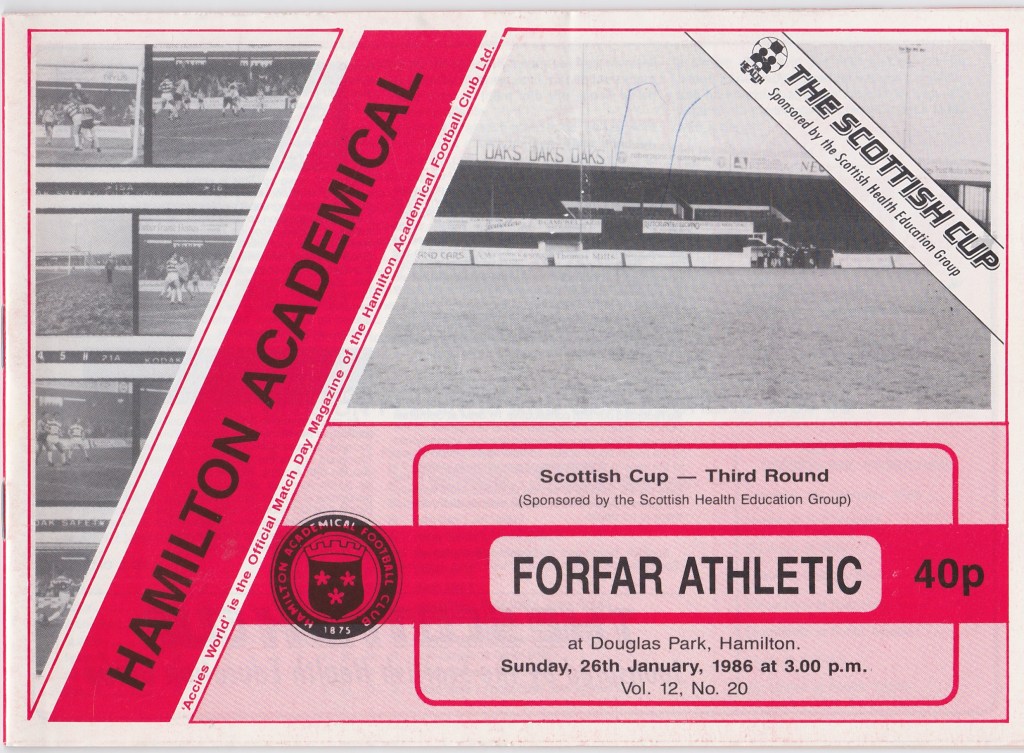
Accies Scottish Cup tie with Forfar Athletic at Douglas Park was postponed as the weather continued to bite.
February 1986
Accies played Clyde on 1st February at Douglas Park and really clicked into gear scoring two tremendous volleys by John McNaught and John Brogan in a 3-0 win.
Two days later Forfar Athletic visited Douglas Park in the Scottish Cup tie previously postponed with two John Brogan goals securing a 2-1 win.
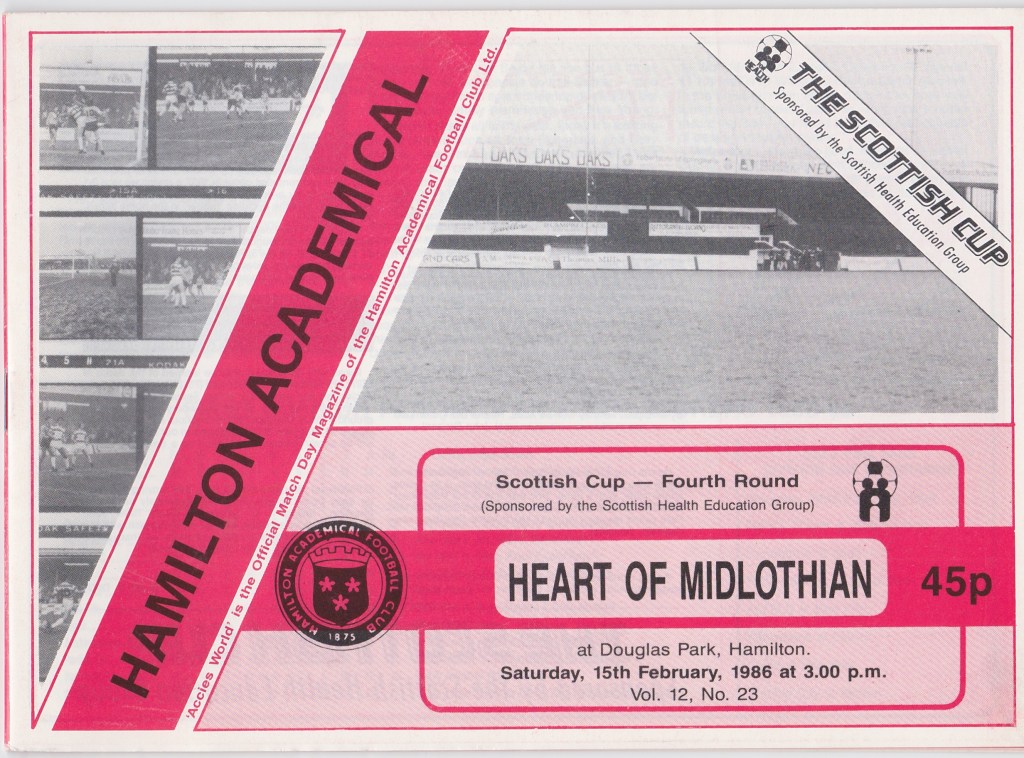
The freezing conditions meant Accies didn’t play another game in February. Home games against Alloa and then the Fourth Round Scottish Cup tie at home to Premier Division leaders Hearts were postponed. The cup tie was postponed on multiple occasions as well as league games at East Fife and Forfar.
March 1986
A capacity crowd packed Douglas Park on the evening of Monday 3rd March 1986 and witnessed the most extraordinary start , as John McNaught galloped down the right wing and crossed for John Brogan to put Accies 1-0 ahead after 21 seconds.
The lead was sadly short lived as Hearts John Robertson soon equalised.
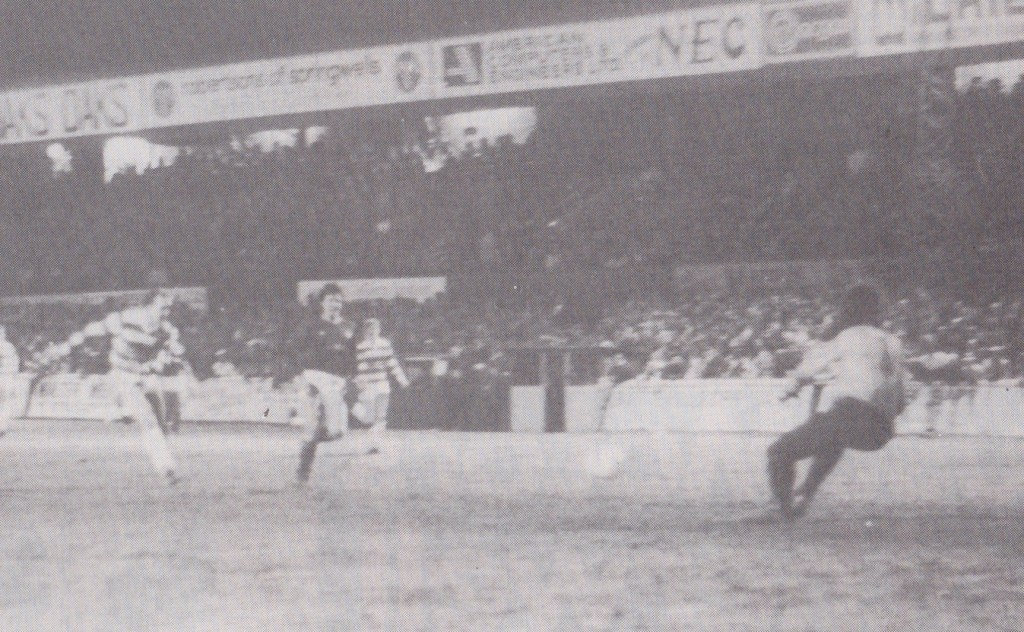
Hearts goalkeeper Henry Smith produced numerous saves to keep Accies at bay and won the match of the match on the night , but it was Hearts Gary Mackay who scored the only goal of the second half to win the game 2-1 for the Edinburgh side.
Henry Smith superb save to deny John Brogan
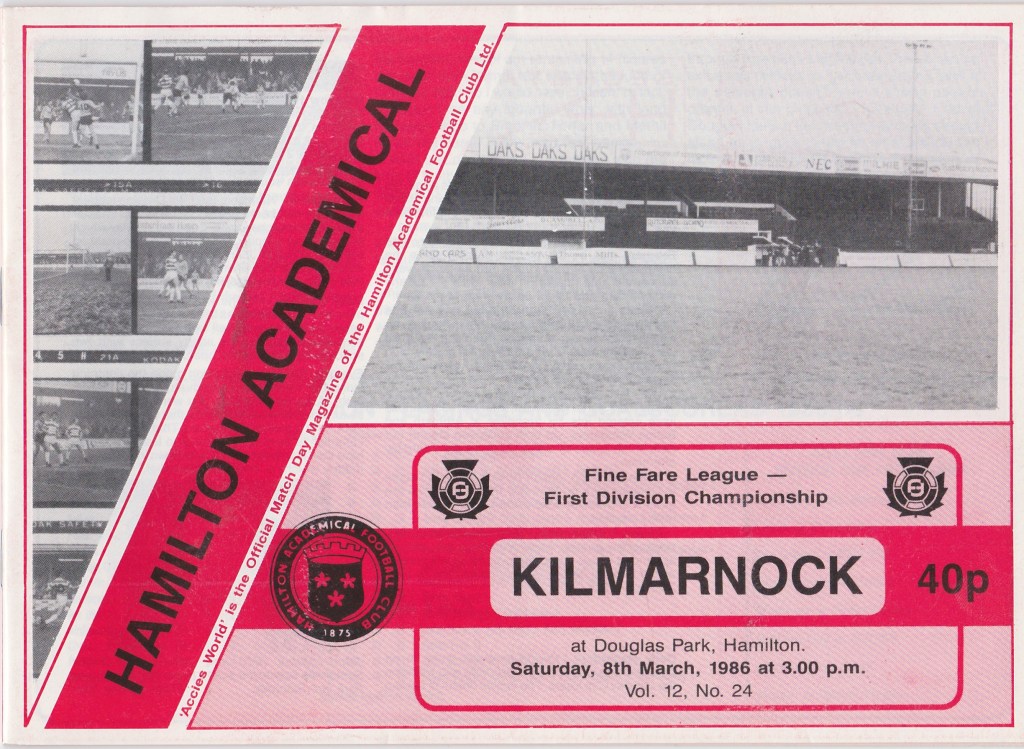
Accies retuned to Douglas Park the following Saturday on a blustery day against Kilmarnock. Three Accies first half goals threatened to sweep the Ayrshire side away, but the change of ends with the wind advantage saw a Kilmarnock comeback , however Accies held out to win 3-2. Accies were four points ahead at the top of the league with two games in hand.
This was followed by two games in seven days against Brechin City , the re-arranged midweek visit to Angus where Accies won 3-1 was followed by the teams meeting at Douglas Park. Joe Reid scored after 35 seconds and despite John Pelosi missing a penalty shortly afterwards , the goal was enough to secure a 1-0 win.
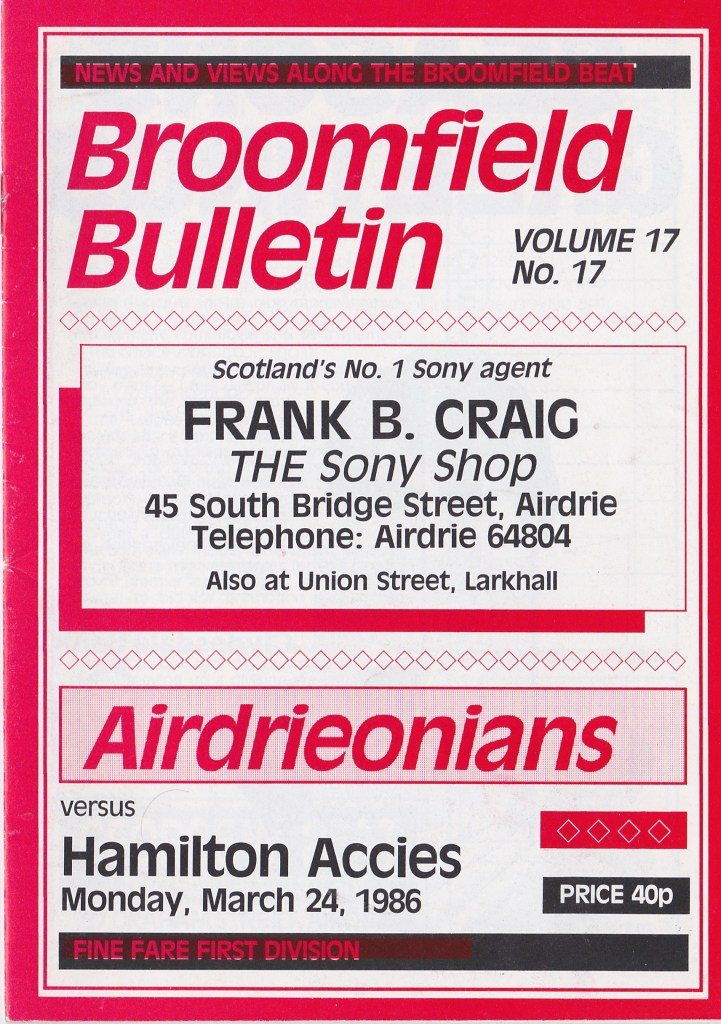
A tough week with three away fixtures began with a 1-0 win at Ayr and then a trip on the Monday evening to Airdrie saw Accies race into a 3-0 lead before a late Joe Reid goal won the game 4-0.
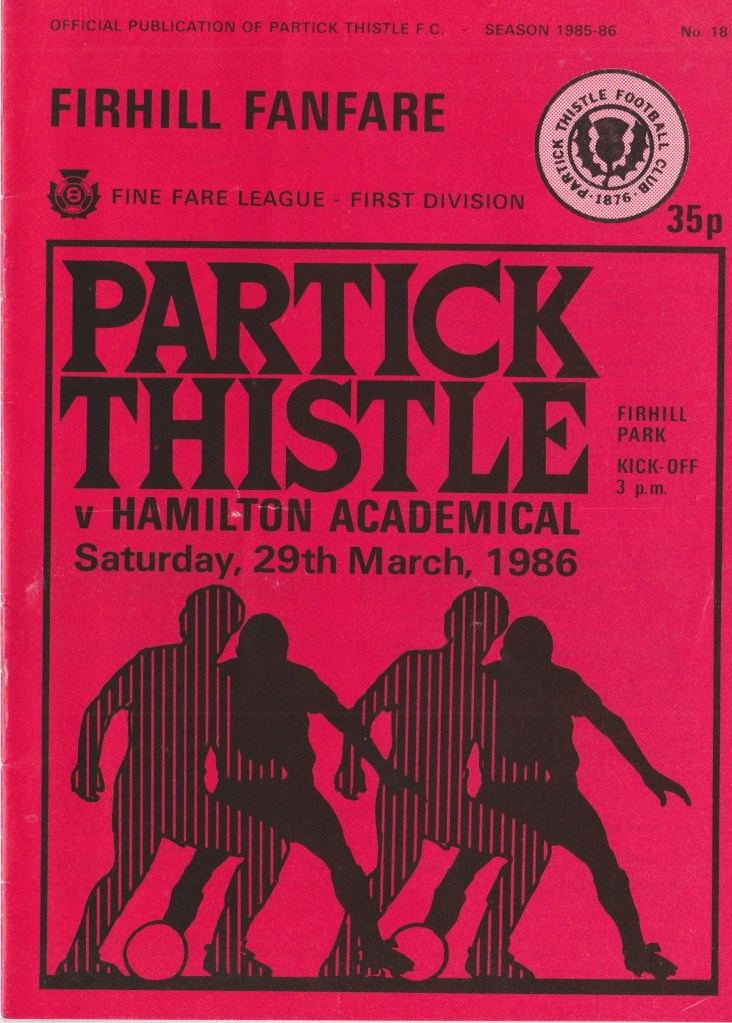
Firhill was the next stop for the Accies bandwagon. A John McNaught first half goal gave Accies a platform to build a 2-0 victory where captain Graeme Mitchell netted in the second half.
Accies despite the cup defeat to Hearts followed this up with six consecutive wins in March which opened a substantial gap at the top of the league with Dumbarton who had played two games more were 8 points behind with 7 games left.
Accies ended March having won 13 leagues games from 14 since the end of November victory at Cappielow.
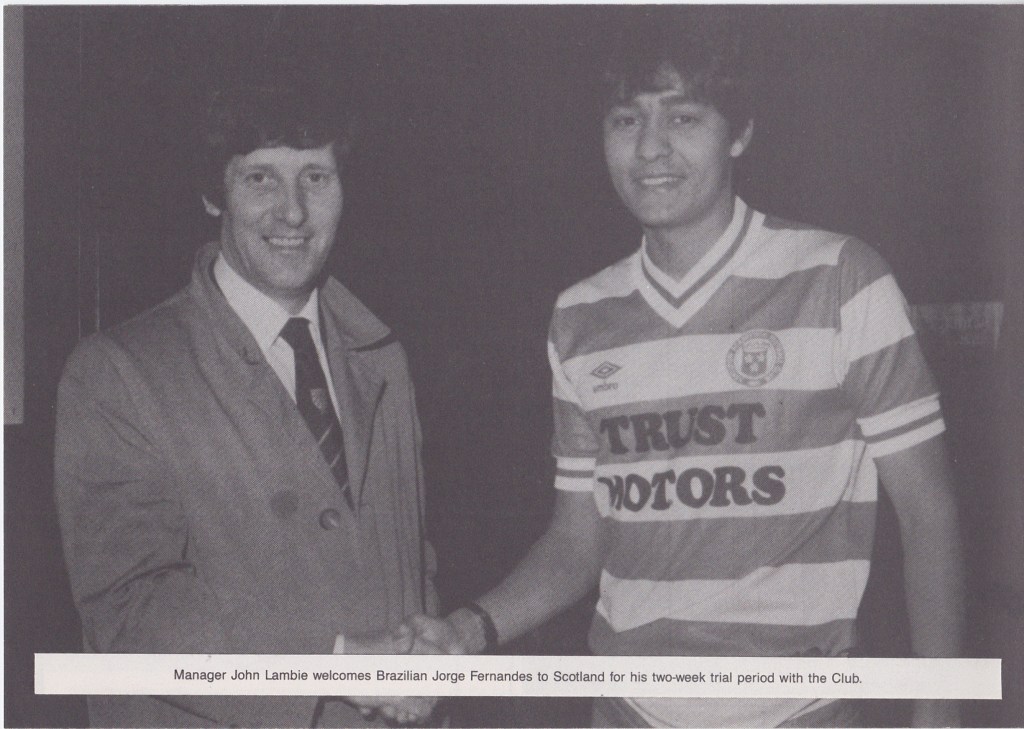
Accies announced the arrival of Brazilian trialist Jorge Fernandez but his time in Lanarkshire was short lived with TV pictures showing him missing the whole goal as they tried to stage him scoring for the cameras.
April – May 1986
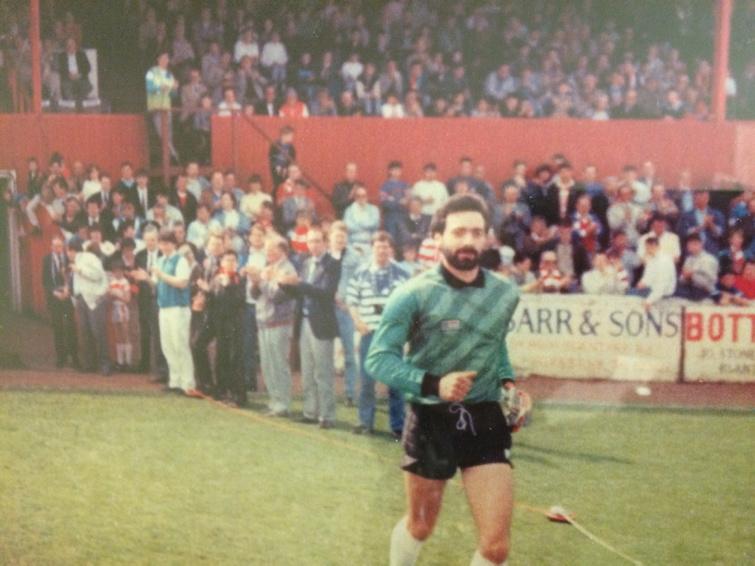
On 2nd April 1986 Accies drew 1-1 at home to Alloa , a game in which goalkeeper Rikki Ferguson made his 500th appearance for the club , a true Accies legend.
Accies were on the verge of promotion and Champions elect however the second promotion spot was wide open going into the final month of the season. although Dumbarton looked favourites.
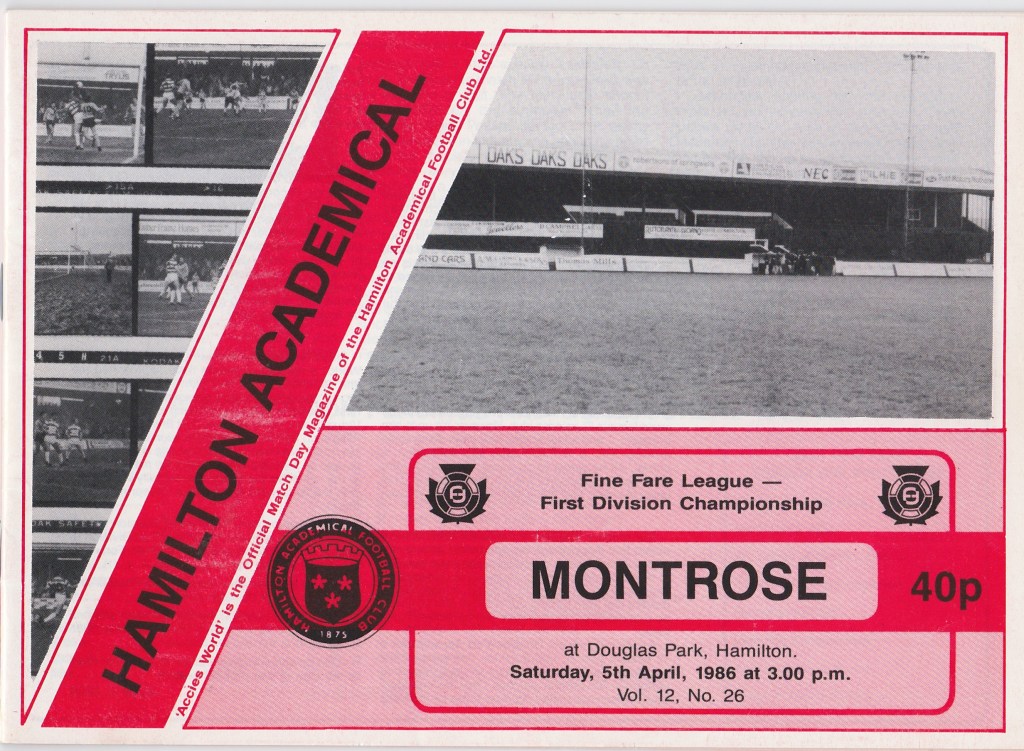
A John Brogan goal at home to Montrose coupled with their penalty miss meant Accies won 1-0 and secure promotion to the Premier League.
The following midweek there were some shock results with Dumbarton losing at home to Forfar 2-0 in an early kick off , which put Accies on the verge of the title.
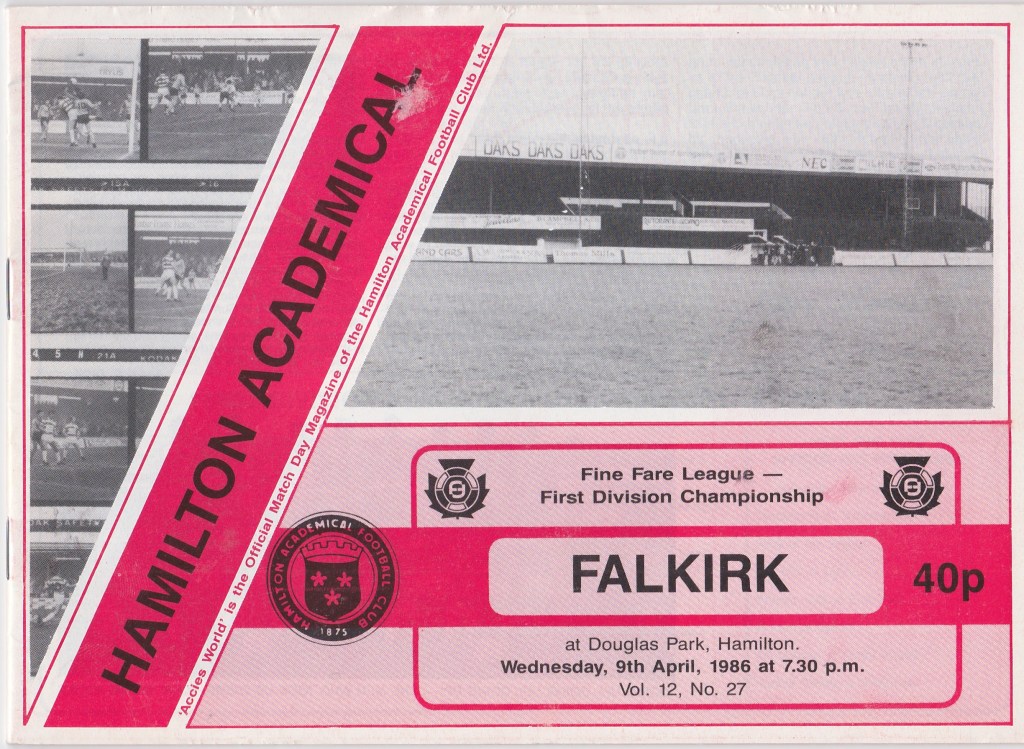
Accies with promotion secured played a Falkirk team with the motivation of chasing promotion and the Bairns ran out surprise 3-0 winners.
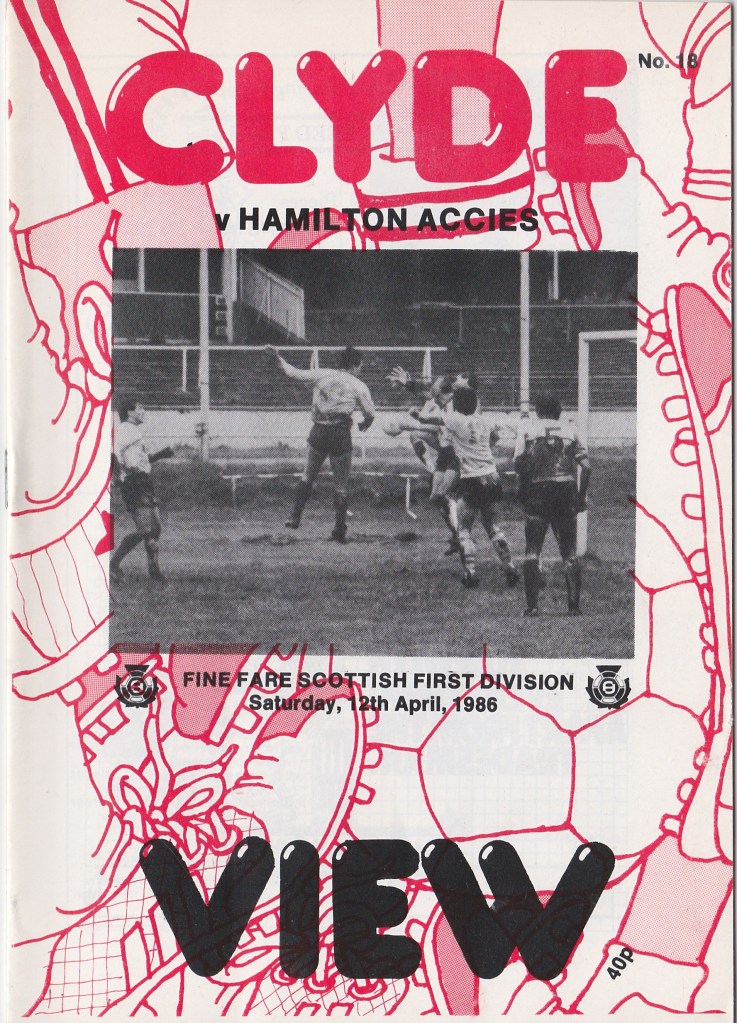
The Hamilton fans travelled in numbers to Shawfield as Accies faced Clyde in the hope of the securing the league title. It was something of an anti-climax with Clyde winning 4-2. Alex Hamill’s late red card was Accies only sending off of the season. Robin Rae was given his debut in goal, as was young Gerry McGuigan.
However news filtered through from Broomfield that a late goal by former Accies player Jamie Fairlie had given Airdrie a 2-1 win over Dumbarton which meant Accies were Champions.
Shawfield saw the Accies fans invade the pitch in celebration.
A day of shocks also saw Falkirk lose 3-2 at home to Morton while Forfar beat Kilmarnock 1-0 at Station Park.
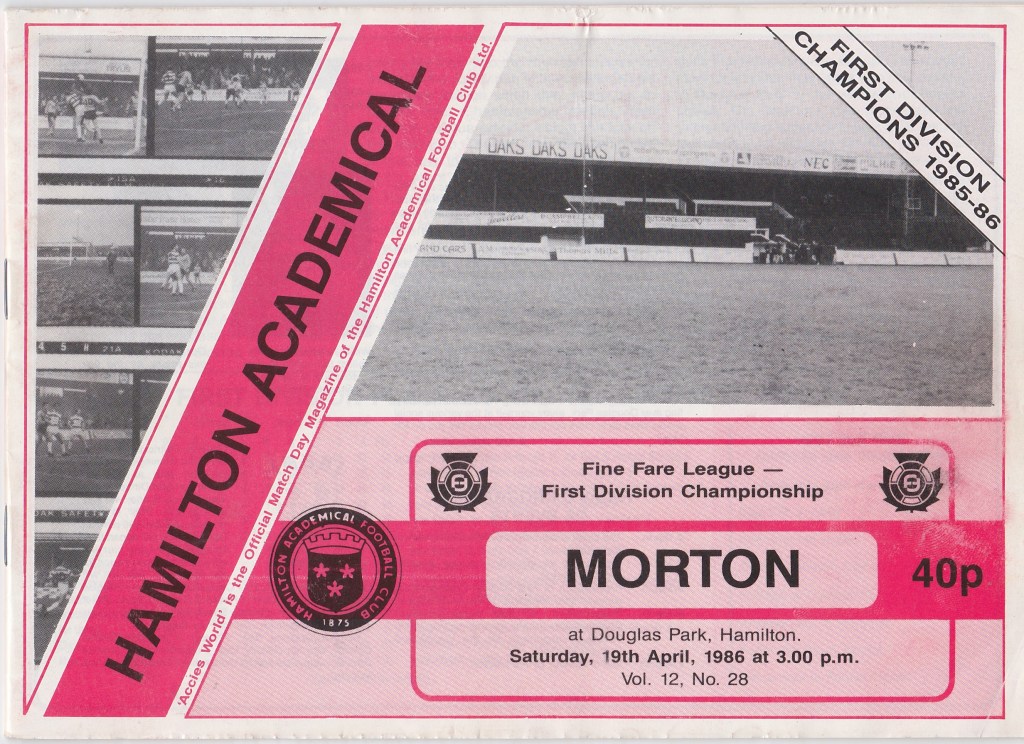
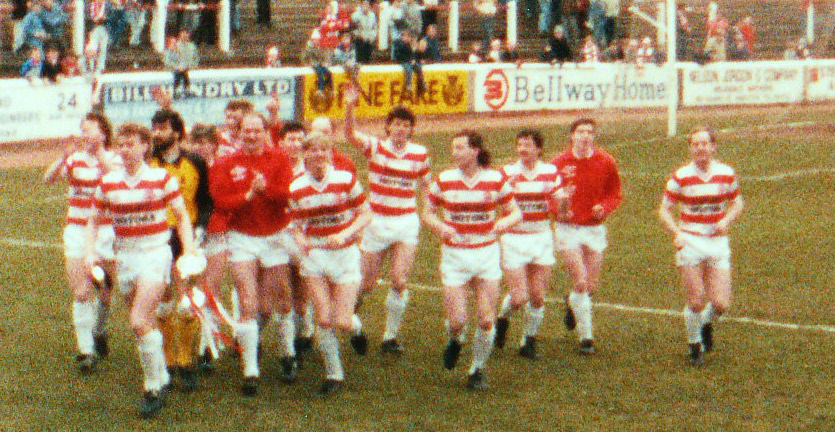
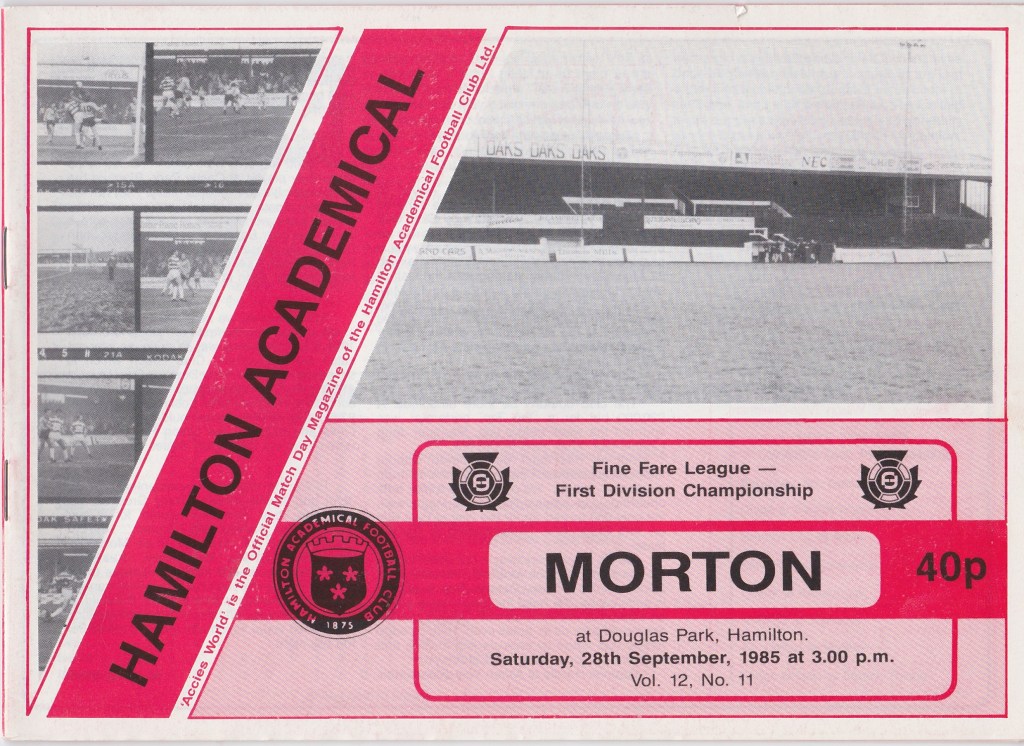
With captain Graham Mitchell in hospital , vice captain Willie Jamieson was presented with the First Division Championship trophy, the players took the trophy on a lap of honour prior to the 2-1 win over Morton at Douglas Park.
Kilmarnock’s 3-0 home win over Dumbarton put them firmly in the promotion hunt as Falkirk beat Brechin 2-1 at Brockville
Accies then followed up with a 4-1 win at Dumbarton where Gerry Phillips was given a rare start and scored twice as John McNaught played his final game for Accies before his £92,000 transfer to Chelsea. This was a game Dumbarton had to win , and Accies ended their promotion hopes.
Forfar lost 2-0 at Morton and Kilmarnock lost 2-0 at Partick , so it was Falkirk with a 2-1 win at Ayr who moved into pole position for the second automatic promotion place going into the final day.
A Falkirk defeat at home to East Fife on the final day could open the door to Forfar or even Dumbarton , Kilmarnock or East Fife.
Accies won the First Division Championship in 1985-86 , this is a look back at an amazing season.
(For context the league was made up of 14 teams playing each other 3 times meaning a total of 39 games and two points for a win)
August1985
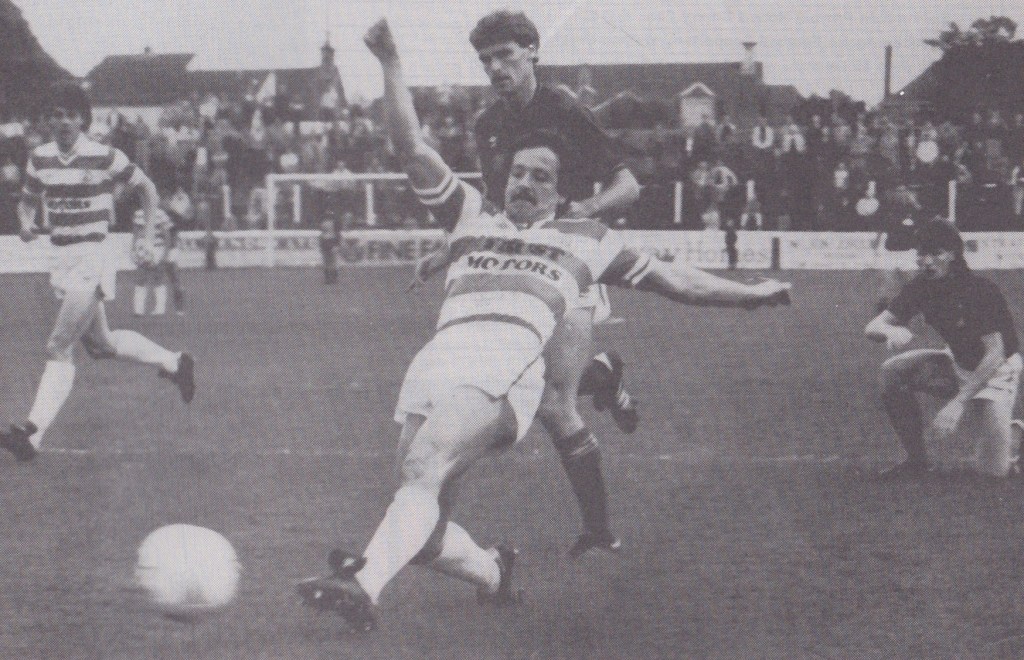
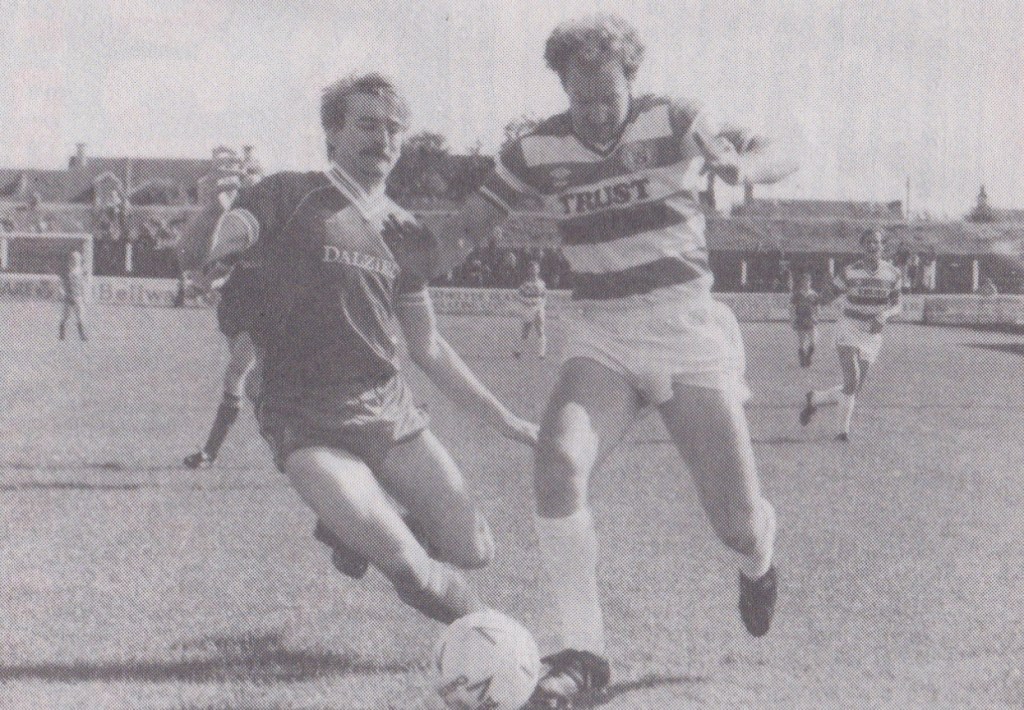
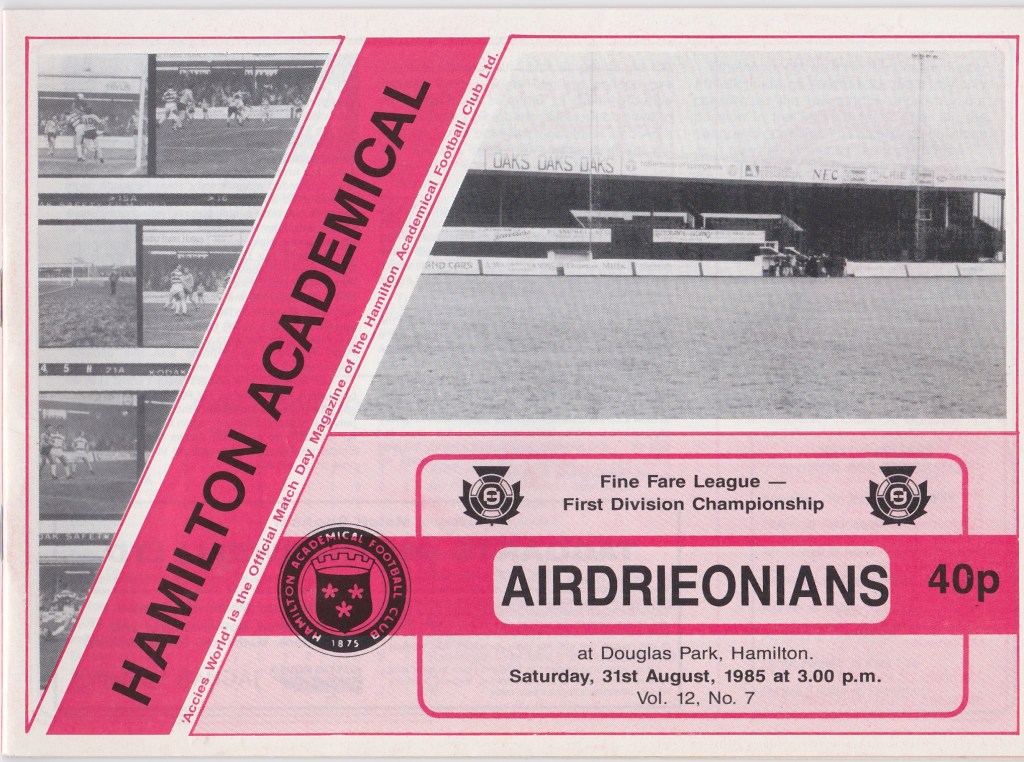
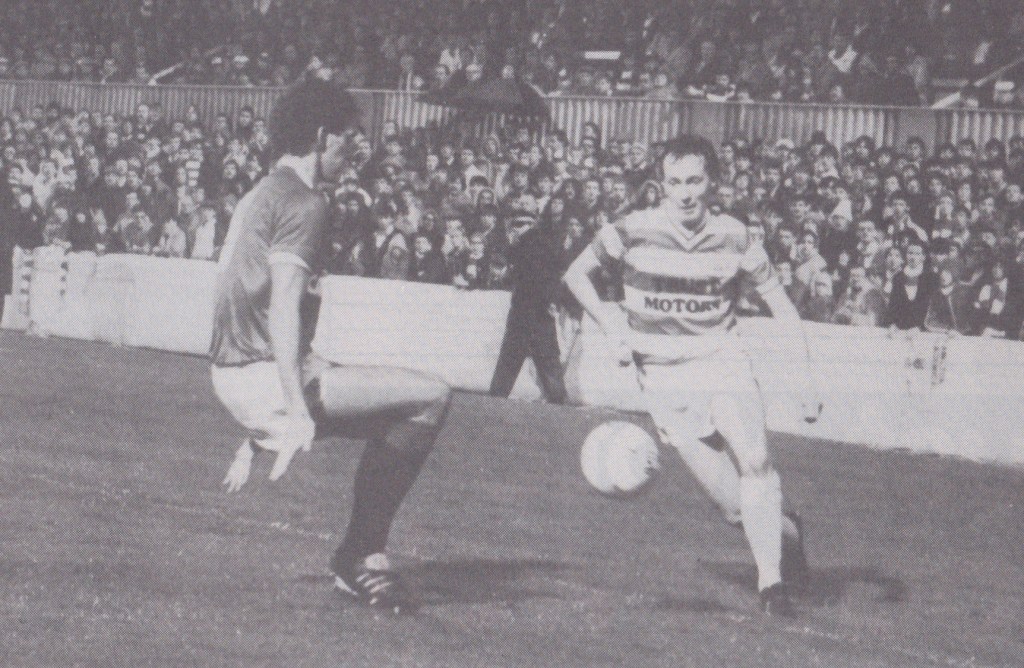
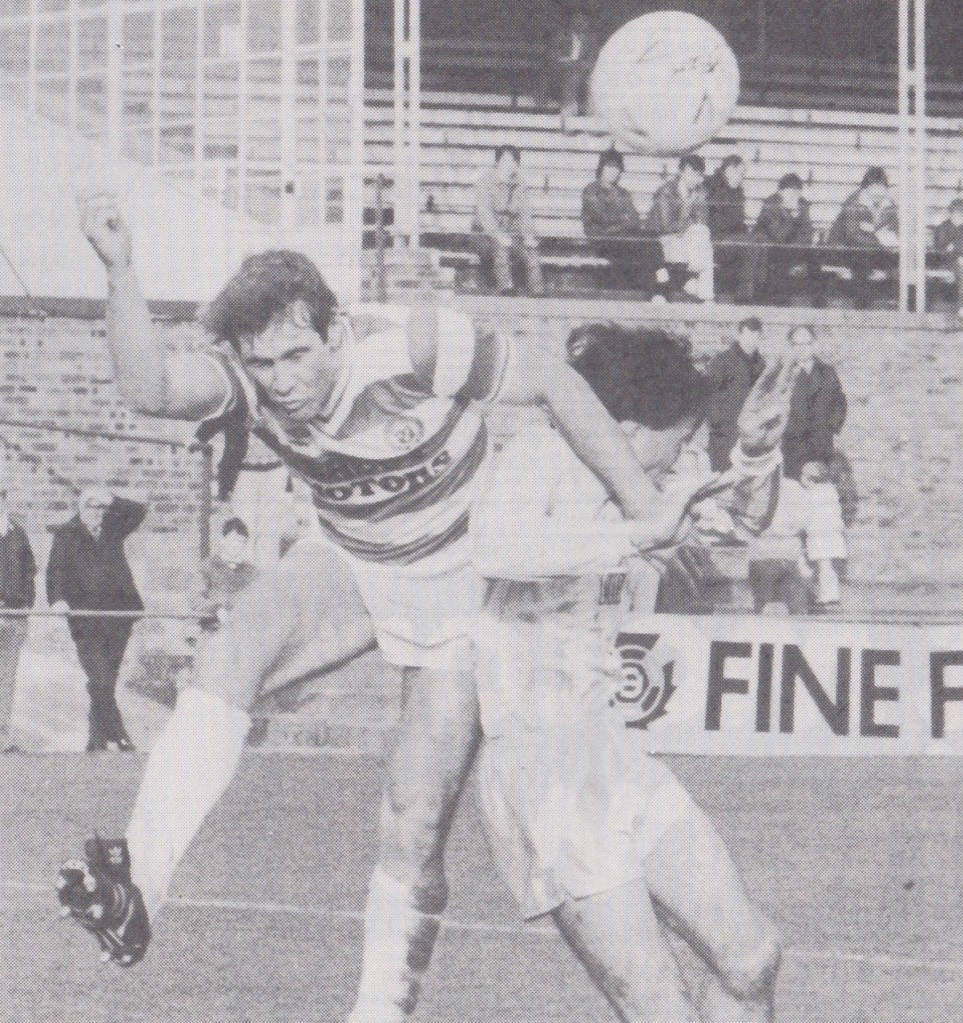
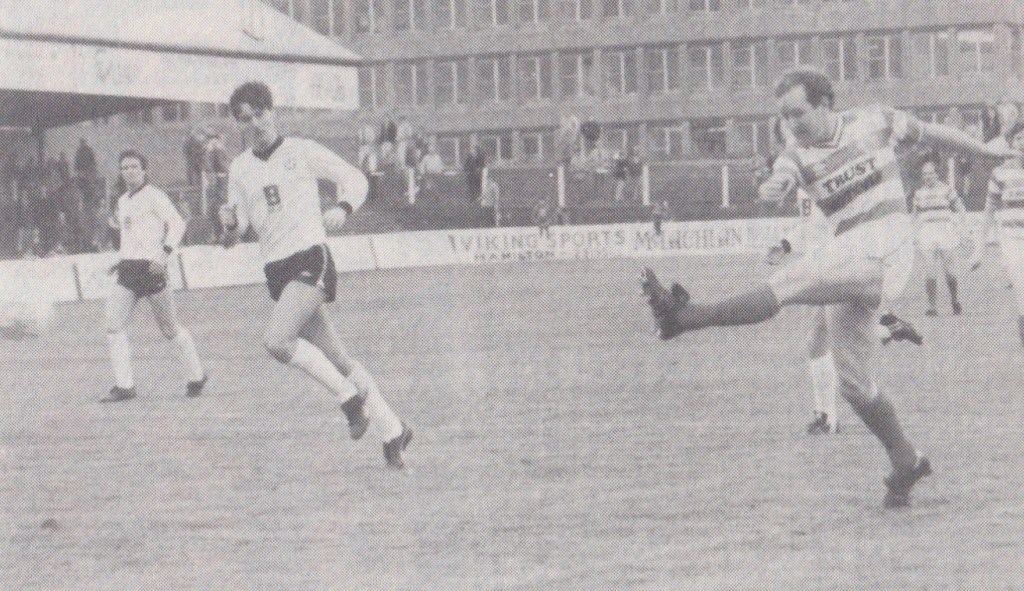
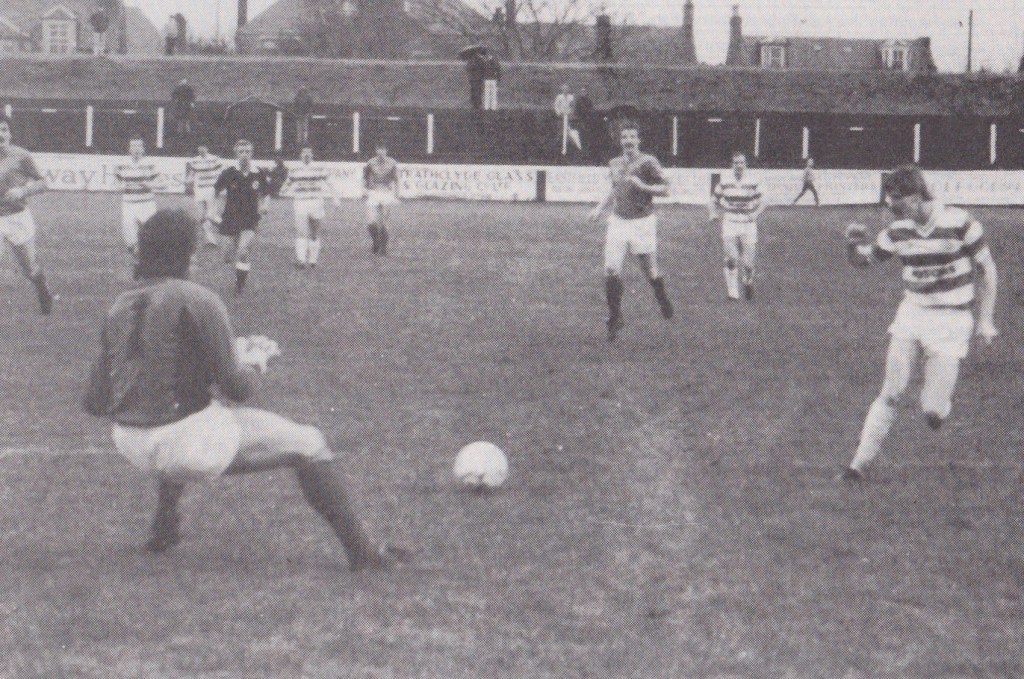
Accies began the 1985/86 season hosting the Lanarkshire Cup , playing Airdrie in the semi final. An early Airdrie goal was soon cancelled out and with new signings Jimmy Sinclair and striker Willie Jamieson making their debuts. Accies ran out 6-1 winners with Willie Jamieson netting a hat trick.
Tommy O’Neill
Accies fans were excited for the season ahead as they won the Lanarkshire Cup for the first time since 1934 as they beat Motherwell 1-0 in the final courtesy of a Gerry Phillips goal.
Willie JamiesonJohn Brogan against Tommy BoydLanarkshire Cup Winner 1985
The league season began with a tough away trip to Falkirk which ended 0-0, although both teams played some quality football which suggested they would both be involved at the top end of the table.
Willie Jamieson at Falkirk
Brockville Park , Falkirk
Brechin City then visited Douglas Park and again the result was 0-0 despite Accies having 27 shots at goal.
Gerry Phillips
A routine 2-0 win the League Cup second round over East Fife was followed by a 1-0 away defeat to Kilmarnock.
Rugby Park , Kilmarnock
Incredibly Accies started what would become a high scoring season , with no league goals scored after 3 games.
Accies hosted Premier Division Dundee in the League Cup 3rd round with Albert Kidd’s early goal being wiped out before half time when Accies were awarded a penalty with John Pelosi netting. Into Extra Time and Accies created the cup shock to win 2-1 with John Brogan scoring the winner in front of 2237 fans. The real hero was goalkeeper Rikki Ferguson who saved a penalty late in extra time.
John Pelosi v Dundee
Accies scored their first league goals of the season the following Saturday as they beat Lanarkshire rivals Airdrie 3-1 again at Douglas Park. Brian Wright scored his final goal in Accies colours before his transfer to Motherwell.
John Brogan v Airdrie
September1985
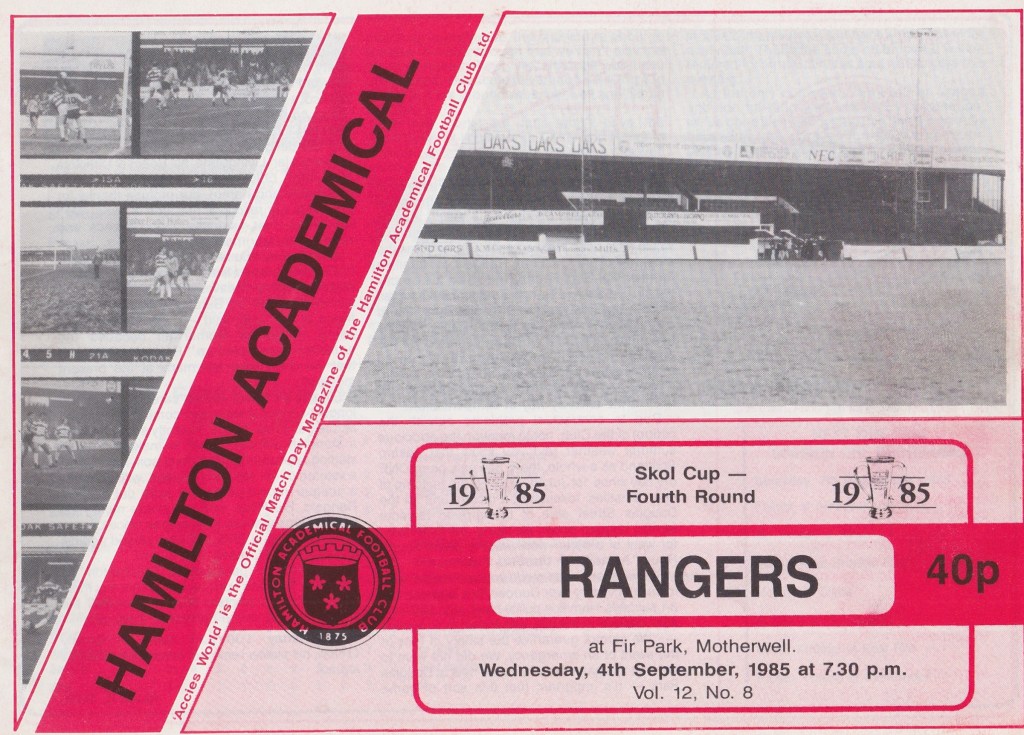
Accies opened September with a League Quarter Final which had to be played at Fir Park for safety reasons against Rangers. An early John Brogan goal was a shock and Accies almost doubled their lead with Tommy O’Neill’s shot hitting the underside of the bar , bouncing on the line before being cleared.
Rangers however won 2-1 with Bobby Williamson scoring twice close to half time.
Jimmy Sinclair v Rangers at Fir Park
Accies returned to league action with a hard fought 2-2 at Dumbarton in a match which was played in monsoon conditions with Rikki Ferguson again saving a penalty from Albert Craig. Accies then beat East Fife 2-1 at home.
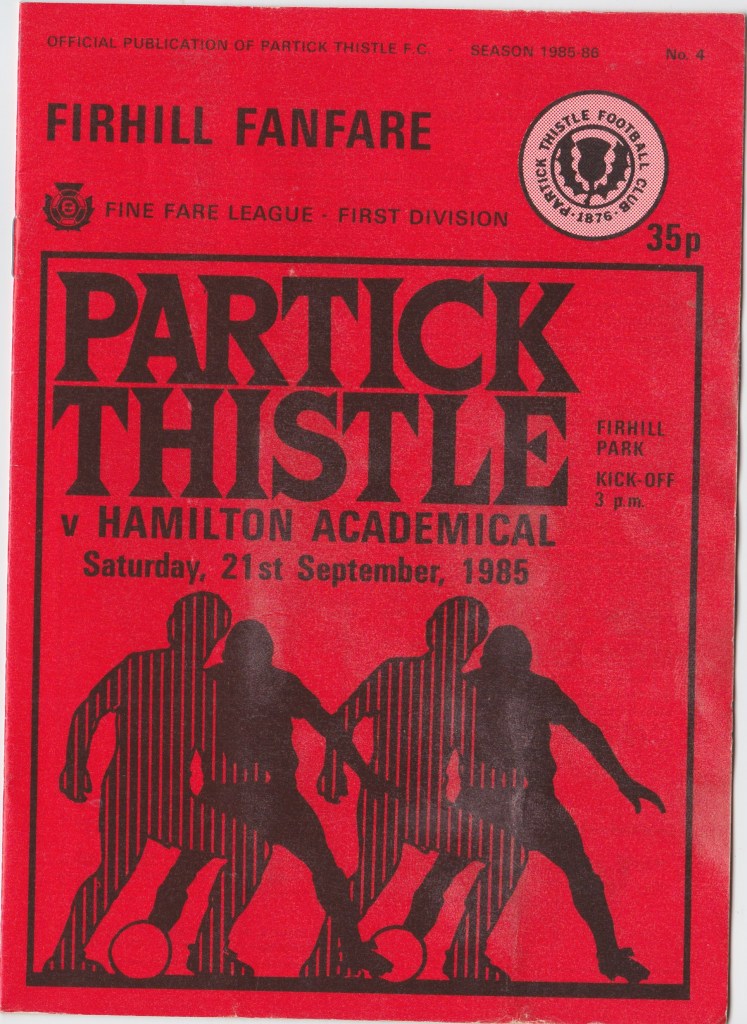
Firhill was the next destination and with John McGachie scoring to level the game 1-1 before John Brogan netted a late winner as Accies won 2-1.
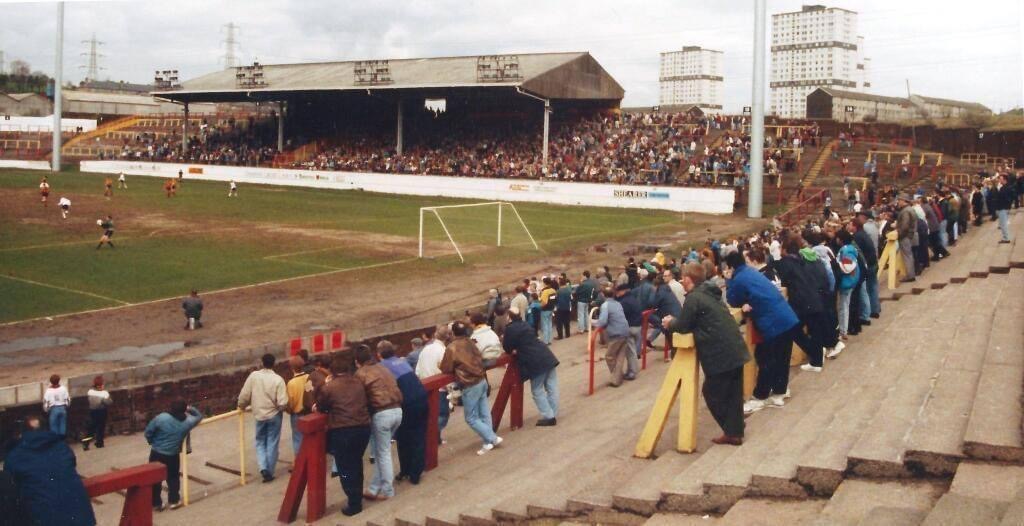
Firhill Stadium
John McNaught at Firhill v Partick
Accies in September with a swashbuckling display where they led Morton 4-0 at half time before John Brogan completed his hat trick in the second half as Accies ran out 5-0 winners.
Graham Mitchell scoring v MortonJohn Brogan competes hat trick v Morton
Accies fans were becoming excited about a promotion push now the goals were being scod on a regular basis with John Brogan beginning to justify his signing the previous year.
October1985
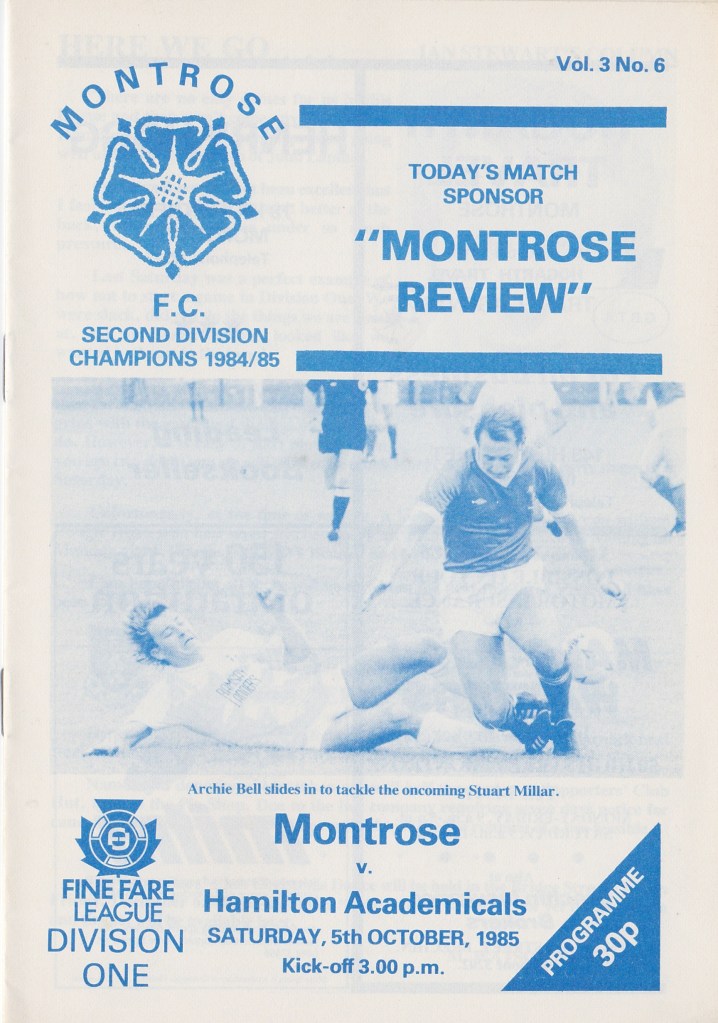
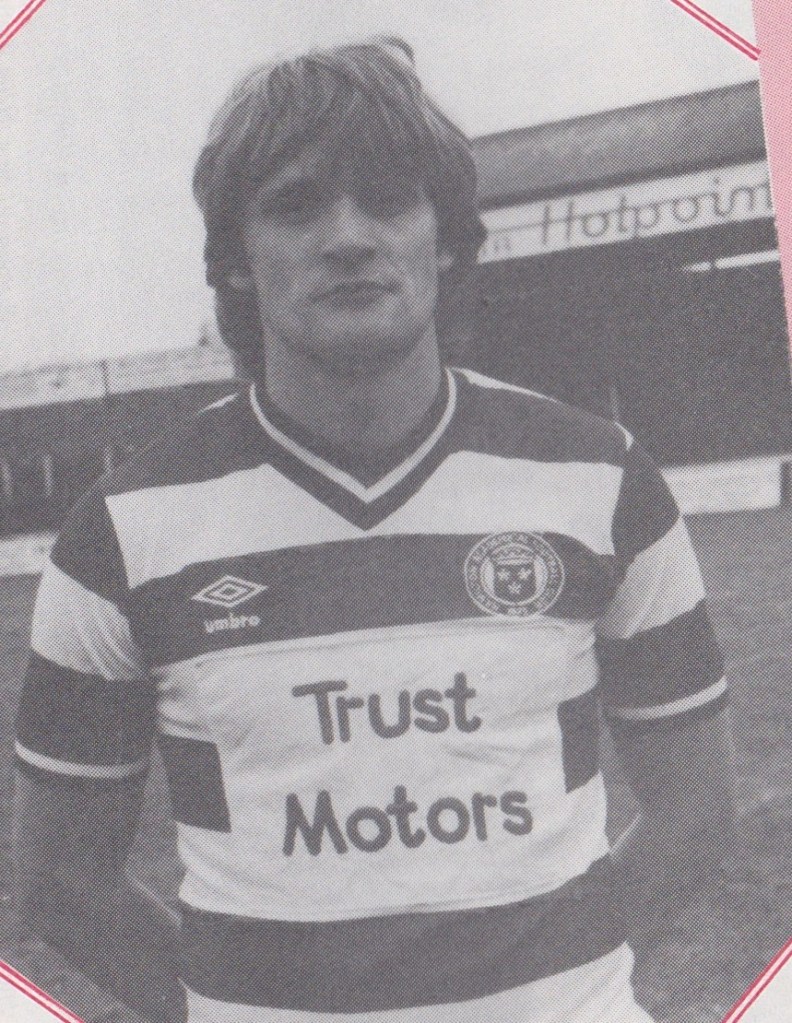
Accies began October moving into second place in the table behind early pace setters Dumbarton when they won 2-1 at Montrose with Brogan and John McNaught (below) scoring. McNaught was a fans favourite and nicknamed “Worzel” after TV character Worzel Gummidge due to his unkept hairstyle. He had begun his Accies career as a full back but manager John Lambie moved him into midfield and he benefited greatly from this move.
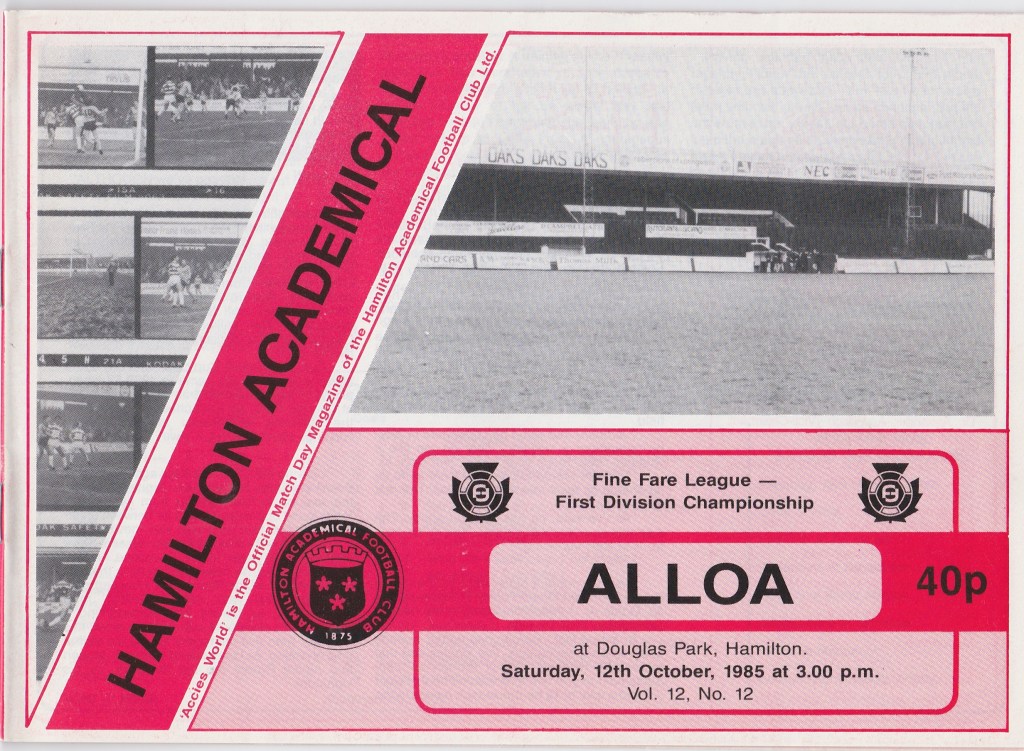
Accies then hit a bump in the road with a 2-1 home defeat to Alloa.
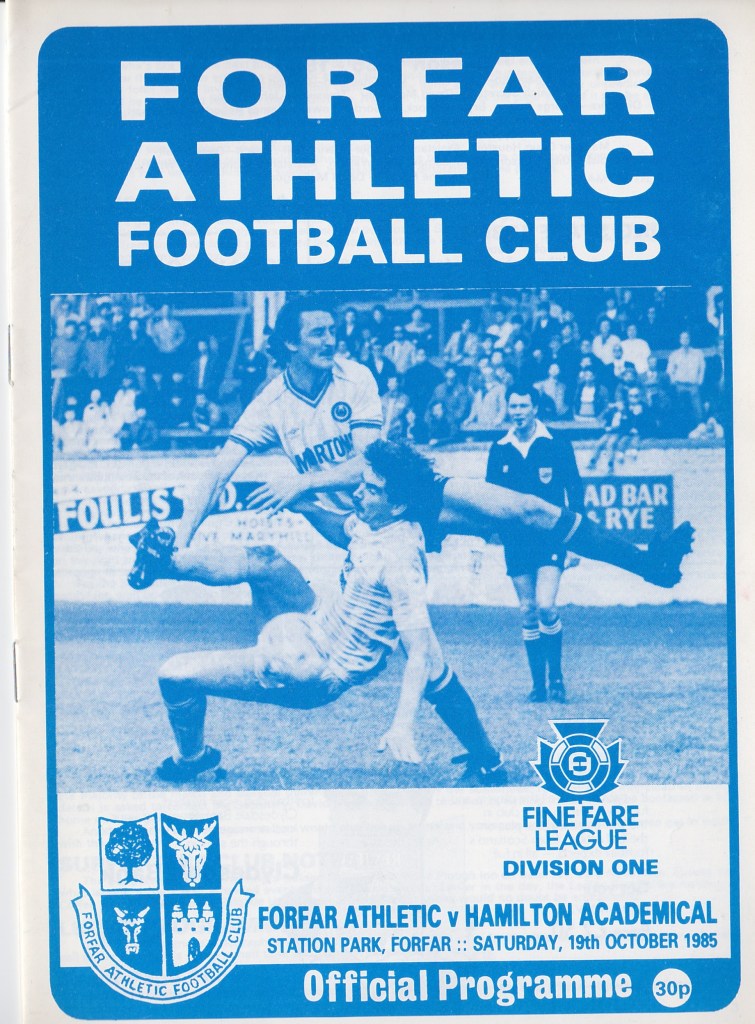
A tough trip to high flying Forfar Athletic ended in a 2-2 draw, with Brogan and McNaught again scoring.
Manager John Lambie was always looking to improve his squad and signed Ayr Utd’s Gerry Collins who immediately made his debut against his former club. John Brogan’s early goal was added to by captain Graeme Mitchell as Accies won 2-0.
John Brogan scoring v Ayr
John Lambie was on look out for a strike partner for John Brogan with Willie Jamieson now playing as a centre half.
November 1985
John McGachie was disappointing in the role at Shawfiled where Accies lost 1-0 to Clyde, this was his last game for Accies. McGachie soon departed for Meadowbank in a swap deal which saw Adrian Sprott arrive at Douglas Park.
Adrian Sprott would go on to score the most famous goal in Accies history when his goal secured a shock 1-0 win over Rangers at Ibrox in the 1987 Scottish Cup Third Round. Sadly Adrian passed away 2023 at age 61.
A new partnership was tried as league leaders Dumbarton visited Douglas Park , with young Willie Waters given his chance , which he grabbed with both hands, scoring a hat trick on his debut as Accies ran out 6-1 winners, with Rikki Ferguson again saving an Albert Craig penalty.
Willie Waters hat trick on his debut v Dumbarton
Accies again struggled to score and it took an own goal on the brink of half time to secure a 1-1 away to East Fife.
John Lambie then on the advice of John Brogan went back to Brogan’s former club St Johnstone and signed their top scorer Joe Reid.
Partick Thistle then visited Douglas Park and raced into a 2-0 half time lead , before John Pelosi brought Accies back into the game midway through the second half when he netted a penalty. Joe Reid came off the bench and made an immediate impact snatching a point with a last minute goal as the teams finished level at 2-2.
Accies ended November with a trip to Cappielow to face Morton, on what many described as a dangerous ice covered pitch. A Gerry Collins goal , his first for the club gave Accies a precious 1-0 win.
Cappielow
December 1985
Kilmarnock started December top of the league , a point ahead of Accies , but following a 1-0 won at Falkirk they hit a remarkable slump losing three consecutive games 4-1.
Accies opened December with a 4-2 win at home to Montrose with new strike force John Brogan and Joe Reid both netting twice.
Kilmarnock stayed top winning 1-0 at Falkirk, but the following week they would suffer a shock 4-1 defeat at Montrose opening the possibility for Accies to snatch top spot.
Accies game at Alloa was one of the most amazing in Accies history with Alloa racing into a 2-0 lead before Tommy O’Neill and Joe Reid brought Accies level. Alloa would go in at halftime 3-2 ahead. A superb second half display by Accies saw them equalise before two goals by substitute John McNaught seemed to have sealed victory. Frankie Cole completed his hat trick for the home side but Accies held on to win 5-4 and go top of the league.
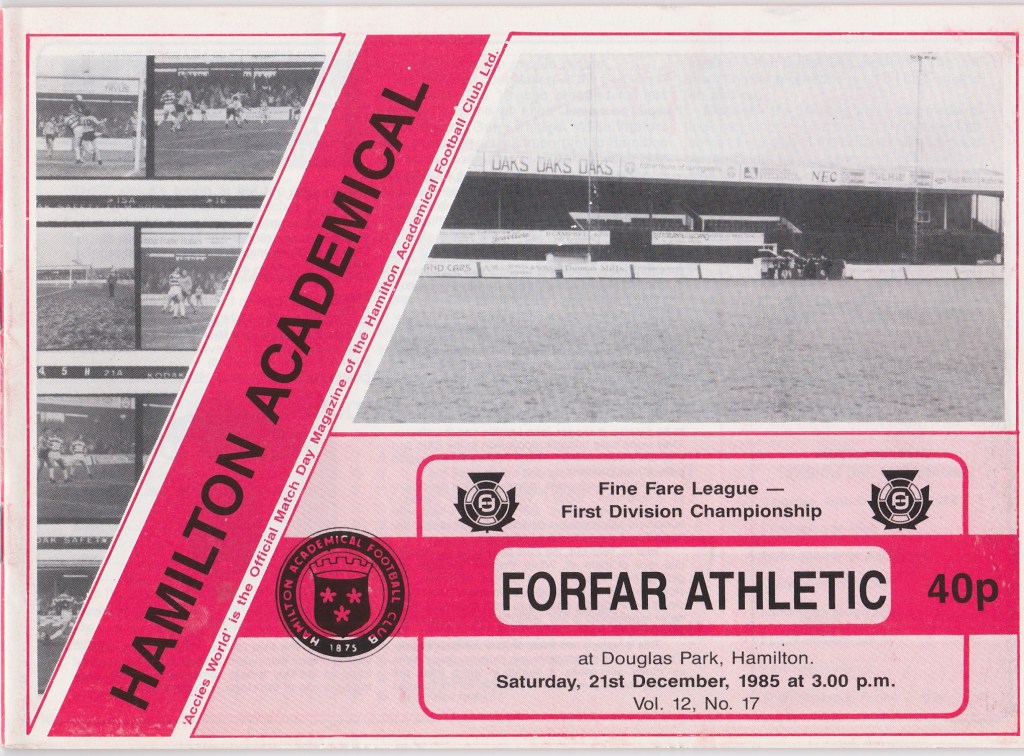
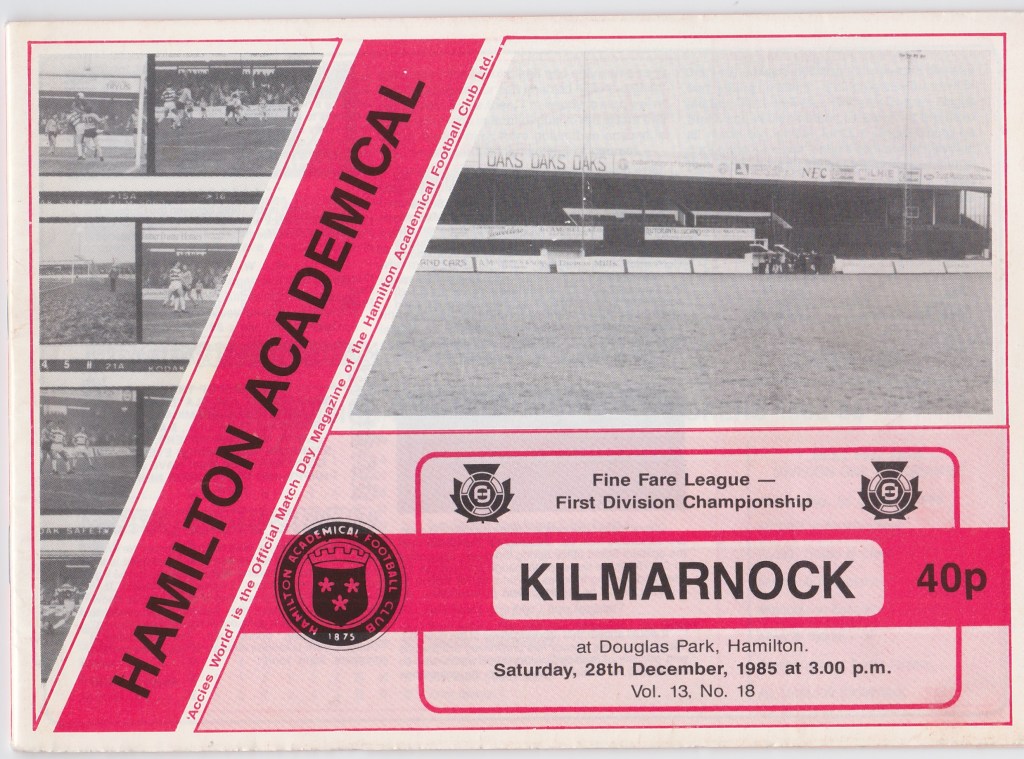
Accies then faced two home games against third placed Forfar and second placed Kilmarnock at Douglas Park before 1985 would end.
John Brogan scored the only goal of the game as Accies defeated a tenacious Forfar Athletic 1-0 at Douglas Park.
This set up a massive game at Douglas Park as Kilmarnock again stumbled 4-1 at home to Dumbarton.
Accies led Kilmarnock by 1 point as the clubs met on a sunny winters day in their match of 1985, on the Saturday between Christmas and New Year 1985.
It was a game with 3,271 in attendance for Accies fans to savour as John Brogan’s early goal was added to by Tommy O’Neill’s wonderful free kick as they went 2-0 ahead inside the first half hour. Accies would go on to inflict Kilmarnock’s third consecutive 4-1 defeat and ensure Accies topped the table as 1985 ended.
The European Cup Winners Cup was a cup for National Cup Winners run by UEFA between 1960 and 1999.
Welsh teams who played in the English football leagues also competed in the Welsh Cup with the winners qualifying for the ECWC , which was always somewhat controversial as they also competed in the FA Cup with Cardiff City reaching the FA cup final in 2008.
The story of Welsh clubs in ECWC is littered with amazing stories and many giant killing acts.
BANGOR CITY
Bangor City competed in the 1962/63 ECWC and were drawn against Italian giants Napoli.
Bangor City were playing in the Cheshire Counties League and had won the Welsh Cup beating Wrexham in the final.
They took on Napoli at Farrar Road in front of 12.000 fans on 5th September 1962 and produced an incredible 2-0 win with goals from Roy Matthews and Ken Birch.
They went to the Naples in front of 80,000 Italian fans and although they lost 3-1 , the scores being level and before the away goals rule , the tie moved into a replay.
The replay was played in London at Arsenal’s Highbury Stadium where Napoli eventually progressed winning 2-1.
After a long absence Bangor City returned to ECWC in 1985 drawing with Norwegian side FK Fredikstad – 1-1 away and 0-0 at home to progress on away goals to the Second Round where they lost both legs to Athletico Madrid , 2-0 at home and 1-0 away
CARDIFF CITY
Cardiff City were competing in the Second Division (second tier) of English football during three amazing runs in ECWC
In 1964 Cardiff City opened their first European campaign with a 0-0 draw in Denmark against Esbjerg , before winning 1-0 in Cardiff to progress to Round 2, with a Peter King goal.
Cardiff were then drawn against the holders Sporting Lisbon and produced a major shock winning 2-1 in Lisbon with goals by Greg Farrell and Derek Tapscott with only a late goal giving the hosts some hope in the return at Ninian Park. A crowd of 24,000 saw Cardiff secure a 0-0 draw and a place in the 3rd round.
The opponents for the Welsh side were Spain’s Real Zaragoza and once again Cardiff produced a creditable away performance despite being 2 goals behind after 12mins , then fought back to draw 2-2. The Welsh team drew a crowd of 38,458 and were left disappointed as they were unfortunate to lose 1-0.
Cardiff City once again qualified for the ECWC in 1967 drawing 1-1 away to Shamrock Rovers before a young John Toshack scored in a 2-0 second leg win at home.
The second round saw Cardiff draw 1-1 with NAC Breda in Eindhoven before winning 4-1 at Ninian Park with Toshack again on the scoresheet.
This took Cardiff beyond New Year and into the Quarter Final where a Barrie Jones goal gave the bluebirds a 1-0 first leg lead against Torpedo Moscow.
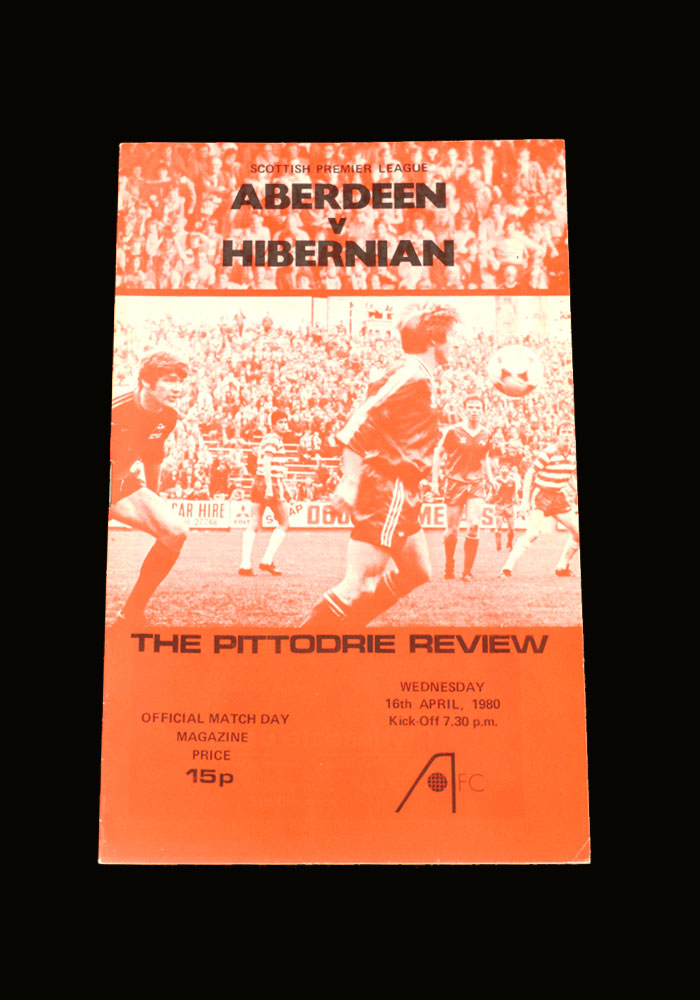
The freezing temperatures in Moscow saw the second leg played in Tashkent with the Russians prevailing by the same 1-0 scoreline , a third game was required to settle the tie.
On 3rd April 1968 Cardiff again won 1-0 with Norman Dean scoring with the game played in Augsburg , Germany.
Cardiff City incredibly reached the ECWC semi final and Norman Dean scored after 4mins away to SV Hamburg but the Germans equalised to set up a massive night at Ninian Park.
The crowd of 43,000 witnessed Norman Dean open the scoring again after 10mins but Hamburg soon equalised. Uwe Seeler who played at 4 World Cups for West Germany put Hamburg ahead before an equaliser by Brian Harris his only Cardiff City goal set up a grandstand finish . Sadly for the Welsh a late goal by Honig took Hamburg to the final.
This was the most successful season for any Welsh club in Europe.
Cardiff City had one further amazing season in Europe beginning in 1970 with an 8-0 win over PO Larnaca with a second leg 0-0 draw in Cyprus.
In the second round French club Nantes arrived in Cardiff and took an early lead before the Welsh side came back to win 5-1 and inflicted another defeat in France 2-1 to win 7-2 on aggregate.
This win set up an incredible evening on 10 March 1971 as 47,000 fans witnessed Cardiff City beat the mighty Real Madrid 1-0 with Brian Clark scoring.
Real Madrid in the end won 2-0 in the Bernabeu with two quick goals early in the second half.
It shows how well Cardiff City had done as it took a team of the calibre of Real Madrid to end their European adventure of 1970/71.
In 1988 Cardiff reached Round 2 beating Derry City 4-0 at home after the first leg ended 0-0 away. It was a step too far for the Welsh side as they lost 2-1 at home and 4-0 away to Aarhus of Denmark.
NEWPORT COUNTY
Newport County qualified for the ECWC in 1980 as an English Third Division club and were encouraged with being drawn against Crusaders of N Ireland. A 4-0 win in the home leg included a goal by a young striker John Aldridge and completed the victory with a 0-0 draw in Belfast.
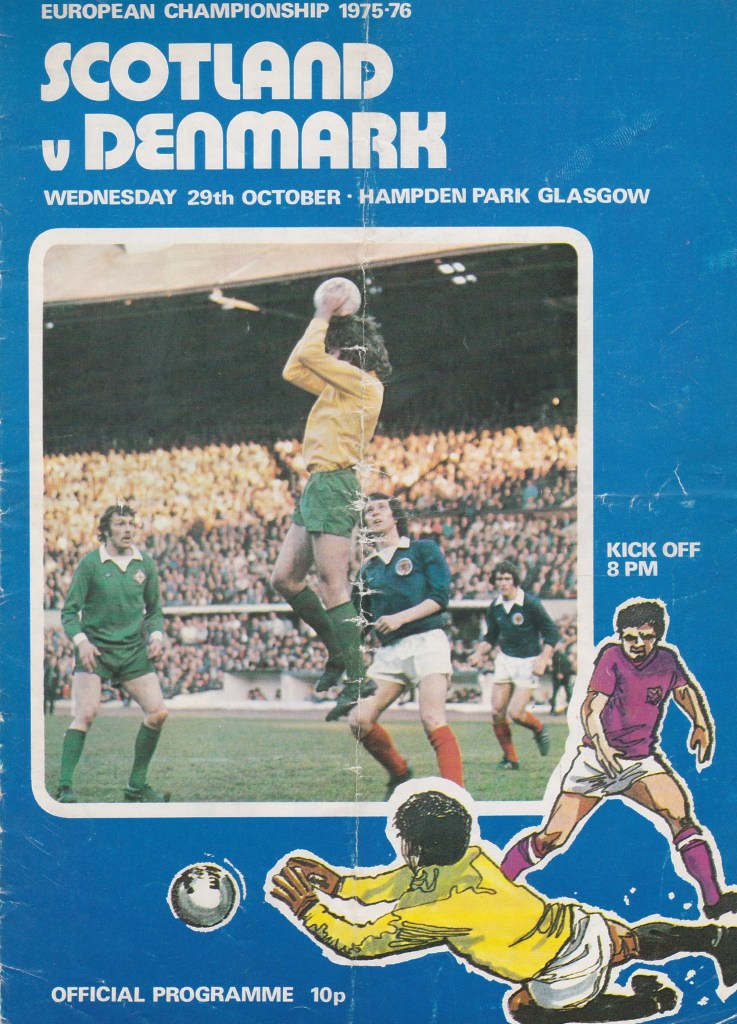
The second round also offered a kind draw against Norway’s FK Hauger, and again the away leg was 0-0 before Somerton Park witnessed a 6-0 win with John Aldridge scoring again with Tommy Tynan scoring twice.
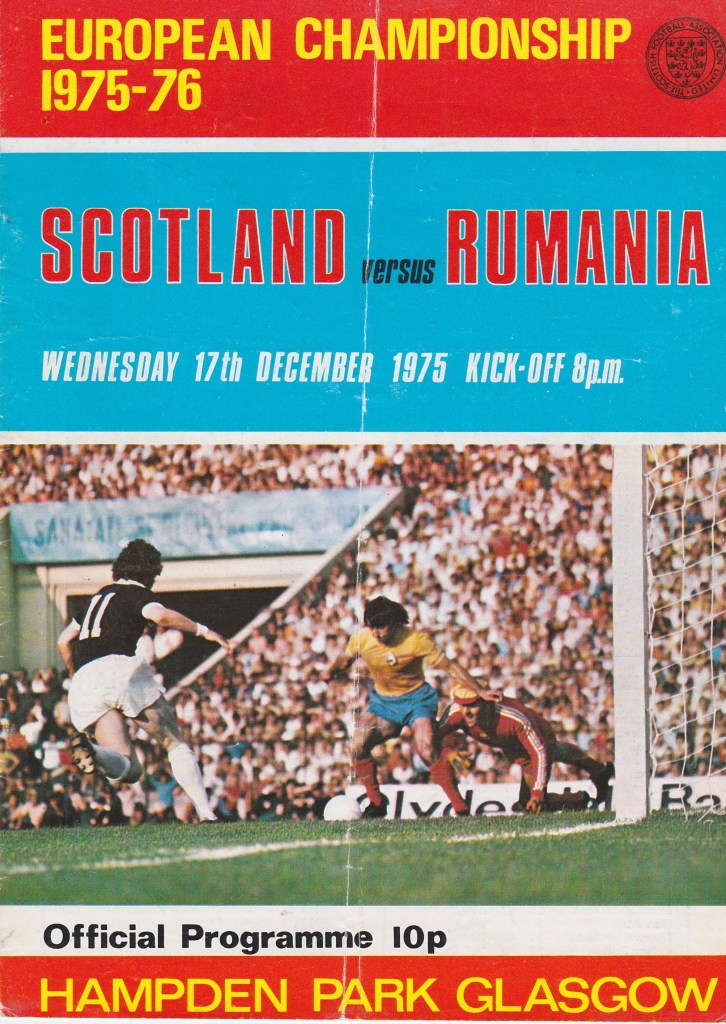
This set up a famous Quarter Final against East German side Carl-Zeiss Jena where the Germans led twice at home only for Tommy Tyan to equalise both times as the first leg ended 2-2.
Newport saw it’s biggest footballing night as the teams came out on 18th March 1981 in front of a capacity crowd of 18,000. Sadly there was no fairytale ending with a first half goal for the Germans winning the tie despite Newport hitting the woodwork and having five shots cleared off the line.
SWANSEA CITY
In 1982 Swansea City had reached the heady height of the top flight of English Football m the First Division under the management of John Toshack
They entered the Preliminary Round of the ECWC and beat Sporting Braga of Portugal 3-0 at home before losing 1-0 away to set up a First Round tie with Sliema Wanderers of Malta
On a record breaking night at the Vetch Field , the Swans ran out 12-0 winners before winning again in Malta 5-0.
The Second Round saw a visit from French Cup winners Paris St Germain with Argentinian World Cup Winner Osvaldo Ardiles. The French side prevailed with a 1-0 win before completing the job in Paris with a 2-0 victory.
WREXHAM
Wrexham first qualified for the ECWC in 1972 where they faced FC Zurich. Albert Kinsey scored Wrexham first ever European goal a minute after Zurich opener to draw 1-1 in the away leg. There were 18.189 at the Racecourse to see the Welsh side win 2-1 and 3-2 on aggregate. Wrexham raced into a 3-0 lead over Hajduk Split, however a late away goal proved vital , the 3-1 win at home was followed by a 2-0 away defeat which saw them eliminated on away goals.
As a Third Division club they were again in ECWC in 1975/76 where they beat the Swedish team Djurgardens 2-1 at home with a last minute winner from Gareth Davies before a Graham Whittle goal earnt a 1-1 draw in Sweden to seal a place in Round 2.
Wrexham then faced Polish cup winners Stal Rzeszow and having won 2-0 at the Racecourse , a 1-1 draw in Poland carried the Welsh cup winners in the Quarter Final of ECWC for the first time. A late Mel Sutton goal taking the pressure off as the Poles tried to level the tie.
Wrexham then faced the might of Belgium’s Anderlecht with a 1-0 defeat in Brussels meant a massive crowd of 19,668 for the return leg in Wales full of hope for a Semi Final place.
On the hour mark Stuart Lee scored for Wrexham and levelled the tie m however Dutch legend Robbie Rensenbrink scored what would prove to be the decisive goal on 77 minutes.
Anderlecht would go on win the cup beating West Ham in their home city of Brussels 4-2.
In 1983 Aberdeen under Alex Ferguson won the ECWC beating Real Madrid in the final , their defence of the trophy was ended in the 1984 semi final by Porto who would lose the final to Juventus 2-1.
The following season saw Wrexham by this time in the English Fourth Division drawn against Porto and this seemed a total mismatch in terms of the two teams.
When the first leg was played at the Racecourse , it was a major shock when Jim Steel’s goal gave Wrexham a 1-0 victory but nothing could have prepared the Welsh team’s fans for what would transpire in the second leg.
I vividly remember the game kick off as all European games played in Portugal in this era at 9.30pm UK time. I was listening to the commentary from BBC Wales radio broadcast with a crackly signal as the evening unfolded.
The second leg in Portugal started badly for Wrexham with Fernando Gomes levelling the tie after only 5 minutes, as Porto led 1-0 on the evening.
Porto then took the lead overall when Jamie Magalhaes scored a stunning left foot volley after 18 minutes and the tie looked over when Gomes netted from the penalty spot after 38 minutes as Porto raced into a 3-0 lead.
Wrexham however were immediately given a lifeline when in a rare attack they won a free kick in the Porto half. Kevin Rogers crossed and Jake King sweetly volleyed home. Porto were stunned before half time when Jake King scored again just before half time and suddenly Wrexham led on away goals and the scent of a real shock was in the air.
The 25,000 crowd however saw their superstar Paolo Futre restore Porto’s lead.
Then the drama in the 89th minute as John Muldoon collected a pass from Jim Steel, who was clattered to the ground , the referee waved play on , with the substitute Muldoon racing clear, he crossed into the penalty area , where the ball was met and flicked into the net by Barry Horne.
Porto 4 Wrexham 3 , as Wrexham levelled the aggregate and win on away goals.
Sadly the Second Round saw Wrexham draw another European giant in Italian side Roma who won 2-0 in Rome and 1-0 in Wrexham
In 1986 Wrexham once again won a First Round tie beating FC Zurrieq of Malta , 3-0 away and 4-0 at home to set up a mouth watering tie with Spanish giants at the time Real Zaragoza.
A goalless first leg in Spain meant a crowd of 14,550 at the Racecourse to see another amazing night of European football where Wrexham came so close to another major upset. The tie was level after 180 minutes at 0-0.
The Spanish side opened the scoring through Patrico Yanez after 98 minutes however Wrexham were back level in the tie when Steve Massey netted 4 minutes later, before Yanez scored again on the stroke of half time in extra time. Steve Buxton levelled at 2-2 after 108 minutes , but Wrexham were unable to force a winning goal.
Real Zaragoza reached the semi final before losing to eventual winners Ajax.
Wrexham again reached the Second Round in 1990 after drawing 0-0 at home to Lyngby they won 1-0 in Denmark.
This led to a another massive match as they played Manchester United but lost both legs 3-0 away and 2-0 at home.
The Wrexham result in Porto is still one of the most famous nights in Welsh football history
As a youngster growing up in Lanarkshire my interest in football developed at a time when Saturday afternoons were reserved for shopping with my parents.
The politics of the day in 1974 with the 3 day week and power cuts that resulted in football matches being moved to Sundays led my Dad to take me to my first games.
Men of his generation didn’t travel to away games but revolved between games at Fir Park and Douglas Park, so my first two games were –
Motherwell 2 Ayr 0 – 23rd February 1974
Hamilton 3 Clydebank 0 – 3rd March 1974
This meant the first player I saw score a goal live was Bobby Graham for Motherwell. He and Willie Pettigrew developed a superb partnership.
My visits to Fir Park became less frequent, as we went to more Hamilton Accies games.
Bobby Graham’s transfer from Motherwell to Hamilton Accies in the summer of 1977 cemented my support to the Accies colours.
Booby Graham and Willie Pettigrew formed a lethal partnership for Motherwell in the four season’s from 1973 to 1977 which included leading the Lanarkshire club to two successive Scottish Cup Finals , with both players ironically ending their playing days with local rivals Hamilton Accies.
In January 1975 Motherwell travelled to play 9 in row Champions Celtic , where Willie Pettigrew and Bobby Graham gave the Lanarkshire side a 2-0 lead before Harry Hood scored twice to equalise. Willie Pettigrew netted a late winner to complete a shock win for the Well, a game which was featured on STV’s Scotsport programme and propelled the attacking duo into the limelight.
The 1974-75 Scottish Cup saw Motherwell reach the semi final at Hampden against local rivals Airdrie. Pettigrew scored for Motherwell in a 1-1 draw but they lost the replay 1-0
The 1975-76 Scottish Cup was a real highlight in the partnership’s career , a Third Round tie at Fir Park saw Celtic lead 2-0 at half time through Dalglish and Lynch. Bobby Graham pulled a goal back early in the second half before the Lanarkshire side equalised around the hour mark through Ian Taylor. Willie Pettigrew then scored to win the game 3-2. This game covered by BBC tv and again highlight the striking partnership to a wider audience.
The Quarter Final saw an epic game against Hibs where a 2-2 draw at Fir Park was followed by a 1-1 draw at Easter Road before Motherwell won the second replay 2-1 at Ibrox.
The Semi Final at Hampden saw Motherwell lead 2-0 at half time before Rangers were awarded a controversial penalty which led them to a 3-2 comeback win.
The 1976/77 Scottish Cup saw an incredible crowd of 26.709 inside Fir Park as Motherwell beat Alex Ferguson’s St Mirren 2-1 with Willie Pettigrew scoring the winner with a penalty. A game that was delayed and we along with many other were locked out.
BOBBY GRAHAM
He was from Motherwell and at age 17 was signed for Liverpool in 1961 by Bill Shankly. He scored on his debut in a European tie against KR Reykjavik in 1964 before on his league debut scored a hat trick in a 5-1 win over Aston Villa. He was unfortunate to be at Anfield at the same time as legends Roger Hunt and Ian St John but he did have a successful season in 1969-70 being an ever present and scoring 21 goals including a famous goal in a win over Everton.
In 1972 be moved to Coventry City where Ian St John was a coach and followed him to Tranmere and then on to Motherwell.
It was at Motherwell where he formed the partnership with Willie Pettigrew
In 1977 he left Motherwell to join Hamilton Accies for a club record £15,000
In 1977 Bobby led Accies to a 2-0 win over Hearts at Tynecastle a feat the club have not managed since
In 1979 Accies lost 3-1 at home to St Mirren in the League Cup first leg , but Bobby scored twice to take to the tie to extra time and penalties which Accies would win and knock out the Premier League team.
The Quarter Final was again over two legs against a Premier League team – Dundee , where Neil Howie opened the scoring and although Dundee equalised , two Jamie Fairlie goals gave Accies a 3-1 win. The second leg at Dens Park had second half live commentary on Radio Scotland as was the norm for big games back then. Accies grimly held on to their two goal advantage until late in the game with Dundee scoring late to record a 1-0 win on the night , but Accies would advance to the semi final under Bobby’s leadership.
The semi final would be a step too far for the part time Accies players where they lost 6-2 to Dundee Utd , the irony for Bobby being the opening goal was scored by his former strike partner Willie Pettigrew.
WLLIE PETTIGREW
Willie Pettigrew began his career at Hibs before moving to East Kilbride Thistle where he played in their 1973 Scottish Junior Cup Semi Final defeat Irvine Meadow (4-1) at Firhill
Willie then moved to Motherwell where he had a highly successful time scoring 20 league goals in 1974/75 as joint top scorer in Premier Division alongside Dundee Utd’s Andy Gray. He scored 21 league goals in 1975/76 behind Celtic’s Kenny Dalglish with 24 goals.
This led to him to his Scotland debut, where he scored the only goal of the game after 2 mins where he scored in a friendly against Switzerland in April 1976 . He would again score in Scotland’s 3-1 win over Wales the following month and would go on to win a further 3 caps over the next 12 months without netting. He was unfortunately having to compete with Kenny Dalglish and Joe Jordan as Scotland main strikers with Andy Gray by then with Aston Villa as third choice.
Willie left Motherwell in 1979 to join Dundee Utd where he won two League Cups before spells at Hearts, where we won the First Division Championship and Morton before ending his career at Hamilton Accies.
Goalscoring
Willie Pettigrew scored 80 goals in 166 appearances for Motherwell, in the end scoring 140 goals across his career.
Bobby Graham scored 37 goals in 132 appearances for Motherwell and a further 42 in 118 appearances albeit at a lower level in his time with Hamilton Accies.
Two players who had great careers in the game but will always be remembered for their partnership at Fir Park particularly by Motherwell fans.
Both were inducted into the Motherwell FC Hall of Fame , Willie in 2019 and Booby in 2022
As I completed this , Motherwell FC announced on 4th September 2025 that Bobby Graham had passed away.
My early football memories in Lanarkshire – Part Two 1976-1980
1976/77
The League Cup saw Motherwell finish bottom of their group with no wins from their six group games and only two draws.
Hamilton Accies set up a final day showdown with Falkirk at Douglas Park for a place in the Quarter Final. Around 4000 packed Douglas Park and their was my first football heartbreak by Falkirk as they raced into an early two goal lead and although Accies pulled a goal back just before half time , they never looked likely to gain the win required, losing 2-1.
Airdrie having won their first five games won their group before a final game loss at Queens Park.
Albion Rovers won Group 9 , the group for the worst six teams would play each season and only play each other once. The winners then played a playoff against one of the eight group winners for a Quarter Final place.
Once again Albion Rovers made headlines when drawn against local rivals Airdrie. Airdrie won the first leg at Broomfield by a narrow 3-2 margin before the second leg at Cliftonhill where 3000 fans plus many on the hill outside saw John Brogan score a hat trick to take Albion Rovers through to a Quarter Final against Celtic with a 3-1 win , the aggregate score being 5-4.
Albion Rovers lost 1-0 at home and 5-0 , however the headlines were made by Clydebank who drew with Rangers 3-3 at Ibrox and 1-1 at Kilbowie , which led to two replays , the first 0-0 at Ibrox before Rangers won the 2nd replay at Kilbowie 2-1. The Clydebank team who were inspired by Hamilton lad Davie Cooper.
The Scottish Cup saw more heroics from Albion Rovers beating Raith Rovers and East Stirling to reach the 4th Round before losing 2-1 to East Fife.
Hamilton Accies following a 0-0 home draw lost 3-0 at Clydebank and Airdrie who had a creditable 1-1 draw at home to Celtic lost the replay 5-0.
Motherwell having beaten Kilmarnock 3-0 at home then took on First Division leaders St Mirren who under manager Alex Ferguson had beaten Dundee Utd 4-1 in the 3rd round. An incredible crowd of 26, 709 with others locked out including me.
The game is remembered for the physical approach of Motherwell and they won the game 2-1 before losing in the Quarter Final to Rangers at Ibrox 2-0.
Motherwell had started the league season with notable wins over Rangers 3-1 and Kilmarnock 5-4 before finishing 7th in Premier League
The First Division was won by St Mirren who were promoted alongside Clydebank who they famously played on Christmas Day 1976 , the last time a top class UK first was played on 25th December.
Airdrie were 6th and Hamilton Accies 10th , with Accies best performance seeing them beat Clydebank 3-2 with young Bobby McKell in goal for the injured Rikki Ferguson, although almost squandered their 3-0 half time lead.
Albion Rovers finished 6th in the Second Division.
1977/78
In the summer of 1977 Hamilton Accies signed former Liverpool striker Bobby Graham from Motherwell, breaking up his partnership with Willie Pettigrew.
The League Cup dispensed with groups and moved to a new two legged knock out format with 6 first round ties drawn to whittle it down to 32 teams in the second round.
Airdrie and Albion Rovers were unlucky to be drawn in the first round and lost on aggregate to Aberdeen 5-1 and Dundee Utd 10-1 respectively.
Motherwell despite a 0-0 draw at Celtic Park lost at home 4- 2 in the second leg.
Hamilton Accies despite a 4-1 defeat at Dumbarton won the second leg at home 6-0 to progress to the Third Round.
Accies lost 2-0 at home to St Mirren and despite a 2-1 win in Paisley exited the competition 3-2 on aggregate.
The Scottish Cup saw Albion Rovers beat Buckie Thistle boring losing to Morton in the Third Round where Hamilton Accies lost 4-1 at home to Dundee Utd and Airdrie lost 3-2 at home to Hearts
Motherwell having won 4-0 at Arbroath were shocked losing at home in the Fourth Round 3-1 at home by Queens Park.
Motherwell 6th place in Premier League along , Hamilton Accies 7th and Airdrie 10th in the First Division were matched by Albion Rovers 8th place in the Second Division , as all four clubs earned mid table finishes.
1978/79
The season began under a cloud after Scotland’s poor campaign in Argentina
Albion Rovers began their League Cup campaign with a 4-0 aggregate defeat to holders Rangers in the First Round
The second round saw Airdrie stroll past Dunfermline 8-0 on aggregate, while Hamilton Accies turned round a 3-2 away defeat to Cowdenbeath with a 2-0 home win to get to Round 3. Motherwell shocked in a 3-1 defeat to Clyde again turned the tie in their favour with a 3-0 home win.
Hamilton Accies lost 1-0 at home to Aberdeen and despite equalising on aggregate with an early Jamie Fairlie penalty at Pittodrie they lost the second leg 7-1.
Airdrie and Motherwell also exited at this stage , Airdrie having drawn 1-1 at Arbroath , lost 2-1 at home. Motherwell with the shock of the tournament won 1-0 at Celtic with Willie Pettigrew scoring , but lost the home leg 4-1.
The Scottish Cup saw Albion Rovers lose in a replay in the First Round 3-2 at home to Dunfermline after a 2-2 at East End Park.
Hamilton Accies Douglas Park was packed with 10,000 fans and the BBC TV cameras as they lost 2-0 to Aberdeen while Rangers beat Motherwell 3-1 at Ibrox in Round 3.
Airdrie had revenge for their League Cup defeat beating Arbroath 1-0 at Gayfield, before losing to Partick Thistle 3-0 at Firhill in Round 4.
In the Premier League Motherwell had a desperate season and finished bottom of the table and were relegated alongside Hearts.
There were midtable finishes for the other Lanarkshire teams with Hamilton 5th and Airdrie 6th in the First Division and Albion Rovers 7th in the Second Division.
Accies 3-1 win over Ayr was featured on BBC TV the week after the Aberdeen game due to the weather wiping out most of Scottish Football
1979/80
Willie Pettigrew left Motherwell for Dundee Utd
Albion Rovers started off the League Cup with a 5-2 First Round win over East Stirling but despite a 2-2 draw away to Partick they lost they second leg 1-0 at home. Airdrie began with a 2-1 win over Dundee Utd but were also eliminated following a 2-0 defeat at Tannadice. Motherwell suffered an embarrassing 4-1 home defeat to Queens Park and despite a 2-0 away win all fell in the Second Round.
Lanarkshire was to see an amazing run by Hamilton Accies and although a slow start with a 0-0 draw at Clydebank , Accies scored early in the return leg at Douglas Park where they wore a one off dark blue kit to secure a 1-0 victory.
The Third Round saw another visit from St Mirren and again a two goal defaet with the Paisley side winning 3-1.
However an incredible night at Love Street saw Accies win 2-0 despite two players being stretchered off and playing extra time and with the aggregate score 3-3 , the games went to penalties.
Accies keeper Rikki Ferguson saved the first two St Mirren penalties and Accies progressed to the Quarter Final 4-2 on penalties.
The Quarter Final saw Accies defeat Premier League Dundee 3-1 in the first leg before a controversial second leg at Dens Park , where the Dark Blues had two goals disallowed for offside before a late Billy Pirie goal meant a tense last few minutes before Accies secured a place in a major cup semi final for the only time since 1961 with a 3-2 aggregate win.
The semi final draw Accies draw the up coming team in Scottish Football Dundee Utd managed by former Accies star Jim McLean.
On a wet and wild day on a muddy pitch at East End Park Dunfermline , Accies struggled against the full time team and especially Paul Sturrock and lost 6-2 although the two late goals put a gloss on the Tayside club’s victory.
The game was televised in highlight form by BBC but due to an engineers strike there was no sound from the ground.
Hamilton Accies League Cup run brought national headlines and they were once again in the headlines , this time for the wrong reasons in the Scottish Cup a few months later losing 3-2 at home to Highland League Keith , famous at the first club of Scotland captain Colin Hendry. Accies were fortune that two late goals made the scoreline less embarrassing as they were 3-0 down late in the game.
Motherwell were also victims of a cup shock losing at Dumfries to Queen of the South in Round 3 , Albion Rovers having lost in Round 1 at Cowdenbeath 3-0 meant the only Lanarkshire team to ain a game in the Scottish Cup in 1979-80 were Airdrie.
Airdrie’s 3-1 home win over St Johnstone gave a short term boost however they travelled to Pittodrie to face Aberdeen , they were thumped 8-0 by a team from the Granite City who were building a special team under Alex Ferguson and would go on to win the Premier League.
The First Division in 1979-80 saw Airdrie , Hamilton Accies and Motherwell all in the same division and there were therefore 9 Lanarkshire derbies.
In the opening weeks of the season Airdrie travelled to Hamilton and showed their promotion credentials racing into a 3-1 half time lead before an amazing second half comeback saw Accies substitute Neil Howie score a dramatic late winner as Accies won 4-3.
Less then 3 weeks later Motherwell travelled to Douglas Park unveiling new signing Brian McLaughlin from Ayr who scored as Motherwell led 2-0 at half time. This Accies team was made of stern stuff and once again produced a stirring second half comeback with summer signing Denis McQuade netting a late winner , as Accies ran out 3-2 victors
Airdrie moved to the top of the league in November following two home wins over their Lanarkshire rivals , Motherwell 4-0 and Hamilton Accies 1-0, as Motherwell struggled near the bottom with Accies in mid table.
Motherwell beat Airdrie 2-1 at Fir Park before Christmas and then in March beat Accies at home twice 2-1 and 4-0.
Airdrie went from strength to strength beating both Lanarkshire neighbours 3-1 at Broomfield in the closing weeks of the season to gain promotion to the Premier League in second place behind Hearts with Motherwell 6th and Hamilton 7th.
Albion Rovers finished in creditable 4th place as the Second Division ended and the 1970s moved into the 1980s.
There have been calls in recent days for the scrapping of the 3pm Saturday TV blackout of live televised football across the UK.
Sky Sports are reportedly claiming they are losing out on revenue due to the existence of the Saturday 3pm TV blackout in England , with fans using fire sticks to watch games illegally.
1. How did we get to this point ?
The 3pm Blackout is an agreement created in the 1960’s by then Burnley Chairman Bob Lord to protect attendances at football matches at all levels across the UK.
Growing up in the 1970s almost all televised football was in highlight form with BBC’s Sportscene and STV’s Scotsport showing highlights of one Scottish game each weekend with some English games which were covered by their equivalent companies down South.
I can remember the days when I was young up to 1977 when the only live televised football matches shown in Scotland were the annual fixture between Scotland and England , as well as the European Cup Final. Audiences in England also had the FA Cup Final. I can remember newspaper reports in 1976 of football fans in Scotland travelling to pubs in the South West of Scotland where Border TV broadcast from England could be picked up and the FA Cup Final was shown live between Manchester Utd and Southampton.
The Scottish Cup Final was first shown live in Scotland when Celtic played Rangers in 1977.
The SFA with some reluctance allowed live TV coverage from Hampden Park of the two World Cup qualifiers between Scotland and Czechoslovakia in 1973 and 1977.
Going back to 1972 when Rangers beat Moscow Dynamo in Barcelona to lift the European Cup Winners Cup the SFA would not allow live TV coverage as it would impact on the attendance at the Scotland v Wales game at Hampden on the same night
There was a time in the early days of satellite TV coverage of live football in the UK where the Scottish Football Association banned games being broadcast live as there were games being played on these midweek evenings in Scotland.
English football began regular live league games on ITV with Tottenham v Nottingham Forest on 2nd October 1983 and the first regular live league games in Scotland was shown on BBC with Hearts v Aberdeen on 20th April 1986
Once the genie was out the bottle and satellite TV became mainstream , the explosion in live televised football has grown to where now , there is wall to wall coverage of live televised football with the exception of 3pm -5pm on a Saturday afternoon.
2. What are the benefits of 3pm blackout ?
It really depends on which prism you look through to see the different sides of the argument.
It can be argued that fans will attend games to watch their own team regardless of TV games , and this has some merit.
The issue I see is the less committed fan , the neutral fan who may no longer exist in great numbers, but they once did and TV has discouraged these football fans as they can watch many live games from their armchair every day of the week.
An example of the way neutral fans used to increase attendances is the Scottish Cup tie between Motherwell and St Mirren in 1977 , the attendance was 26,709.
The other issue is the future , the future of the game is under threat. If a fan stays at home and watches televised football rather than live football then they won’t take the next generation to live games , and each subsequent generation don’t go to games , the whole sport will see declining attendances.
Those at the top of the game with their American owners will never be impacted but it’s the football pyramid that will suffer as small club who rely on an ever decreasing fans through the gate will simply fold.
The current 3pm TV blackout covers the whole of the UK , so helps clubs in Scotland , England and N Ireland as well as the lower leagues and beyond in England to have regular 3pm kick off son a Saturday and their crowds are not impacted by TV live games.
If the 3pm TV blackout is retained at least these smaller club will still attract fans and will see the following generations continue to support the small local clubs.
3. What are the arguments against the 3pm TV blackout
Fans want to watch their team and with limited away allocations and the excessive costs involved with travel , food and beverages , as well as tickets , they can’t watch live 3pm games.
This is a fair point for those relatively few bigger clubs who have their matches televised and would predominately benefit the massive supports of a few teams.
TV companies , they would have total control of fixtures and would be able to charge whatever they like for each game or packages of games. This is no doubt the biggest driver of the push to abandon the 3pm Live TV blackout.
The large TV companies would see their profits soar while thousands of football clubs as every level of the game would struggle to survive.
4, Who pays ?
It does amuse me when I read stories of record TV deals for football particularly the Premier League in England.
It was reported in December 2023 that the Premier League had agreed a domestic TV rights deal of £6.7bn.
Great for the teams in that league receiving massive payouts each year, but ultimately the cost of this is borne by the fans through paying their TV subscriptions.
The game at the top in England has seen massive increases in TV revenues over the past 30 years , all paid for by fans and their TV subscriptions.
The result of this , players paid more , clubs borrowing more and pushing up ticket prices, paid for again by the fans . The modern game has also pushed into the commercial market with more and more football related products and yes paid for by the fans.
In the end football is using fans money to inflate a game to take more money out of fans pockets.
There has never been so much spending of other peoples money and the end of 3pm TV blackout will just increase the push to get more and more money out of fans.
Conclusion
My conclusion is that TV companies are pushing to end the 3pm Live TV blackout for their own benefits and the benefit of the ever growing number of American owners of English football clubs who see football fans as their own cash cow to be milked.
One day they will set up a scheme where you can pay your salary to them and they will control your complete spending, through their mortgages, their supermarket , their insurances, their pension schemes, their TV subscription, their travel system, and they might allow you a ticket to a match one day.